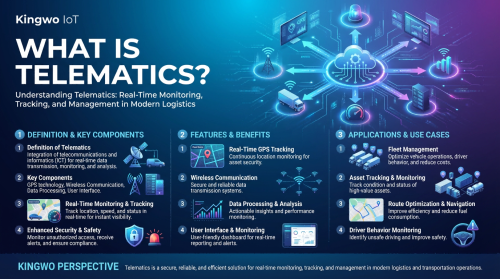
Telematics – the convergence of telecommunications and informatics – is revolutionizing vehicle fleets, assets, and insurance. By 2025–2026, virtually all segments of transportation are adopting connected-device technology to improve efficiency, safety and business intelligence. Embedded vehicle connectivity (GNSS/GPS plus cellular or LPWAN), Internet-of-Things (IoT) sensors, and real‐time data analytics are driving a proliferation of telematics solutions across fleets, supply chains and insurance. Major carmakers now ship embedded telematics in nearly 80% of new vehicles worldwide, and mandates (e.g. EU eCall) will push this to ~100% by 2025 in Europe. At the same time, traditional fleets and high-value assets (trailers, containers, heavy equipment) are increasingly fitted with telematic trackers to optimize routes, prevent theft and comply with regulations. Data-driven risk profiling is expanding usage-based insurance (UBI) programs for both commercial and personal auto policies. In sum, telematics is maturing from a niche add-on into a core platform for connected mobility, with broad implications for technology providers, OEMs, insurers and logistics operators.
Teeming with innovation, the telematics industry is seeing structural shifts: embedded OEM connectivity is displacing purely aftermarket trackers; business models are transitioning from hardware sales to subscription-based data services; and advanced software (AI, cloud analytics) is augmenting hardware. Sustainability and digitized supply chains are powerful tailwinds: greener operations and just-in-time logistics increasingly depend on granular tracking. At the same time, regulatory mandates (emissions targets, driver safety, data privacy) compel telematics adoption. This white paper reviews current market dynamics for fleet telematics, asset tracking and insurance telematics, covering market size and forecasts, key technology trends (IoT, AI, GNSS, LPWAN, etc.), adoption drivers, regional variations, and strategic implications for stakeholders.
Market Size and Growth Projections
The global telematics market is large and growing. Forecasts vary by segment, but all point to double-digit growth. For example:
Fleet Telematics: A recent analysis projects the global fleet telematics systems market (hardware + software + services for managing vehicle fleets) at about $11.2 billion in 2023, rising to ~$26.9 billion by 2032 (~CAGR 10.3%). Demand is fueled by digitization of transportation and strict compliance (e.g. hours-of-service, emissions). Fleets use telematics to track vehicles, monitor drivers, optimize routes and cut fuel costs.
Insurance Telematics: The insurance/usage-based insurance (UBI) telematics market (telematics devices and platforms sold to insurers) was roughly $6.8 billion in 2024 and is growing at ~18–19% CAGR. By 2034 it may exceed ~$30 billion. Rapidly increasing adoption of UBI policies – which price premiums based on actual driving data – is the key driver. Insurers use telematics to improve underwriting, personalize pricing and reduce fraud.
Asset Tracking: This broader IoT segment (tracking of trailers, containers, palletized goods, equipment, etc.) is even larger. One estimate pegs asset tracking at $28.99 billion in 2025, with a ~12.6% CAGR to ~$52.6 billion by 2030. Growth is driven by e-commerce/3PL logistics, falling sensor costs and the need for supply-chain visibility. For perspective, IoT Analytics notes that ~3.7 billion global IoT devices (20% of all) are used for asset tracking, reflecting how pervasive tracking has become.
Automotive Telematics (Overall): In a broader sense (including consumer connected cars, embedded OEM systems, etc.), forecasts cite a global automotive telematics market of ~$49.6 billion in 2025, rising to nearly $80 billion by 2034 (CAGR ~5.5%). This slower CAGR reflects the already-high vehicle penetration rates; indeed, ResearchandMarkets reports ~79% of new cars in 2024 had embedded telematics.
These figures are summarized in the table below:
Market Segment
~2025 Size (USD)
Forecast (Year)
CAGR (%)
Insurance Telematics
~$6.8 b (2024)
~$30.9 b (2034)
~18.9
Fleet Telematics
~$13.6 b (2025*)
~$26.9 b (2032)
~10.3
Asset Tracking
~$29.0 b (2025)
~$52.6 b (2030)
~12.6
Automotive Telematics
~$49.6 b (2025)
~$79.9 b (2034)
~5.45
*Fleet telematics 2025 estimate (GM Insights only gave 2023 baseline); CAGR from 2023–2032. Market sizes combine hardware and software/services.
Beyond raw market value, adoption rates are skyrocketing. ResearchandMarkets projects 64.5 million new telematics units shipped in 2024, rising to 82.1 million by 2029 (4.9% CAGR), while telematics service subscriptions grow ~13% annually from 286.6 million (2024) to 528.1 million (2029). Such penetration means nearly all vehicles on the road soon will generate data streams. In North America, for instance, telematics attach rates are ~93% for new vehicles; in China ~84% (2024). In Europe, regulatory “eCall” and smart tachograph mandates will require essentially all heavy vehicles (over 2.5 t) to have modern telematics/ELD devices by 2025.
Regional Dynamics
Adoption is global but uneven by region:
North America: Early and high adoption, driven by large fleets, logistics operations and active insurance markets. The U.S. Commercial Vehicle Safety Alliance (CVSA) has fully rolled out electronic logging (ELD) for hours-of-service, embedding telematics in millions of trucks. Insurers offer many UBI programs (though consumer uptake is still single-digit percentage). Telecom infrastructure is mature (4G/5G), and large OEMs include telematics in almost all vehicles. North America is expected to hold a significant share of fleet telematics market due to tech-savvy fleets and strict compliance focus.
Europe: Heavily regulated, Europe is pushing telematics via emissions and safety rules. The EU targets ~55% CO₂ reduction by 2030, making fleet optimization and EV integration mandatory for operators. EU law (Data Act, GDPR) also compels stronger data practices, affecting telematics data sharing. The forthcoming Euro 6e-bis emissions standard and the fitment of smart tachograph Gen2V2 (by July 2026) ensure all commercial vehicles will carry advanced telematics. As a result, the European fleet management market is sizable (GM Insights notes Europe’s fleet market ~€6.5 b in 2025) and growing at high rates. Video and safety telematics (e.g. Lytx, Mobileye) are also surging in Europe, addressing both driver risk and carbon goals.
Asia-Pacific: The fastest-growing region, with massive industrial and transport sectors. China leads in sheer numbers: it already has dozens of millions of connected cars and is integrating telematics into smart-city and EV initiatives. ResearchandMarkets reports Asia-Pacific accounted for ~60% of the global automotive telematics market in 2024. Rapid urbanization, expanding logistics networks, and government projects (e.g. China’s National Logistics Plan, India’s e-way bills) are propelling adoption. Southeast Asia is emerging, especially for mining/agriculture telematics and maritime asset tracking. Regulatory environments vary: while China and Japan actively promote automotive connectivity, India is enhancing fleet GPS tracking for commercial goods. Overall, APAC’s fleet and asset tracking markets have double-digit CAGRs.
Latin America, Middle East & Africa: These are smaller but growing. Brazil and Mexico have budding logistics and ride-hailing sectors adopting telematics. In Latin America, cargo theft has spiked (over 3,600 incidents in 2024), prompting insurers and shippers to mandate trackers. Africa and Middle East fleets (oil/gas, utilities, government) are slowly digitizing via satellite and LTE devices. Middle East smart city projects (e.g. UAE, Saudi NEOM) include connected vehicle fleets. However, adoption lags due to infrastructure and cost; local regulations on telematics are minimal, aside from some ELD-like trucking requirements.
Technological Innovations
Telematics has been energized by several overlapping technology waves:
IoT and Connectivity: Modern telematics units fuse GNSS with a variety of radios. Traditional cellular (4G/5G) remains ubiquitous for vehicles; IoT-specific standards like NB-IoT/LTE-M and LoRaWAN provide low-power, wide-area options for asset sensors and cost savings. Satellite IoT (Iridium, Starlink, etc.) is emerging for truly remote tracking. Telit notes that 5G and “cellular LPWA” are driving faster, low-latency data, improving real-time asset tracking and telematics responsiveness. Many solutions now support hybrid connectivity, automatically switching networks (e.g. from 5G to NB-IoT to satellite) to ensure global coverage.
GNSS and Positioning: The backbone is high-accuracy satellite navigation. Multi-constellation GNSS (GPS, GLONASS, Galileo, BeiDou) and augmentation (e.g. RTK) yield sub-meter accuracy when needed. In challenging environments, inertial sensors (IMUs), Wi-Fi/BLE positioning, and even UWB/RFID can supplement GPS, as Telit describes. Precise location supports advanced use cases: secure geofencing, automated location validation, and driver behavior mapping.
Edge and Cloud Analytics: Smarter devices can preprocess data onboard, but the real power lies in AI and big-data platforms. Telematics providers are embedding machine learning and predictive analytics to surface insights. For instance, AI can predict component failures (based on engine diagnostics), optimize routes under dynamic conditions (traffic, weather), and detect driver fatigue or distractions via video telematics. Frost notes that AI-driven predictive maintenance and risk detection are “revolutionizing fleet management”. On the cloud side, unified telematics platforms ingest streams from vehicles, smartphones and third-party sources to generate dashboards, alerts and automated reports (for fuel, safety, compliance, etc.). Gartner-like modular architectures allow layering new services without forklift upgrades.
Video and Computer Vision: Increasingly, telematics includes cameras (internal/external dashcams). These AI-enabled systems provide evidence in incidents, coach drivers, and enhance security. Video data, combined with vehicle sensors, deepens the analytics (e.g. correlating harsh braking with driver behavior, noted by Lytx). 5G bandwidth is enabling live video in fleet contexts (e.g. for remote driver assessment).
Advanced Connectivity Devices: IoT devices now incorporate NFC, BLE, RFID and UWB for tracking pallets, tools and inventory within buildings, as well as vehicles. Wearables (for drivers) and portable GPS tags allow granular tracking of people and goods. The telco industry is also innovating: connectivity management platforms (e.g. Cisco Jasper, Aeris) orchestrate millions of cellular SIMs, simplifying global roaming and data plans for fleets.
Security and Standards: As data volume grows, cybersecurity is critical. Developers emphasize encryption and secure design, especially with regulations like GDPR in place. The new EU Data Act (effective 2025) will give vehicle owners more control over the raw telematics data from their vehicles, shifting power from OEMs to fleet operators. Open standards (e.g. ISO 20078 vehicle integration) and data sharing consortia are also emerging to ensure interoperability among OEMs, fleets and insurers.
Structural Shifts & Business Models
Telematics business models are evolving rapidly:
OEM-Embedded vs Aftermarket: Traditionally, fleet managers retrofitted vehicles with aftermarket devices. Now, OEM-embedded telematics are becoming standard. Research shows most automakers include a base telematics unit in new cars. This shifts the market: hardware vendors must partner with vehicle manufacturers or supply connected device platforms. Meanwhile, the aftermarket segment remains important for older fleets and non-vehicle assets.
From Hardware to Services: Many providers now sell telematics as a service (TaaS): bundled hardware + connectivity + cloud platform + support, typically subscription-based. This lowers upfront costs for customers. Connected-device OEMs (e.g. CalAmp, Geotab) bundle data plans and software. Pay-per-use models (e.g. mileage-based insurance) align costs with usage. Business models are trending toward “SaaS + usage fees” rather than one-time device sales.
Data Monetization & Ecosystems: Telematics companies are monetizing data by offering analytics subscriptions (fleet scorecards, risk indices). Some sell aggregated (anonymized) data to third parties (e.g. traffic pattern analysis, supply chain insights). Partnerships and marketplaces are forming (OEM–Insurer–Telematics provider collaborations). For example, telematics devices often integrate with HR and fuel-card systems for complete fleet services.
Mergers & Consolidation: As Frost & Sullivan notes, mergers and acquisitions are accelerating in telematics. Large logistics/tech conglomerates are buying specialized telematics startups to scale quickly and fill portfolio gaps (EV fleet management, video analytics, etc.). Established telematics platform vendors are adding insurance and maintenance modules to become one-stop-shop providers.
Non-Traditional Entrants: Tech companies and carriers (AT&T, Vodafone, etc.) are entering telematics. Some telecom operators now resell telematics solutions combined with connectivity. E-commerce and mobility platforms (e.g. Uber Freight) internally develop tracking systems, blurring lines between fleets and platforms.
Insurance Innovations: In auto insurance, Usage-Based Insurance (UBI) and “pay-as-you-drive” models are maturing. Insurers are rolling out subscription-style policies with telematics tracking (via in-car devices or mobile apps). Telematics data enables granular underwriting. Some markets are exploring “pay-per-mile” and “pay-per-drive” insurance products for delivery drivers and low-mileage customers.
Shared Mobility / Mobility-as-a-Service (MaaS): Car-sharing, fleet rental and last-mile services integrate telematics to manage utilization and condition of vehicles. New mobility startups adopt telematics to monitor vehicles in real time, reducing idle time and enabling dynamic pricing.
Key Drivers of Change
Several overarching trends are driving telematics adoption:
Sustainability and Efficiency: Growing pressure to reduce carbon emissions is pushing fleets to optimize every drop of fuel. Telematics enables eco-driving programs (reducing idle, controlling speed) and better route planning, directly cutting fuel use. For heavy fleets, a small reduction per vehicle can have huge CO₂ impact; notably, trucks represent ~8% of vehicles but over 35% of on-road CO₂. Transition to EV fleets also boosts telematics demand: EVs require monitoring of battery health and range optimization. Telematics systems are evolving to integrate EV-specific data (charge levels, consumption). Regulatory targets (e.g. EU’s 55% CO₂ cut by 2030, California’s clean truck rules) compel fleets to adopt these technologies.
Supply Chain Digitization: Recent disruptions (pandemic, geopolitical conflicts) have highlighted the need for end-to-end visibility. Real-time asset tracking is now mission-critical in logistics. As Mordor Intelligence notes, rising e-commerce volumes and 3PL expansion require live shipment visibility. Falling costs of GPS/IoT sensors (–3.2% CAGR impact on CAGR) make widespread tagging feasible. Insurers and shippers increasingly mandate tracking for high-value cargo: cargo-theft incidents jumped 27% in 2024, prompting mandatory trackers on containers. IoT Analytics similarly identifies supply-chain disruptions and risk management as top drivers for enterprise asset tracking.
Regulatory Compliance: Governments worldwide are enforcing regulations that inadvertently promote telematics. Examples include: EU and U.S. hours-of-service rules (requiring electronic logging), EU digital tachograph updates (Version 2 by 2026 for inter-country trucks), mandatory emergency call systems (eCall) and impending EU Data Act/GDPR impacting data usage. Safety regulations (e.g. EU’s Mobility Package, North American crash mitigation guidelines) encourage fleets to use telematics-driven safety programs (driver monitoring, video) to comply. For insurers, regulators demand transparency; telematics can help justify fair pricing. In short, to meet these compliance needs, fleets and insurers deploy telematics as a tool rather than a luxury.
Cost Pressures: Operational costs – fuel, maintenance, insurance – remain high. Telematics promises ROI by reducing accidents, optimizing routes and preempting breakdowns. With volatile fuel prices, companies rely on telematics-driven fuel-management modules. Labor shortages also incentivize productivity gains: tracking driver hours and automating dispatch improves utilization of drivers and vehicles.
Technology Costs and Enablers: The cost of IoT connectivity and sensors continues to fall. This democratizes telematics: even small fleets can deploy low-cost trackers. The maturation of cloud platforms and standardized hardware (OBD-II devices, smartphone apps) lowers barriers. Meanwhile, emerging technologies – AI, edge compute, blockchain for secure data logs – are making telematics more powerful, which in turn justifies investment.
Adoption Trends and Use Cases
Adoption spans many use cases:
Fleet Safety & Efficiency: The vast majority of fleets now use telematics primarily for safety and efficiency. Industry surveys find ~88% of fleets report using telematics for safety monitoring. Key functionalities include driver-scorecards, real-time alerts (e.g. overspeeding, harsh braking), and automated maintenance scheduling. Video telematics is seen as a growing segment for crash prevention and training. However, fleet managers also highlight “data overload” as a challenge: many use multiple telematics devices and struggle to integrate data. This drives demand for unified platforms.
Insurance Programs: In personal auto, UBI programs are growing slowly. For example, a U.S. consumer survey found only ~12% currently enrolled in insurer telematics programs (despite 88% of U.S. drivers not participating). Privacy concerns (70% worried about data use) are a major barrier. Among those enrolled, two-thirds saw rate reductions (median savings ~$27/month). In commercial auto, more insurers use telematics: ~80% of large U.S. insurers have programs (though few are “advanced”), whereas many smaller insurers are only now experimenting. U.S. regulators are increasingly approving telematics-based rating.
Asset/Equipment Tracking: Telemetry is not just for vehicles. Industrial companies track equipment (cranes, generators), shipping containers, and high-value goods. Inside warehouses, RFID/IoT trackers manage inventory. Nearly 90% of surveyed enterprises now track finished goods; over half track employees for safety. Top IoT Analytics use cases – supply chain track-and-trace (54% of firms) and on-site location tracking (50%) – are core telematics applications.
Mobility Services: Ride-hailing, rental and micro-mobility operators embed telematics to monitor their fleets. Delivery and courier services (last-mile) use telematics to optimize multi-stop routes in real time, reducing delays. Even public transit agencies are adopting telematics for bus/train fleets to improve scheduling and passenger safety.
Strategic Implications
The above trends have important implications for each player in the ecosystem:
Telematics Hardware/Software Providers: Companies in this space must build end-to-end, modular solutions. Integration of hardware, connectivity and analytics is table stakes. Providers should invest in AI/ML capabilities to offer predictive services (e.g. predictive maintenance, safety alerts) as value-added offerings. Security and compliance must be core (e.g. GDPR/Data Act readiness). Given consolidation, smaller vendors should consider partnerships or niche specialization (e.g. focusing on EV fleet management or cold-chain tracking). Those with global reach need multi-network connectivity (including LPWAN and satellite) to serve international fleets. Offering flexible pricing (subscription, pay-per-mile) will broaden adoption. In short, telematics firms are transitioning into data-platform companies; success depends on analytic insight and customer ROI, not just hardware.
Vehicle OEMs: Automakers are embedding telematics as standard or premium features. They can leverage this to create new services (predictive maintenance subscriptions, enhanced navigation, usage-based warranties). OEMs can partner with insurers or tech companies to monetize vehicle data (while respecting privacy laws). They must also prepare for regulators’ data-access requirements: the EU Data Act will force OEMs to open up vehicle data to third-party services, leveling the playing field. Finally, OEMs should align telematics with trends in electrification and autonomy – telematics data is critical to improving EV performance and enabling advanced driver assistance (ADAS) validation.
Insurers: Companies in auto insurance should aggressively develop UBI and risk management products. The data from telematics can refine underwriting and claims. Insurers can collaborate with fleets by offering premium discounts for data-sharing; SambaSafety notes most fleets that do share telematics data do so to secure better rates or support. Insurers should also invest in analytics to make sense of the flood of IoT data, and to educate customers on privacy protections (since consumer acceptance depends on trust). Insurer telematics programs will likely expand from simple score-based discounts to comprehensive fleet safety services (training, risk dashboards). Some insurers are also exploring “parametric” products (e.g. pay-per-mile policies) enabled by telematics.
Logistics/Fleet Operators: For companies operating fleets (trucking, delivery, service vehicles), the message is clear: telematics is essential. Operators should aim for integrated solutions – for example, linking vehicle tracking with warehouse management and supply-chain platforms for seamless visibility. Organizationally, this means training dispatchers and drivers on new systems and using the data to continually refine operations. Companies should also look to monetize telematics internally: using driver behavior data to reduce insurance, negotiating better fuel deals, etc. Given the trust gap highlighted by SambaSafety (79% of fleets don’t share data simply because no one asked), fleets should proactively engage insurers and regulators to shape useful programs. Finally, as electric and autonomous vehicles enter fleets, operators will need specialized telematics (battery telemetrics, complex sensors), so planning pilot projects now is prudent.
Policy and Regulation: Governments and standards bodies will play a role. Policymakers should ensure telematics deployments protect privacy (transparent data use policies) while not stifling innovation. Data ownership laws (like the EU Data Act) will reshape contracts between OEMs and fleet owners. Regulators may also require minimum telematics features (e.g. emergency reporting, driver monitoring) on new vehicles. For industry, staying ahead of these changes (and even influencing them through industry groups) is a strategic necessity.
Conclusion
The global telematics industry is at an inflection point. Innovation in IoT connectivity, AI analytics and GNSS positioning, combined with structural changes (OEM embedding, new business models), is rapidly expanding the role of telematics across fleet management, asset tracking, and insurance. Markets are projected to grow at double-digit rates, supported by drivers such as sustainability imperatives, digitized supply chains, and regulatory mandates. Industry players must adapt: solution providers should become analytics-driven service platforms, OEMs must embrace open data ecosystems, insurers need to integrate telematics deeply into products, and fleet operators should leverage telematics for every aspect of efficiency and compliance.
This white paper has outlined key market forecasts, emerging technologies (5G/LPWAN, AI, advanced GNSS, video), and adoption trends. It is clear that by 2026, telematics will no longer be an optional upgrade – it will be a core infrastructure layer for transportation and logistics worldwide. Stakeholders that act now to build flexible, data-centric telematics offerings will gain competitive advantage in the coming era of connected mobility.
Sources: Industry reports and analyses, including SambaSafety’s 2025 Telematics Report; Global Market Insights (Insurance Telematics 2025–34); DataIntelo (Fleet Telematics 2025–33); Mordor Intelligence (Asset Tracking 2025–30); Precedence Research (Automotive Telematics 2025–34); IoT Analytics and Telit technical blogs on telematics use cases; Lytx and Geotab briefings on EU regulations; Frost & Sullivan industry insights; BusinessWire/ResearchAndMarkets press on connected car statistics; among others. Each source informed market sizing, trend data and technological context for this analysis. Detailed references are provided below.


 news
news
 news
news
 news
news
 news
news
 news
news
 news
news
 news
news
 news
news