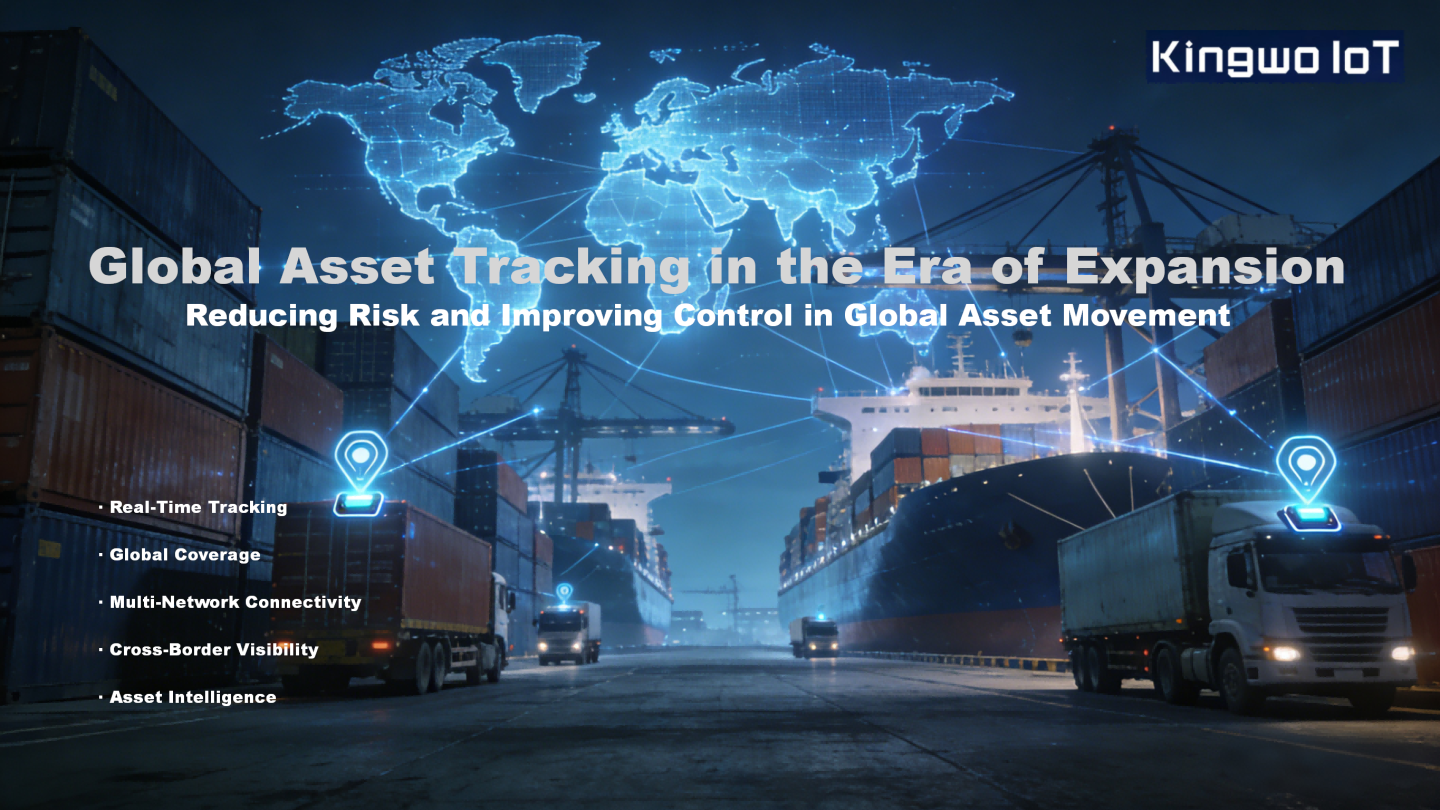

As global trade continues to expand and more enterprises move toward international operations, managing assets across borders has become a critical challenge.
From logistics and transportation to high-value equipment deployment, assets are increasingly mobile, distributed, and exposed to a wider range of risks. While globalization creates new opportunities, it also introduces new operational uncertainties.
Among these, the lack of real-time asset visibility remains one of the most significant.
When assets move across different countries and regions, maintaining consistent oversight becomes more difficult. Differences in infrastructure, connectivity, and operational environments can all impact tracking effectiveness.
In many cases, organizations rely on fragmented or delayed information, which limits their ability to respond to issues such as delays, unauthorized movement, or potential loss.
As a result, asset management is no longer just an operational function — it is closely tied to risk control and business continuity.
Recent advancements in IoT technologies are helping to address these challenges.
The combination of GPS and Beidou positioning systems enhances location accuracy and ensures broader global coverage. At the same time, low-power communication technologies such as LTE-M and NB-IoT support long-term deployment of tracking devices, even in remote or infrastructure-limited environments.
In addition, cloud-based platforms are enabling centralized monitoring and data analysis, allowing organizations to gain a clearer understanding of asset movement and usage.
The role of asset tracking is expanding across multiple sectors.
In international logistics, it improves cargo visibility and security throughout transportation processes. In fleet operations, it supports better coordination and oversight of vehicles operating across regions. In industries such as healthcare and equipment leasing, it provides a reliable way to monitor high-value assets and reduce operational risk.
These applications highlight a broader trend: asset tracking is becoming an essential component of modern operational systems.
Asset tracking is no longer just about knowing where assets are — it is about reducing uncertainty across increasingly complex, cross-border operations. As global expansion accelerates, enterprises need more than basic visibility; they need continuous insight, real-time responsiveness, and the ability to manage assets proactively across regions.
In this context, asset tracking becomes a foundational layer for operational efficiency, risk control, and decision-making.
At Kingwo, we approach asset tracking as part of a broader IoT infrastructure rather than a standalone device. Our solutions are designed to provide reliable global connectivity, long-term deployment capability, and data-driven visibility across logistics, fleet, and high-value asset scenarios.
By integrating tracking into daily operations, enterprises can move beyond reactive management and build more scalable, transparent, and efficient global systems.

English

French

Portuguese

Spanish








 Launch