
In today’s increasingly interconnected and globalized business environment, asset tracking has moved from being a supporting tool to becoming a fundamental part of operational infrastructure. Whether in logistics, fleet management, industrial operations, or high-value equipment transportation, companies are placing greater emphasis on knowing not only where their assets are, but also how they are being used and managed across different stages of operation.
As supply chains extend across borders and operational complexity increases, the ability to maintain continuous visibility over assets is directly linked to efficiency, risk control, and decision-making. What was once considered an optional capability has now become a baseline expectation in many industries.
The scope of asset tracking has expanded significantly over the past decade. It is no longer limited to vehicles or basic fleet operations. Today, companies are tracking a wide range of assets, including cross-border shipments, high-value equipment, industrial machinery, and emerging mobility assets such as e-bikes. In sectors like healthcare, even sensitive and high-cost devices are increasingly included within asset tracking systems.
This shift reflects a bigger change in mindset. Assets are no longer treated as static resources that are only checked at specific points in time. Instead, they are viewed as dynamic elements within a broader operational system, requiring continuous monitoring and management throughout their lifecycle.
Modern asset tracking is built on the integration of multiple technologies rather than relying on a single positioning method. Satellite systems such as GPS and BeiDou form the foundation for global positioning, while cellular networks, including 4G, LTE-M, and NB-IoT, enable real-time data transmission across regions. In environments where satellite signals may be limited, such as urban canyons, indoor facilities, or underground locations, Wi-Fi and LBS positioning provide additional layers of reliability, ensuring continuity of tracking even in complex operational conditions.
Beyond positioning and connectivity, the effectiveness of modern asset tracking lies in how these technologies are orchestrated into a cohesive system. Devices are now designed to dynamically switch between different positioning sources depending on signal availability, optimizing both accuracy and power consumption. At the same time, advancements in low-power communication protocols and energy management have enabled longer deployment cycles, making it feasible to monitor assets over extended periods without frequent maintenance or battery replacement.
These technologies are further supported by cloud-based platforms that serve as the central layer for data aggregation, visualization, and analysis. Through these platforms, businesses are able to track asset movements in real time, monitor operational status, and generate historical insights that support planning and optimization. Instead of simply displaying location data, modern systems can correlate movement patterns with operational events, enabling companies to identify inefficiencies, detect anomalies, and respond proactively to potential risks.
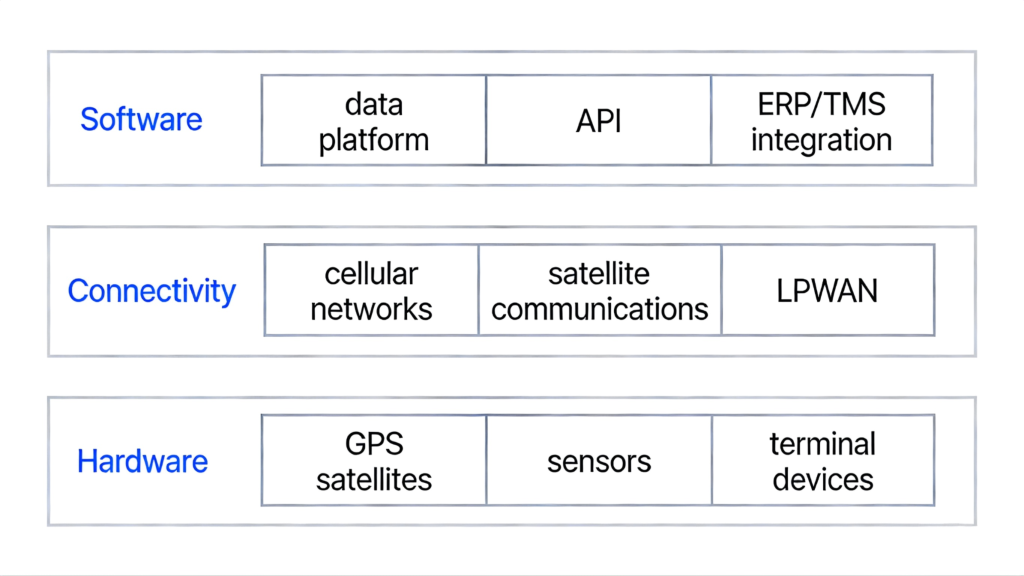
As a result, asset tracking has evolved into a comprehensive and intelligent system that connects hardware, connectivity, and software into a unified operational framework. It is no longer defined solely by where an asset is located, but by how effectively that information can be used to enhance visibility, improve control, and drive operational efficiency across increasingly complex and distributed environments.
The development of asset tracking cannot be separated from the technological evolution of GPS. The GPS program was initiated by the U.S. Department of Defense in the 1970s and reached full operational capability in 1995. In its early stages, it was primarily used for military navigation purposes.
During the initial deployment phase, civilian signals were subject to accuracy restrictions, limiting their commercial value. In 2000, these accuracy restrictions were lifted, and civilian positioning accuracy significantly improved to the range of 10 to 15 meters. This shift opened new possibilities for the modern asset-tracking industry.
In the early 2000s, the improvement in GPS accuracy combined with the widespread adoption of cellular communication technologies. Location data began to be transmitted back to backend platforms in real time, enabling logistics dispatching and fleet management systems to gradually become digitized. The emergence of location management applications, starting with commercial fleets in North America, marked a turning point—moving asset tracking from traditional methods such as manual record-keeping and phone inquiries into a new era of real-time visibility and data-driven operations.
From a technological evolution perspective, the civilian use of GPS expanded the scope of asset tracking—from closed environments such as warehouses and factories to every link in the global supply chain. This laid the foundation for location awareness, which later enabled the integration of IoT technologies, system interoperability, and intelligent management. Today, asset tracking is no longer just a positioning tool; it has become a comprehensive operational framework that connects hardware, connectivity, and software.
In its early stages, asset tracking was primarily focused on answering a single question:
Where is the asset?
However, as technology advanced and business needs evolved, this question became only one part of a much larger picture.
Today, companies are equally concerned with how assets are being used, whether they are being moved as expected, and whether they have reached the correct destination under the right conditions. Asset tracking systems now contribute to broader operational insights, enabling organizations to detect anomalies, improve utilization, and enhance overall efficiency.
This evolution has transformed asset tracking from a simple positioning function into a form of asset intelligence, where data plays a central role in guiding operational decisions.
Modern tracking devices are engineered to withstand extreme environments—ranging from freezing cold chains to high-temperature industrial settings, from remote construction sites to hazardous chemical facilities. Ruggedized enclosures, extended operating temperature ranges, and vibration resistance have become standard features, ensuring reliable performance where assets are most exposed.
Beyond durability, devices are increasingly embedded with intelligence at the edge. On-device processing capabilities allow for real-time data filtering, event detection, and conditional reporting, reducing unnecessary data transmission while ensuring that critical alerts—such as unexpected movement, prolonged idling, or route deviation—are delivered instantly.
Interoperability has become a core design principle. Modern tracking devices support open communication protocols and are built to integrate natively with cloud platforms, enterprise resource planning (ERP) systems, and transportation management systems (TMS) through standardized APIs. This eliminates data silos and enables location intelligence to flow directly into business workflows.
In addition, modular designs and over-the-air (OTA) firmware updates allow devices to adapt to evolving requirements without hardware replacement. New features, security patches, and connectivity profiles can be deployed remotely, extending device lifespan and reducing total cost of ownership.
The role of tracking devices continues to expand. With the integration of artificial intelligence and machine learning capabilities at the edge, devices are beginning to support predictive use cases—such as anticipating maintenance needs based on vibration patterns, detecting anomalies in asset usage, or optimizing routes based on real-time conditions.
As connectivity technologies converge—combining cellular, satellite, Bluetooth, and low-power wide-area networks (LPWAN) within a single device—assets can now be tracked seamlessly across indoor and outdoor environments, from dense urban canyons to regions with no cellular coverage.
Today's tracking devices are far more than location transmitters. They serve as intelligent edge nodes that collect, process, and communicate critical data about asset status, condition, and behaviour. When combined with cloud platforms, analytics engines, and enterprise systems, they form the foundation of a connected operational environment—one where visibility is continuous, decisions are data-driven, and assets are not just located, but actively managed.
Asset tracking is no longer simply about knowing location. It has become an essential capability that supports efficiency, transparency, and control in modern operations. As technologies continue to develop and global business environments become more interconnected, the role of asset tracking will continue to expand.
For companies looking to improve operational visibility and manage assets more effectively, adopting advanced tracking solutions is increasingly a strategic decision rather than a technical upgrade.
Within this evolving landscape, Kingwo IoT focuses on providing asset tracking solutions tailored to real operational scenarios. By integrating multi-source positioning technologies with intelligent hardware and scalable platforms, Kingwo supports businesses in achieving global visibility and reliable asset monitoring.
Our solutions are designed to support long-duration deployments, track asset movement and status in real time, and integrate with existing operational systems. This enables organizations to enhance control over their assets without significantly increasing complexity in their workflows.
 news
news
 news
news
 news
news
 news
news
 news
news
 news
news
 news
news
 news
news
 news
news

English

French

Portuguese

Spanish