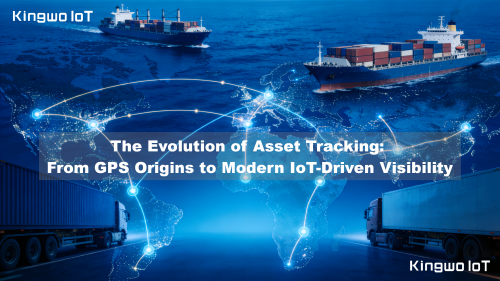
Asset tracking has long been considered a supporting function within logistics, warehousing, and industrial operations. Its primary role was straightforward: to provide visibility into the location of assets across different stages of movement and usage.
However, as operational environments become increasingly distributed and interconnected, this definition is no longer sufficient. The expectations placed on tracking systems have expanded significantly, driven by rising complexity, cost pressure, and the need for more reliable decision-making.
In this context, asset tracking is no longer simply about visibility. It is becoming part of a broader operational infrastructure that supports efficiency, risk control, and system-wide coordination.
For many years, asset tracking systems were designed to answer a single question: where is the asset?
While this remains a fundamental capability, it now represents only a baseline requirement. Modern operations require systems that can interpret asset behaviour, identify inefficiencies, and support proactive decision-making.
This shift can be understood through a change in the types of questions organizations are asking. Beyond location, businesses increasingly need to understand:
These requirements reflect a broader transition from visibility-driven systems to intelligence-driven systems, where data is not only collected but actively used to support operations.
The evolution of asset tracking is closely aligned with the emergence of Industry 5.0. Unlike earlier industrial models that emphasized automation and scale, Industry 5.0 focuses on integrating human decision-making with intelligent, data-driven systems.
Within this framework, technologies such as IoT, real-time analytics, and connected platforms are not deployed in isolation. Instead, they function as part of a coordinated system that enhances adaptability, resilience, and operational awareness.
Asset tracking is therefore no longer a standalone tool. It becomes a critical data layer within a larger ecosystem, supporting coordination across processes such as logistics, inventory management, and service operations.
The transition toward more intelligent asset management is not happening in isolation. It is being driven by several structural pressures that are reshaping industrial operations globally.
Labour constraints are one of the most significant factors. According to Deloitte, manufacturing in the United States alone may require 3.8 million new workers between 2024 and 2033, with nearly half of those roles potentially remaining unfilled. This makes manual coordination, tracking, and verification increasingly unsustainable at scale.
At the same time, investment in digital infrastructure is accelerating. Industry data shows that more than half of supply chain leaders are increasing their investment in technology, with a substantial proportion allocating multi-million-dollar budgets to digital transformation initiatives.
Finally, the rapid expansion of IoT connectivity is making real-time data exchange more feasible than ever. Ericsson projects that total IoT connections will reach over 22 billion globally, creating the technical foundation for more connected and responsive asset systems.
Taken together, these factors are pushing asset tracking beyond simple monitoring toward integrated operational intelligence.
Traditional tracking solutions were often built around single devices or isolated systems. In contrast, modern asset tracking is increasingly based on integrated architectures that combine multiple technologies.
Research in Industry 5.0 warehouse environments highlights the use of RFID, Bluetooth Low Energy (BLE), and Ultra-Wideband (UWB) as complementary tools for tracking and managing assets across different operational contexts.
In practice, this multi-layered approach allows organizations to balance accuracy, cost, and coverage across different scenarios. More importantly, it enables tracking systems to capture not only location data but also contextual information about asset movement, interaction, and usage within operational workflows.
This represents a fundamental shift from device-centric thinking toward system-level design.
As asset tracking systems become more integrated into operational decision-making, the importance of data integrity increases significantly.
Accurate location data alone is no longer sufficient if the underlying system cannot guarantee the reliability and security of that data. Modern tracking architectures must therefore incorporate mechanisms that ensure data authenticity, protect against unauthorized access, and prevent tampering.
Research in this field emphasizes the use of encryption, secure communication protocols, and validation mechanisms such as checksums and digital signatures to maintain data integrity across the system lifecycle.
This shift reframes asset tracking from a data collection function into a trusted information system, where reliability is as important as visibility.
From a practical deployment perspective, the market is moving toward solutions that integrate devices, connectivity, and data platforms into unified systems.
Rather than focusing solely on tracking individual assets, organizations are increasingly looking to build connected ecosystems that support multiple use cases across logistics, fleet management, mobility, and industrial operations.
In this context, the value of asset tracking lies not only in capturing data but in enabling that data to be used effectively across different layers of the organization. This includes supporting real-time decision-making, improving operational efficiency, and reducing risk through better visibility and control.
Asset tracking is undergoing a fundamental transformation.
What was once a tool for location visibility is becoming a core component of intelligent, connected systems that support modern operations. As Industry 5.0 continues to evolve, the ability to transform asset data into actionable insight will become increasingly critical.
The key question is no longer whether assets can be tracked, but whether the data generated by those systems can support better, faster, and more reliable decisions.
 news
news
 news
news
 news
news
 news
news
 news
news
 news
news
 news
news
 news
news
 news
news

English

French

Portuguese

Spanish