
Rechargeable GPS Container Locks and Smart E-Locks Explained
Global logistics networks are expanding in both scale and complexity. Containers now move across multiple transport modes, jurisdictions, and custody points before reaching their destination. While global trade volumes continue to grow, cargo theft, unauthorized access, and shipment diversion have increased in parallel.
What makes container security a structural challenge, rather than a temporary disruption, is the fragmentation of responsibility. Containers often sit idle in ports, rail yards, inland depots, or temporary storage locations—frequently outside direct supervision. Once a container leaves a controlled facility, traditional mechanical seals provide no visibility into its status until final inspection.
This gap between physical protection and operational awareness has driven demand for security mechanisms that extend beyond deterrence and toward continuous, data-driven oversight.
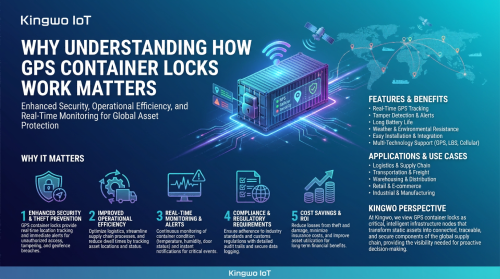
A rechargeable GPS container lock is an electronic locking device that combines physical access control with location tracking, wireless connectivity, and event-based monitoring.
Unlike disposable mechanical seals, these devices are designed for repeated use across multiple shipments. They secure container doors while reporting location, lock status, and security events to a centralized platform throughout transit.
In industry contexts, rechargeable GPS container locks are also referred to as smart container locks, electronic container locks, or container e-locks, and are increasingly deployed across global logistics and fleet operations.
Traditional seals confirm container integrity only at inspection points. They provide no insight into what happens between origin and destination.
Smart container locks transform this model by enabling continuous oversight during transit. Key differences include:
This shift moves container security from reactive inspection to proactive monitoring, allowing risks to be identified while corrective action is still possible.
Rechargeable GPS container locks function as both security devices and tracking nodes. They transmit location and status data at scheduled intervals or in response to specific events.
Rather than relying on constant real-time transmission, modern systems prioritize event-driven intelligence. Location updates may occur periodically, while alerts are triggered only when anomalies arise—such as route deviation, unexpected movement, or door opening.
This approach delivers operational visibility while preserving energy efficiency, making it suitable for long-haul and cross-border logistics.
Battery life is a decisive factor in the total cost of ownership for container security devices.
Short-life or disposable batteries require frequent replacement, increasing labor costs and operational friction—especially when containers are in transit or stored in remote locations.
Rechargeable GPS container locks address this challenge through:
As a result, a single device can support multiple international shipping cycles before recharging is required, aligning more closely with real-world logistics workflows.
Modern container e-locks integrate multiple sensors to detect physical interference and abnormal conditions.
Common security mechanisms include:
When combined with geofencing rules, these signals enable systems to infer intent rather than simply record position. For example, a container opening outside an authorized zone can trigger immediate investigation.
This capability supports digital chain-of-custody requirements increasingly demanded by regulators, insurers, and cargo owners.
Rechargeable GPS container locks are widely deployed across asset-intensive industries, including:
Their independence from fixed infrastructure makes them suitable for both long-haul transit and temporary storage environments.
The value of smart container locks increases when integrated into a broader tracking ecosystem. When lock data is combined with fleet telematics, asset tracking, and logistics platforms, organizations gain a unified view of movement, security, and utilization.
Over time, this data supports operational optimization, risk analysis, and compliance reporting—shifting container security from a defensive measure to a strategic capability.
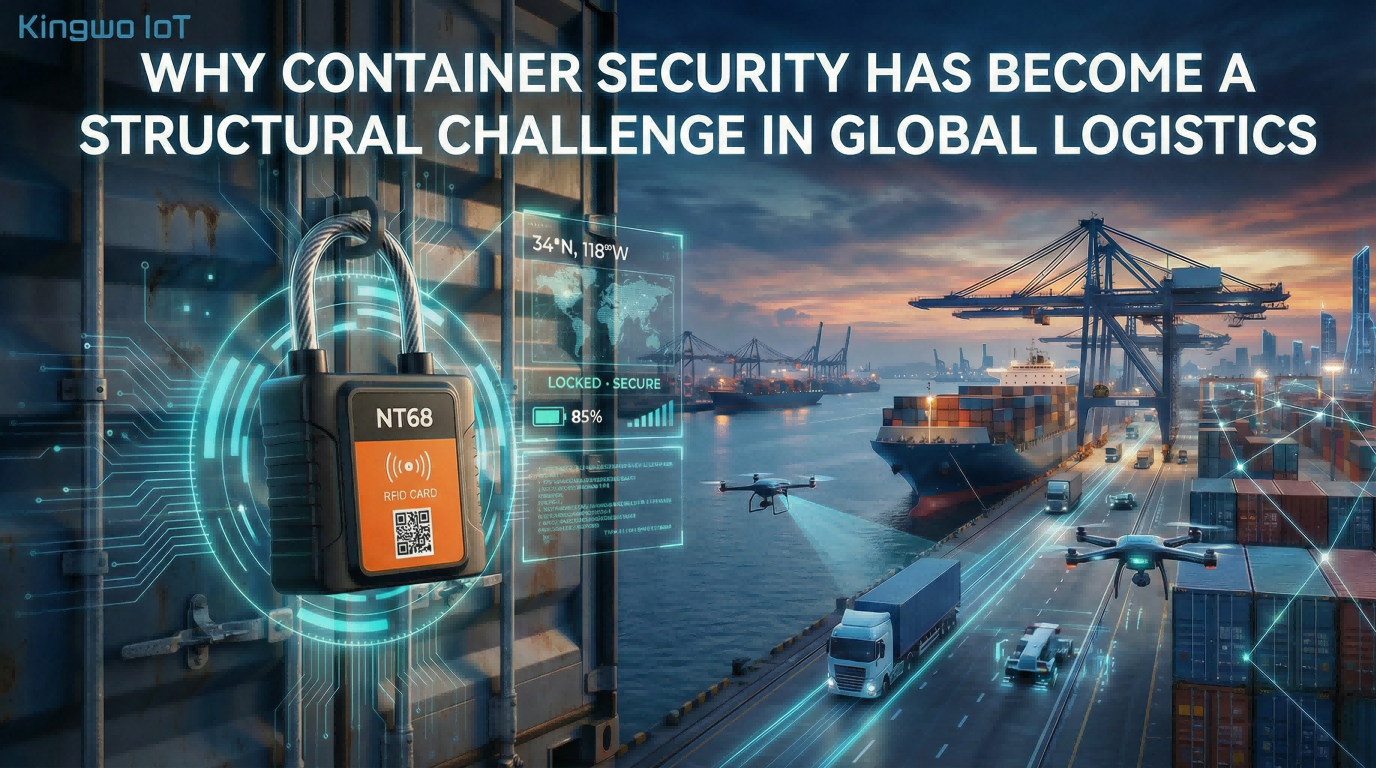
One example of this approach is the NT68 rechargeable GPS container lock, designed for long-duration logistics operations. It combines GNSS positioning, cellular connectivity, and a high-capacity rechargeable battery within a rugged, weather-resistant enclosure.
The device supports event-based reporting, tamper detection, and remote access control, reflecting the broader industry shift toward durability, autonomy, and global compatibility in container security technology.
As global logistics networks become more distributed and less predictable, container security must evolve accordingly.
Rechargeable GPS container locks represent a move away from disposable seals and manual inspection toward persistent, low-intervention visibility. Their adoption reflects a growing industry consensus: in a world of continuous movement, security systems must be designed to operate quietly, reliably, and continuously.
What is a rechargeable GPS container lock?
A rechargeable GPS container lock is an electronic device that secures container doors while providing GPS tracking, cellular connectivity, and tamper alerts. It enables continuous visibility and digital chain-of-custody monitoring during transport.
How do electronic container locks improve cargo security?
Electronic container locks improve security by detecting unauthorized opening, cable cuts, route deviations, and abnormal movement, and sending real-time alerts so operators can respond before losses occur.
Why are rechargeable container locks replacing disposable seals?
Rechargeable container locks support reuse across multiple shipments, reduce operational waste, lower long-term cost, and provide in-transit visibility that disposable seals cannot offer.
How long does a rechargeable GPS container lock battery last?
Battery life varies by reporting frequency and network type, but most industrial-grade devices operate from several weeks to several months on a single charge using low-power networks.
Can GPS container locks work internationally?
Yes. Most modern GPS container locks support multiple cellular bands and low-power wide-area networks, enabling global operation across major logistics regions.
Rechargeable GPS container locks are also referred to as smart container locks, electronic container seals, container e-locks, or GPS-enabled cargo locks. These terms are often used interchangeably in search queries, even though they may describe slightly different deployment models.
From an operational perspective, these devices are evaluated alongside container GPS trackers, asset tracking systems, fleet telematics platforms, and cargo monitoring solutions—particularly in long-distance and cross-border logistics environments.
 news
news
 news
news
 news
news
 news
news
 news
news
 news
news
 news
news
 news
news

English

French

Portuguese

Spanish