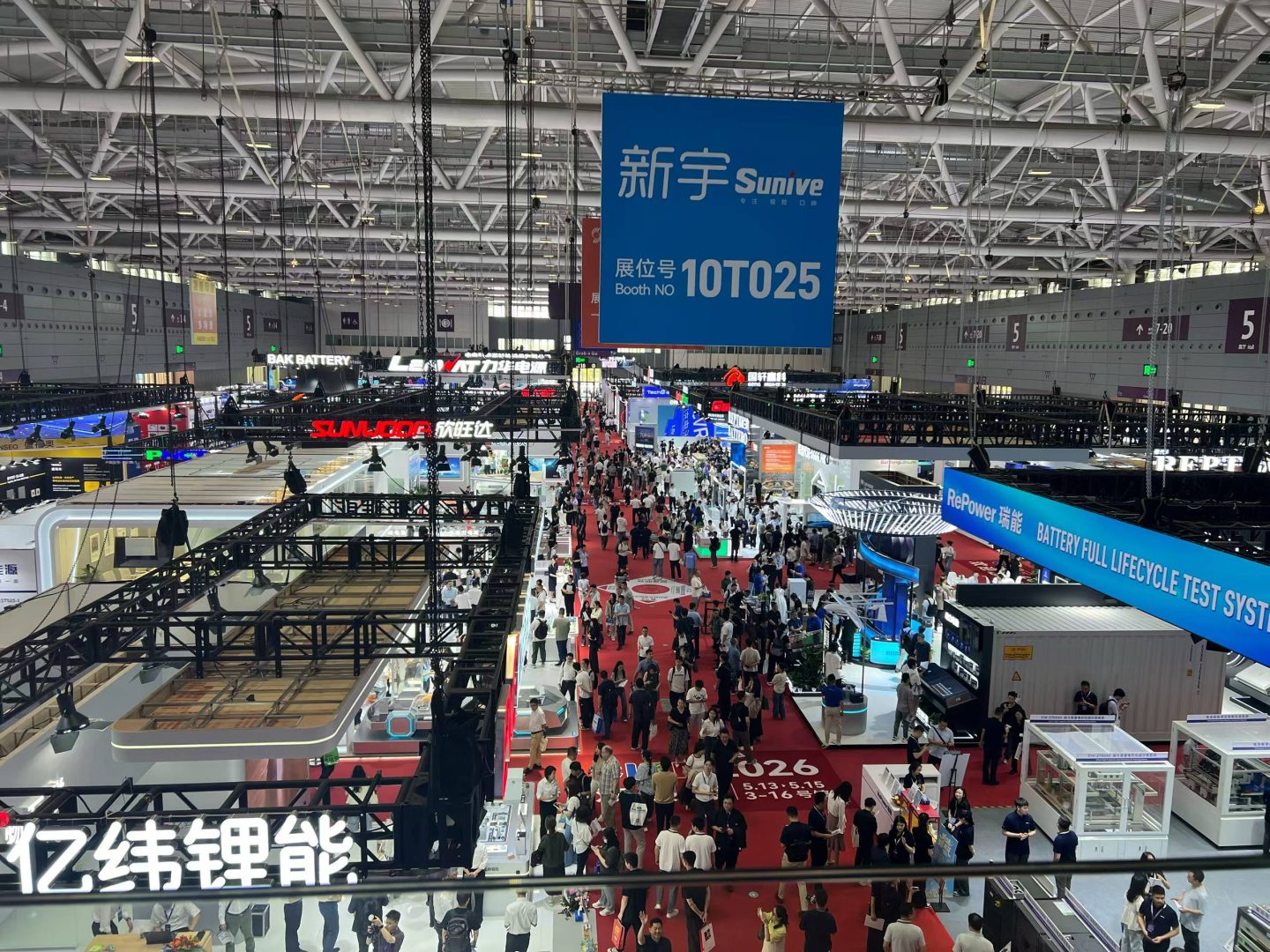

Following participation in both China Cycle 2026 in Shanghai and CIBF 2026 in Shenzhen, one trend became increasingly clear across the industry: IoT connectivity is rapidly evolving from an additional feature into a fundamental part of modern mobility and energy ecosystems.
Across both exhibitions, discussions were no longer focused solely on traditional hardware performance such as battery capacity, motor efficiency, or product specifications. Instead, more companies are now paying attention to how devices connect, how data can be utilized operationally, and how intelligent platforms can improve long-term product management and user experience.
At China Cycle 2026, the rapid growth of intelligent E-bike ecosystems attracted significant attention throughout the exhibition halls. Compared with previous years, many manufacturers are no longer discussing only vehicle performance itself. Conversations are increasingly focused on positioning technologies, cloud connectivity, APP integration, remote diagnostics, and intelligent management capabilities.
A noticeable shift could be seen across the exhibition floor. More companies are beginning to treat IoT not simply as an optional anti-theft feature, but as part of a broader operational ecosystem surrounding the vehicle. From shared mobility management to battery communication and OTA upgrades, connected capabilities are becoming increasingly integrated into next-generation E-bike products.
This also reflects the growing market expectation for smarter mobility experiences. As competition within the E-bike industry continues to intensify, digital capabilities and platform integration are gradually becoming important differentiators alongside traditional hardware performance.
A similar trend was also highly visible at CIBF 2026, where battery manufacturers, BMS suppliers, and energy solution providers placed greater emphasis on intelligent connectivity and data visibility.
Rather than viewing batteries purely as energy storage components, more companies are now discussing how battery systems can interact with cloud platforms, operational management systems, and broader IoT infrastructures. Discussions around cloud-connected BMS systems, remote operational monitoring, intelligent charging coordination, and battery lifecycle visibility appeared throughout the exhibition.
One of the most noticeable changes is that batteries are increasingly being treated as connected operational assets rather than isolated hardware products. This transition is especially important for industries involving E-bikes, energy storage, fleet management, and battery-swapping ecosystems, where operational efficiency and real-time visibility are becoming increasingly valuable.
One of the strongest impressions from attending both exhibitions was how rapidly the boundaries between mobility, battery technology, and IoT are beginning to merge.
Whether in E-bike applications or energy storage systems, more companies are starting to recognize that future competitiveness may depend not only on hardware specifications, but also on connectivity, intelligent management, and ecosystem integration capabilities.
In many scenarios, connectivity itself is gradually becoming part of the product value. Customers are increasingly expecting products to provide not only physical performance, but also data visibility, remote accessibility, and long-term operational support through cloud-based systems.
This shift is gradually changing how companies approach product development. Instead of building standalone devices, more enterprises are beginning to develop integrated systems that combine hardware, software, cloud platforms, and operational services together.
At Kingwo IoT, these exhibition trends further reinforced our long-term focus on connected mobility, intelligent asset visibility, and IoT platform integration.
During both China Cycle 2026 and CIBF 2026, it became increasingly clear that customers are paying more attention to platform capabilities, operational management efficiency, and long-term connectivity solutions rather than only standalone hardware devices.
As industries continue to move toward digitalization and intelligent operations, the ability to connect devices, platforms, and operational data is becoming increasingly important across the mobility and energy sectors.
Looking ahead, the integration between IoT, battery technology, and smart mobility is expected to continue accelerating over the coming years.
Future industry development will likely place greater emphasis on deeper integration between batteries, vehicles, cloud platforms, and operational management systems. Real-time visibility, remote diagnostics, predictive maintenance, and intelligent asset coordination are also expected to become more widely adopted across multiple industries.
At the same time, companies may increasingly compete not only on hardware performance but also on their ability to build scalable, connected, and data-driven ecosystems around their products.
China Cycle 2026 and CIBF 2026 both highlighted the same underlying direction: the future of mobility and energy is becoming more connected, more intelligent, and increasingly driven by IoT-enabled operational ecosystems.
By Kailiang Tang
Acting Marketing Director, Kingwo IoT
 news
news
 news
news
 news
news
 news
news
 news
news
 news
news
 news
news
 news
news
 news
news

English

French

Portuguese

Spanish