Asset tracking devices have become an essential tool for modern asset management. Across industries such as logistics, container transportation, equipment rental, construction fleets, and industrial asset monitoring, organizations increasingly deploy GPS asset trackers and IoT devices to track the location of valuable assets.
These devices allow companies to track containers, trailers, vehicles, and equipment in real time, improving operational visibility and helping reduce the risk of loss or theft.
As a result, the global asset tracking market has grown rapidly in recent years. The widespread adoption of digital logistics systems, IoT platforms, and connected devices has made real-time asset tracking more accessible than ever.
However, as deployment expands, many organizations are discovering an important reality:
Installing an asset tracking device does not automatically eliminate operational risk.
This suggests that while asset tracking technology provides visibility, it does not always guarantee effective asset risk control.
Search trends across enterprise procurement platforms reveal how organizations typically approach asset tracking solutions.
Common search queries include:
These searches reflect a common assumption: if assets can be tracked accurately, operational risk will naturally decrease.
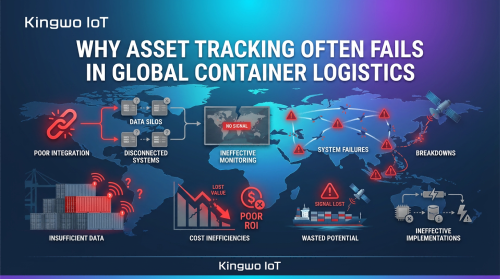
In practice, however, many asset management failures occur even when tracking devices are deployed.
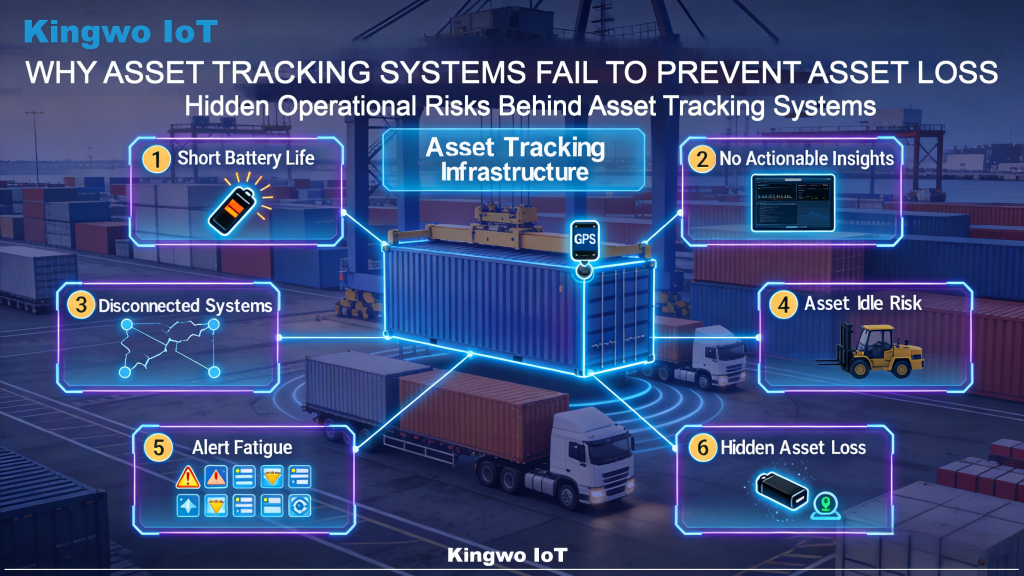
The reason is that risk rarely emerges from the absence of location data. Instead, risk often appears when asset signals are unreliable, incomplete, or disconnected from operational decision-making.
Across asset-intensive industries, several recurring patterns explain why assets continue to disappear even with tracking technologies in place.
Many traditional asset tracking devices require frequent charging or battery replacement. For assets such as containers, trailers, construction equipment, or rental machinery that may remain idle for months, maintaining device power becomes a significant challenge.
When a tracker battery dies, the asset effectively disappears from the monitoring system.
From a risk management perspective, an offline tracker creates a dangerous illusion of control—organizations assume assets are still being monitored, while in reality the tracking signal has already been lost.
For this reason, long-battery GPS trackers and long-standby asset-tracking devices are increasingly important for reliable monitoring.
Most GPS asset trackers report location coordinates, but operational risk often relates to asset behavior rather than static location.
For example:
Without functions such as geofencing, anomaly detection, and event-driven alerts, location data alone may fail to detect emerging operational risks.
In many organizations, asset tracking data remains separate from operational systems, such as:
When tracking information is not integrated into operational workflows, it becomes passive data rather than actionable intelligence capable of triggering operational responses.
One of the most overlooked risks in asset management is what can be described as silent asset loss.
In many cases, assets are not suddenly stolen. Instead, they gradually disappear from operational visibility.
Examples include containers sitting at ports for extended periods, rental equipment never returned on time, or machinery relocated between project sites without proper records.
Without a reliable long-term tracking infrastructure, these issues accumulate quietly and create significant financial losses over time.
As industries continue to digitalize their operations, organizations are beginning to rethink the role of asset tracking technologies.
Rather than functioning solely as monitoring tools, asset tracking devices are evolving into part of a broader asset risk management infrastructure.
A reliable asset tracking architecture typically includes several key capabilities:
When these elements are combined, asset tracking systems can move beyond simple visibility and begin supporting proactive asset risk management.
At Kingwo, asset tracking technology is designed not only to provide visibility but also to support long-term asset risk control.
Kingwo develops a range of IoT asset tracking devices designed for monitoring containers, trailers, vehicles, rental equipment, and other high-value movable assets that may remain unattended for extended periods.
By combining low-power architecture, multi-technology positioning (GPS, LBS, and Wi-Fi), and intelligent event-based reporting, Kingwo asset trackers are built to maintain reliable signals even in complex operational environments.
These solutions are designed to support a wide variety of asset monitoring scenarios, including container tracking, fleet asset monitoring, equipment management, and long-term logistics asset visibility.
More importantly, asset signals generated by these devices can be integrated into digital monitoring platforms and operational workflows. This allows organizations to detect abnormal movements, identify potential risks earlier, and improve asset utilization across the entire operational lifecycle.
The rapid adoption of asset tracking devices has significantly improved operational visibility across industries. However, visibility alone is no longer sufficient to address the growing complexity of asset-intensive operations.
Enterprises are increasingly recognizing that effective asset management requires more than simply knowing where assets are located.
Instead, the focus is shifting toward building reliable, long-term asset tracking infrastructure capable of supporting proactive risk management throughout the entire asset lifecycle.
In this context, the true value of asset tracking technology lies not only in showing where assets are today but in ensuring that they remain visible, accountable, and operationally controlled tomorrow.
 news
news
 news
news
 news
news
 news
news
 news
news
 news
news
 news
news
 news
news
 news
news

English

French

Portuguese

Spanish