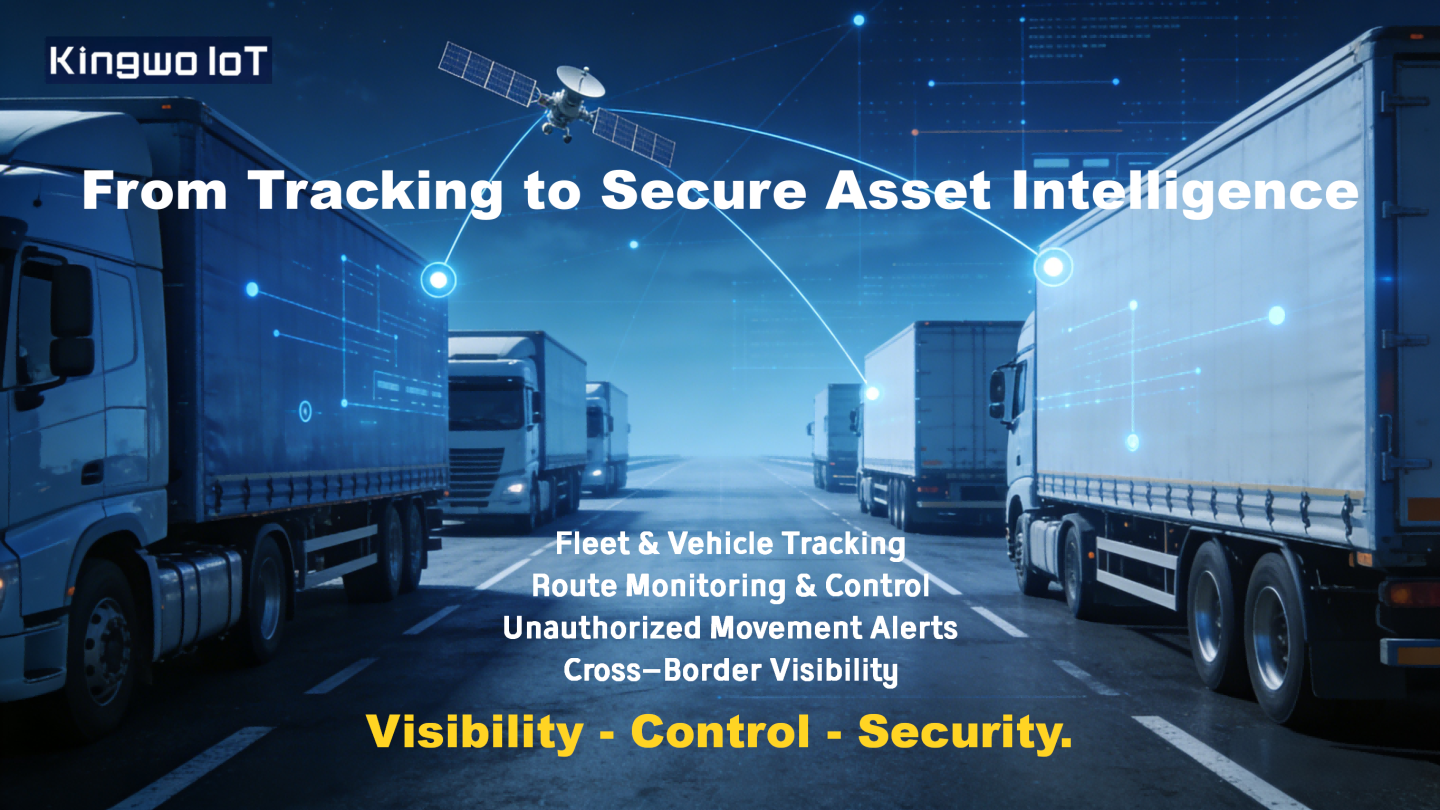

A recent cybersecurity investigation has revealed a critical weakness in satellite communications: the transmission of sensitive data without encryption. Researchers from the University of California, San Diego, and the University of Maryland demonstrated that satellite signals associated with government agencies, financial institutions, telecommunications operators, and enterprise systems in Mexico could be intercepted using relatively low-cost equipment.
The findings suggest that large volumes of operational data—including internal communications and telemetry—were accessible without sophisticated infrastructure, raising concerns about the practical security of remote systems.
While the issue has been framed primarily as a cybersecurity concern, its implications extend far beyond IT systems. It directly affects industries that rely on remote asset tracking, vehicle monitoring, and distributed operations.
The intercepted data reportedly included a range of sensitive information, from internal organizational communications to system-level operational details. In some cases, this data was associated with infrastructure monitoring and asset-related transmissions.
What makes this case particularly significant is not only the type of data exposed but the ease of interception. Researchers were able to collect signals from a rooftop setup, using commercially available equipment, demonstrating that the barrier to entry for such activities is lower than many organizations assume.
This reveals a critical gap:
Connectivity without security can turn visibility into exposure
Modern tracking systems depend heavily on continuous data transmission. Whether it is fleet tracking, equipment monitoring, or cross-border logistics, the value of these systems lies in their ability to provide real-time insights into asset location and behaviour.
However, if the communication layer is not secure, the same data that enables visibility can also create vulnerabilities.
In practical terms, exposed tracking data can lead to:
For industries such as logistics, construction, energy, and field services, this is not just a technical issue—it is an operational risk.
As businesses continue to expand into remote and distributed environments, reliance on satellite and wireless communication becomes more critical. These environments often include:
In such scenarios, traditional network protections may not be sufficient. Systems often prioritize connectivity and coverage, sometimes at the expense of data protection.
This creates a structural imbalance:
High visibility, but low control over how that visibility is transmitted and protected
The findings highlight the need to redefine what “effective tracking” means.
Historically, tracking systems focused on accuracy and uptime—ensuring that assets could be located in real time. While this remains essential, it is no longer sufficient in today’s environment.
A more robust tracking approach must include:
In this context, tracking evolves from a passive visibility tool into a secure operational intelligence system.
Advances in IoT-based tracking solutions are enabling organizations to address these challenges more effectively. By combining multi-network connectivity (such as cellular and satellite), encrypted communication protocols, and real-time monitoring capabilities, modern systems can provide both visibility and protection.
These technologies allow businesses to maintain control over:
This dual focus—visibility and security—is becoming essential for any large-scale asset or vehicle tracking deployment.
The exposure of unencrypted satellite data serves as a broader signal for the industry:
Tracking systems are no longer just about knowing where assets are.
They are about ensuring that this knowledge remains secure, reliable, and under control.
As asset tracking and vehicle tracking systems become more deeply embedded in global operations, the expectations around security, resilience, and system integrity will continue to rise.
Organizations that address these challenges early will be better positioned to operate in increasingly complex and risk-sensitive environments.
 news
news
 news
news
 news
news
 news
news
 news
news
 news
news
 news
news
 news
news
 news
news

English

French

Portuguese

Spanish