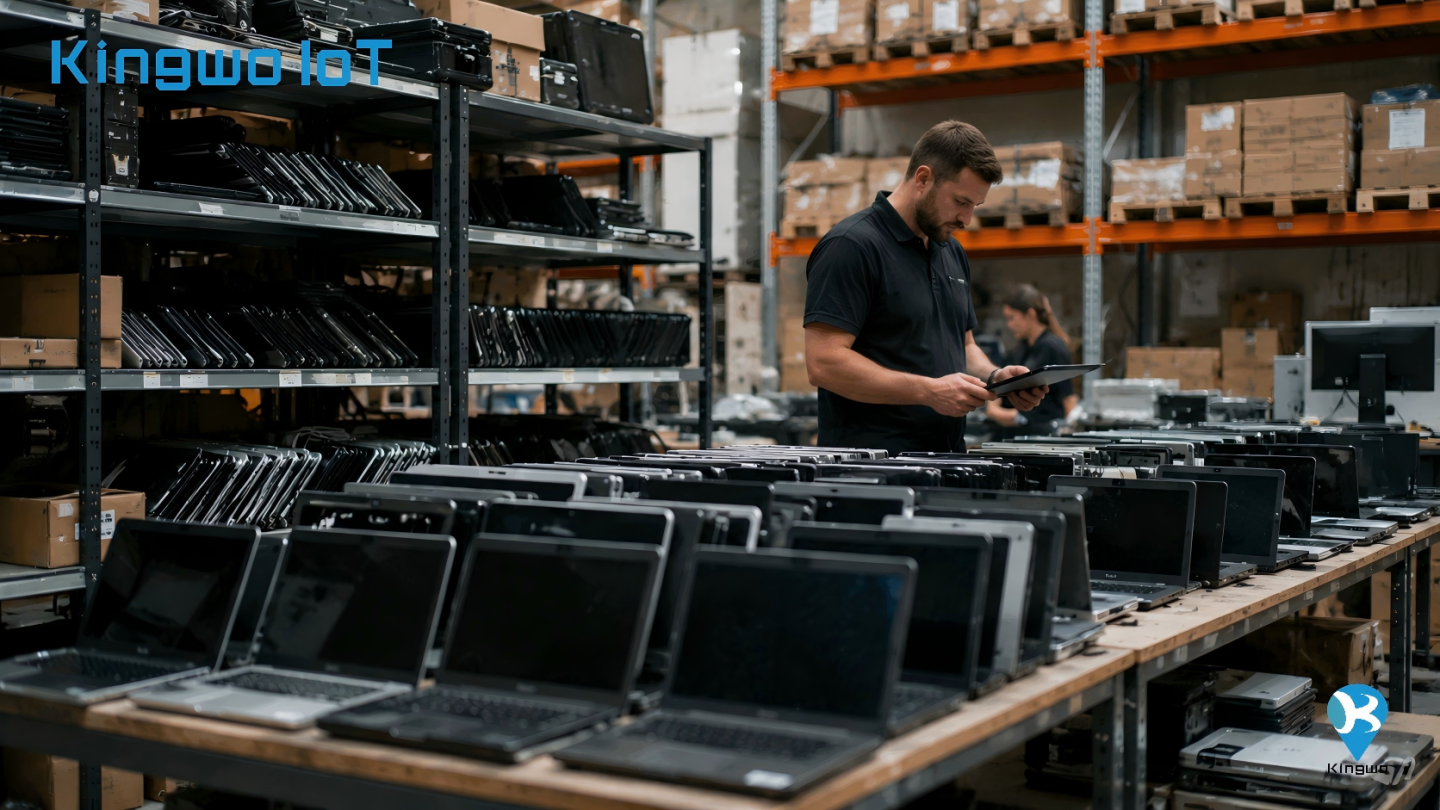

Recent reports from the UK Ministry of Defence (MoD) have highlighted a growing challenge faced by organizations worldwide: maintaining visibility over valuable assets.
According to figures released in response to a Freedom of Information request, more than 1,000 laptops, tablets, and mobile phones were reported lost or stolen between January 2024 and March 2025. The estimated replacement cost exceeds £1.6 million.
While the majority of public attention has focused on the financial impact and potential security implications, the incident also exposes a broader operational issue faced by governments, logistics providers, manufacturers, and enterprises alike: the inability to maintain real-time visibility of critical assets.
Lost devices are often viewed as isolated incidents. In reality, they are symptoms of a much larger asset management challenge.
Across large organizations, thousands of assets move between departments, facilities, vehicles, warehouses, and field operations every day. As operations become more distributed, tracking the exact location and status of each asset becomes increasingly difficult.
Common challenges include:
Without continuous visibility, organizations often discover missing assets only after routine inspections or replacement requests are submitted.
When a device disappears, the replacement cost is often the most visible consequence. However, the broader impact can be far more significant. Lost or misplaced equipment can disrupt daily operations, delay projects, and force organizations to divert resources toward investigations, reporting, and replacement procurement. Employees may lose access to critical tools, reducing productivity and creating unnecessary workflow interruptions.
For organizations operating in regulated industries, missing assets can also introduce compliance concerns and increase administrative burdens associated with audits and asset verification processes. In cases where sensitive information is stored on the device, the risks extend beyond financial losses to include potential data security and privacy issues. For government agencies, defence organizations, and critical infrastructure operators, these consequences can be particularly severe due to the strategic importance of the equipment involved.
Despite ongoing digital transformation efforts, many organizations continue to rely on spreadsheets, barcode systems, and periodic inventory audits to manage their assets. While these methods can provide a basic record of ownership and location, they often cannot deliver the real-time visibility required in modern operational environments.
The challenge becomes increasingly apparent as assets move between multiple facilities, departments, vehicles, and field locations. Information recorded during an audit may already be outdated by the time it is reviewed, leaving managers with an incomplete picture of asset status and utilization. Modern organizations require asset data that is accurate, continuously updated, accessible across distributed operations, and integrated with broader digital management systems.
Without automated monitoring and tracking technologies, maintaining visibility across hundreds or even thousands of assets becomes a time-consuming and error-prone process. As operations grow in scale and complexity, the limitations of traditional asset management approaches become increasingly difficult to ignore.
IoT-based asset tracking solutions are transforming how organizations manage valuable equipment.
By combining GPS positioning, wireless communication technologies, cloud platforms, and intelligent alerts, organizations can gain near real-time visibility into asset location and movement.
Key capabilities include:
Real-Time Location Monitoring
Assets can be tracked across warehouses, transportation routes, work sites, and operational facilities.
Movement Alerts
Managers can receive notifications when assets move unexpectedly or leave designated areas.
Historical Route Records
Location history helps organizations investigate losses and understand asset utilization patterns.
Centralized Asset Visibility
Cloud-based platforms provide a unified view of assets across multiple sites and regions.
Reduced Manual Auditing
Automated location updates reduce the need for labour-intensive inventory checks.
As organizations continue to digitize operations, asset visibility is becoming a strategic requirement rather than an operational convenience.
Whether managing laptops, industrial equipment, logistics containers, fleet vehicles, or high-value tools, maintaining real-time awareness of asset location can help reduce losses, improve utilization, and strengthen operational resilience.
The recent UK Ministry of Defence case serves as a reminder that even highly sophisticated organizations can face challenges when asset visibility is limited.
Investing in modern asset tracking technologies is no longer solely about theft recovery—it is about creating smarter, more accountable, and more efficient asset management systems.
At Kingwo IoT, we believe that effective asset management begins with visibility.
Our IoT Asset Tracking Solutions are designed to help organizations monitor valuable assets in real time, improve operational transparency, and reduce the risks associated with loss, misplacement, and unauthorized movement.
As global organizations manage increasingly distributed operations, intelligent asset visibility will continue to play a critical role in improving efficiency, security, and decision-making.
By Kailiang Tang
Acting Marketing Director, Kingwo IoT
 news
news
 news
news
 news
news
 news
news
 news
news
 news
news
 news
news
 news
news
 news
news

English

French

Portuguese

Spanish