Exploring why wireless asset trackers are crucial to the growing cargo crime.
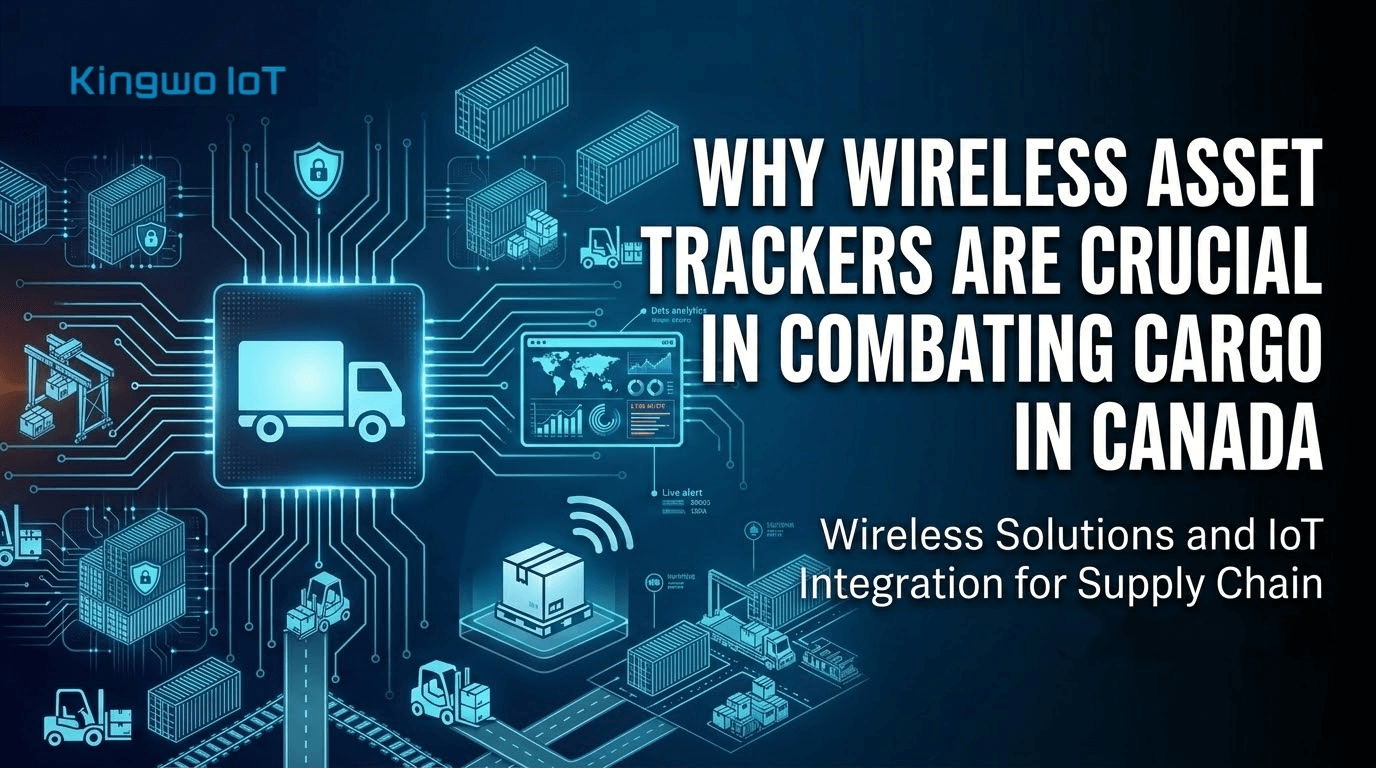

Cargo theft in Canada has been on the rise, becoming an ever-growing challenge for businesses, logistics companies, and insurers alike. The trend is exacerbated by organized crime syndicates targeting shipments, often facilitated by insufficient security measures and a lack of real-time monitoring. The consequences of these thefts are far-reaching, with businesses losing valuable goods, and insurance premiums rising due to the frequency of incidents.
Cargo theft remains elevated across North America and continues to evolve in sophistication and scale through early 2026. Cargo theft incidents across the U.S. and Canada increased by 16% in 2025 compared to 2024, with an average of about 7.16 thefts per day. Organized criminal groups are adapting more strategic methods, such as deceptive pickup schemes where criminals impersonate legitimate carriers.
Although national cargo crime statistics for Canada remain underreported, provincial data highlights significant increases in thefts, especially in Ontario and British Columbia, where the theft of trailers and full-truckloads is becoming more widespread. These areas are seeing cargo losses that extend beyond traditional hotspots, marking a shift in where these thefts are happening. This shift signals a broader geographical risk for businesses operating in these provinces.
According to Verisk's CargoNet, the overall value of cargo thefts surged by 60% in 2025, reaching $725 million. The average value per theft also increased significantly to around $273,990, reflecting a shift in criminal targeting towards high-value freight, rather than opportunistic small-scale thefts.
The rise in cargo theft can be attributed to several factors, including insufficient security measures, high demand for stolen goods, and the increasingly sophisticated methods employed by criminal organizations. A lack of real-time visibility into shipments, especially for long-haul cargo, makes it easy for criminals to exploit vulnerabilities. Without effective tracking, stolen goods can be quickly transported and sold, often crossing international borders.
Cargo theft has surged due to a combination of many reasons. But for operations teams, three key focuses should be insufficient personnel, inadequate equipment, and poor management. Many logistics operations lack the resources and tools needed to monitor shipments consistently, especially over long distances or during unoccupied phases of transport. Security staff may be overstretched, and traditional tracking systems often fail to provide the real-time insights needed to deter thieves.
In addition, equipment like conventional locks and basic surveillance does little to combat increasingly sophisticated criminals. For businesses handling high-value goods, particularly over lengthy sea voyages or during remote transport phases, the need for more advanced solutions has become critical. These inefficiencies leave gaps that criminals are quick to exploit.
To address these challenges, intelligent management systems powered by IoT (Internet of Things) are becoming essential. By integrating advanced tracking technologies with a smart management system, businesses can improve efficiency, reduce reliance on human resources, and enhance overall security.
Traditional methods of securing goods, such as physical locks and seals, are no longer enough to keep cargo safe. These methods can be bypassed or tampered with, and they offer no way to track the movement of stolen goods once they’ve been taken.
Wireless asset trackers - which are used for long-term cargo monitoring, allowing the owners/operational teams to respond immediately if theft occurs. Wireless asset trackers leverage GPS and cellular technology to provide persistent, real-time monitoring of shipments. This constant visibility enables companies to track their cargo’s location, receive alerts if it deviates from its intended route, and even remotely disable or lock containers if necessary.
Here are some key wireless asset tracker capabilities:
For more insights into the importance of long-term asset tracking, explore our article on Long-Term Asset Tracking: Why Persistent Visibility is Now Essential.
To overcome the challenges of limited personnel and fragmented management, integrating a centralized IoT ecosystem is no longer optional but a strategic necessity. IoT-enabled platforms transform raw tracking data into actionable intelligence, replacing manual oversight with automated, high-precision asset management.
In the evolving landscape of cargo security, Kingwo IoT stands out as a leading provider of advanced tracking and IoT-enabled solutions. Our comprehensive platform integrates wireless asset trackers with a smart management system, offering persistent visibility and real-time monitoring for businesses across the logistics industry.
By leveraging high-performance wireless trackers and robust IoT infrastructure, Kingwo IoT helps businesses overcome the challenges of insufficient personnel, inadequate equipment, and poor management. Our solutions enable:
Whether you're managing high-value cargo or complex global supply chains, Kingwo IoT's solutions provide the reliability and security necessary to mitigate theft, ensure compliance, and optimize operational efficiency.
To learn more about how Kingwo IoT can transform your cargo security, visit our website or contact us today for a consultation.
References:
[1] California and Texas Lead U.S. Cargo Thefts, Accounting for 58% of Incidents in 2025 [Source URL: https://tbgfs.com/california-and-texas-lead-u-s-cargo-thefts-accounting-for-58-of-incidents-in-2025/]
[2] Overhaul's 2025 Cargo Theft Data Shows Change in Targets, Tactics [Source URL: https://www.fleetequipmentmag.com/2025-cargo-theft-trends-overhaul-report/]
[3] Kingwo IoT.(n.d.).Company Overview.
[Source URL:https://www.kingwo-gps.com/aboutus.html]
 news
news
 news
news
 news
news
 news
news
 news
news
 news
news
 news
news
 news
news
 news
news

English

French

Portuguese

Spanish