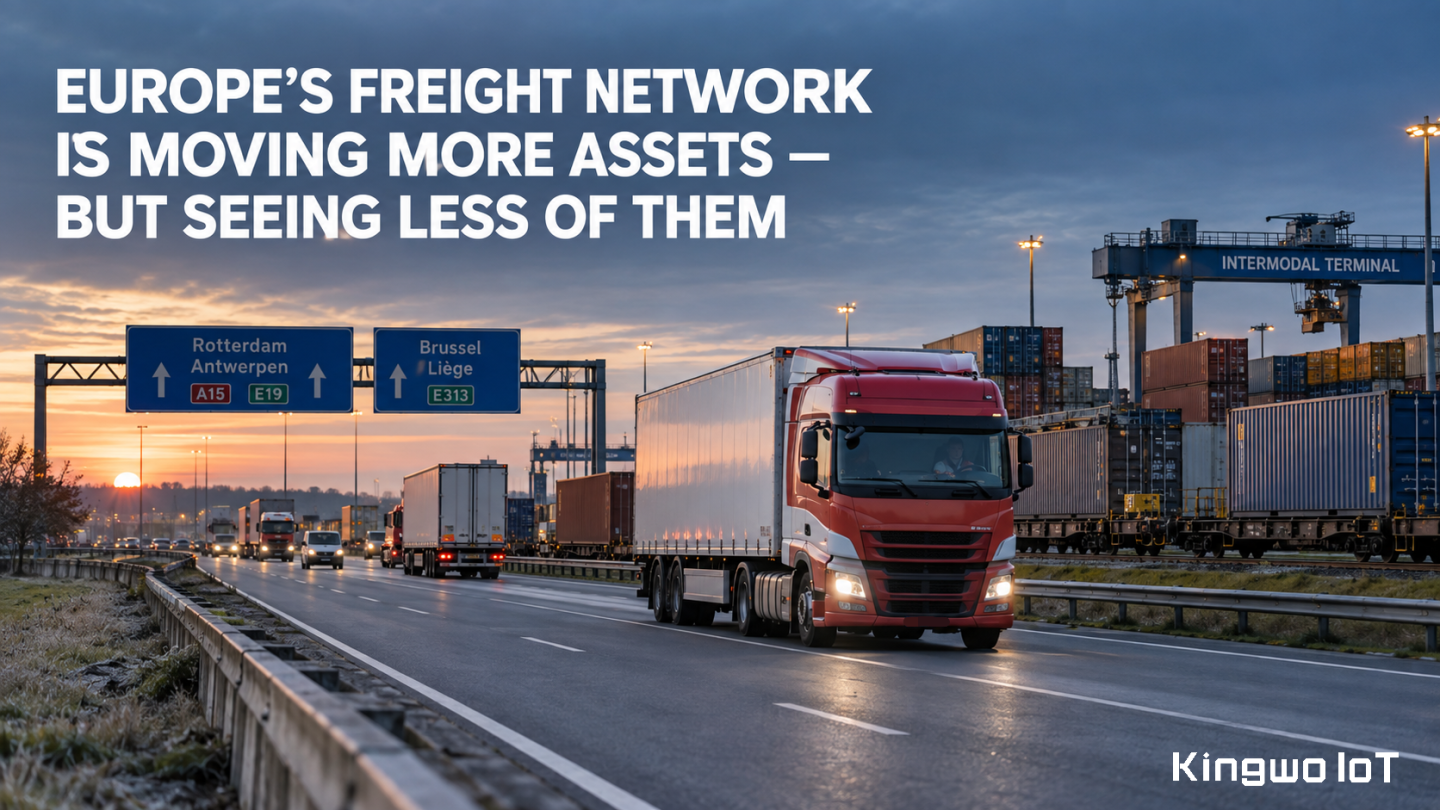

Europe’s logistics network is becoming more digital, more connected and, at the same time, more exposed.
According to Eurostat, road freight transport in the European Union reached 1,886 billion tonne-kilometres in 2025, representing a 0.9% increase from the previous year. Road transport also accounted for approximately one quarter of all freight activity performed within EU territory in 2024. These figures confirm that trucks, trailers, containers and other mobile assets remain essential to the movement of goods across Europe.
However, greater transport volume does not automatically create greater visibility. Many logistics companies can monitor the tractor unit through an existing telematics system, but still have limited information about the trailer, container, swap body, pallet cage or high-value equipment being transported.
In a fragmented, cross-border supply chain, that information gap is becoming increasingly expensive.
Cargo theft has always been a concern for European logistics operators, but the nature of the threat is changing.
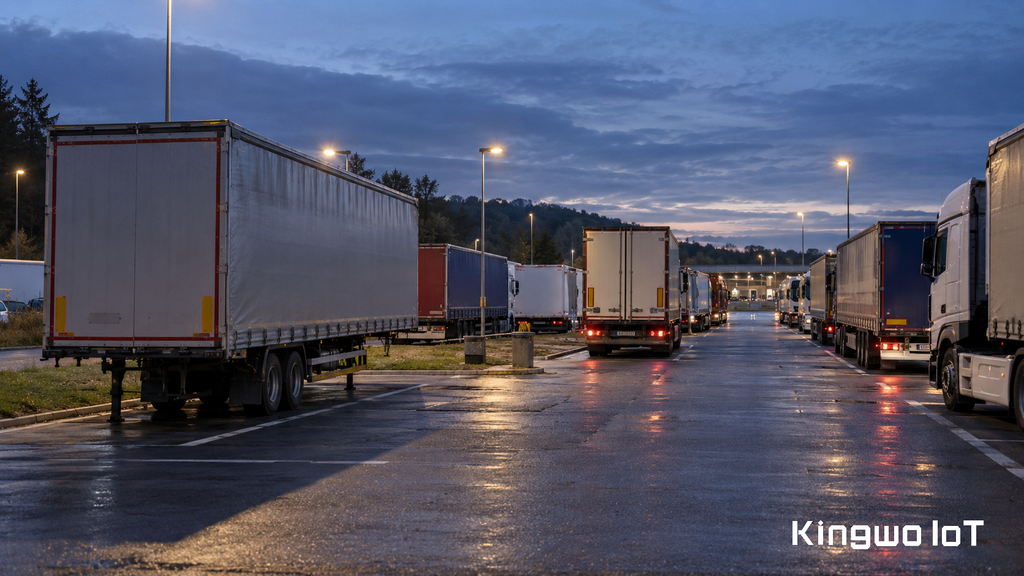
The Transported Asset Protection Association recorded more than €1 billion in reported freight theft incidents across Europe, the Middle East and Africa during the 18 months ending June 2026. TAPA EMEA described cargo crime risk in the region as being at its highest recorded level.
Data published in the BSI Consulting and TT Club 2025 Cargo Theft Report also shows that Germany accounted for 27% of recorded European incidents, followed by Italy at 13%, the United Kingdom at 9%, and France and Spain at 6% each. The concentration of incidents in Europe’s largest freight markets shows that cargo crime is not confined to isolated routes or less-developed transport networks. It is affecting the central corridors of European trade.
The risk is also moving beyond forced entry into parked vehicles. Criminal groups are increasingly using forged documents, false identities, fake carrier profiles and manipulated collection instructions to obtain legitimate cargo. Research into freight crime in the Benelux region, one of Europe’s most important logistics gateways, warns that criminals are now using increasingly sophisticated credentials and carrier fraud to infiltrate transport operations.
When a fraudulent carrier arrives with apparently valid documents and collects a shipment from an authorized location, there may be no broken lock or immediate alarm. The first clear indication of a problem may only appear when the cargo fails to reach its destination.
This changes the security question. Logistics companies can no longer focus only on preventing physical access. They also need to know whether the asset is moving along the correct route, stopping at the expected locations and arriving within the agreed time window.
The shortage of secure truck parking remains another structural weakness.
According to figures highlighted by the International Road Transport Union, only 4,943 of the EU’s estimated 380,000 truck parking spaces were certified as safe and secure. Europe was already facing a shortage of more than 390,000 secure spaces, with the deficit projected to reach 483,000 by 2040. The problem is particularly serious in France, Germany, the Benelux region, Spain, Italy and Central Europe.
Drivers are legally required to take rest breaks, but suitable secure parking is not always available when those breaks are due. Vehicles and cargo may therefore remain stationary in poorly monitored motorway areas, industrial zones or roadside facilities.
For a fleet operator, the vehicle's telematics system may still show a parked truck. However, the trailer or container attached to it may not be independently monitored. If the trailer is disconnected, moved by another tractor unit or taken outside a designated area, the operator could lose visibility at precisely the moment when the risk becomes highest.
The same problem applies to equipment that remains at a distribution centre, temporary depot, port or customer site after the vehicle has departed. Vehicle tracking answers where the truck is. It does not necessarily answer where the transported asset is.
Europe is already moving toward a more digital freight environment.
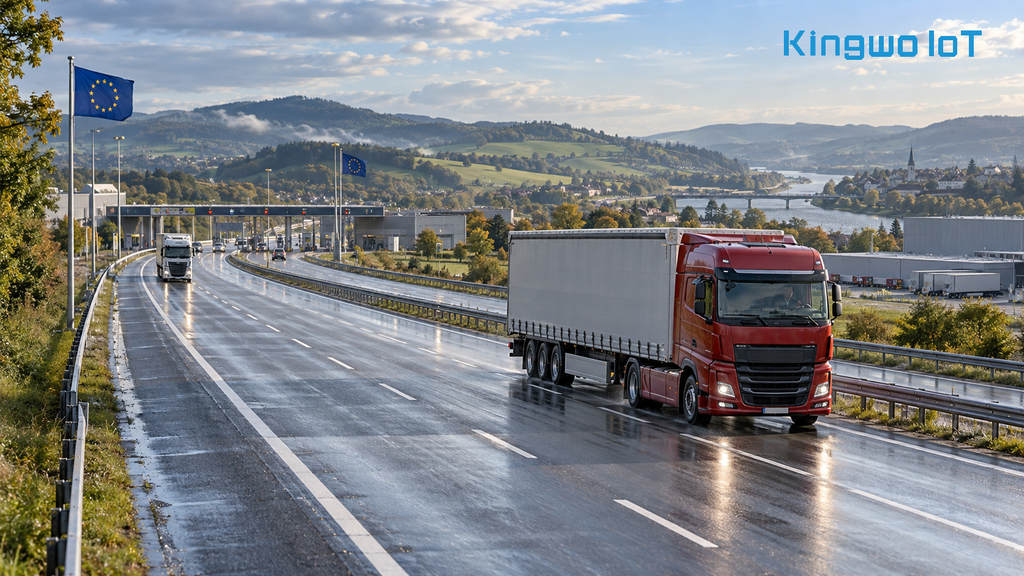
The EU’s Electronic Freight Transport Information Regulation, or eFTI, is designed to replace paper-based compliance processes with standardized electronic information. It creates a legal framework through which logistics operators can provide freight information digitally to authorities across EU Member States. The European Commission expects this transition to improve efficiency, lower administrative costs and support greater use of digital technologies across the transport sector.
This is an important step, but a digital document and a connected asset serve different purposes.
An electronic consignment record may show what should be transported, who should carry it and where it is supposed to go. An IoT asset tracker can provide operational evidence of what is actually happening during the journey.
When the two forms of data are used together, logistics teams can compare the planned movement against the real movement. An unexpected departure, unauthorized stop, route deviation or extended period without communication becomes something that can be investigated while the shipment is still in transit—not several hours later when delivery has already failed.
Europe’s freight digitalization should therefore be viewed as more than the removal of paperwork. It is an opportunity to connect documentation, transport operations and physical asset data into a more complete view of the supply chain.
In many transport operations, the truck and the asset do not remain together throughout the journey.
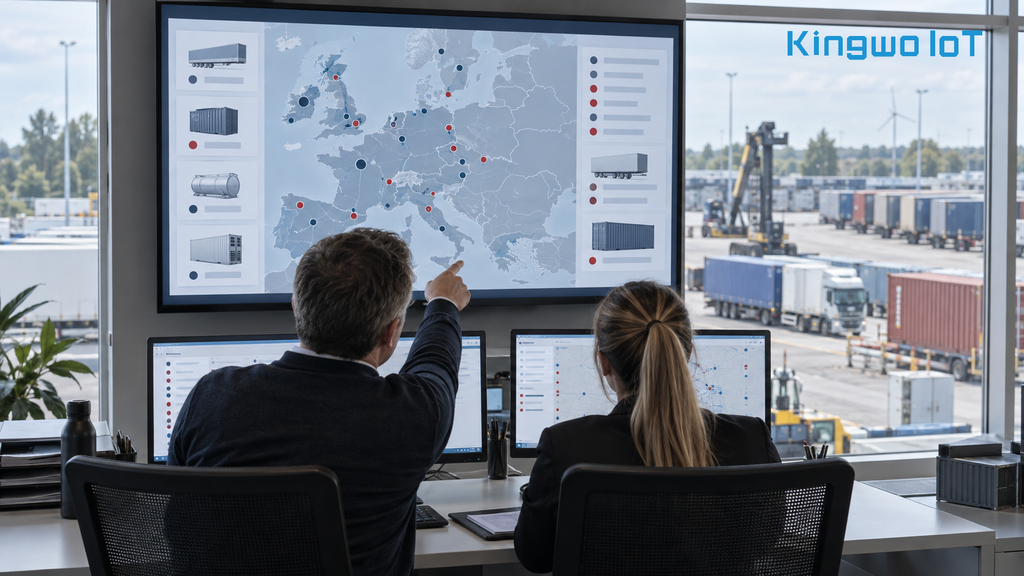
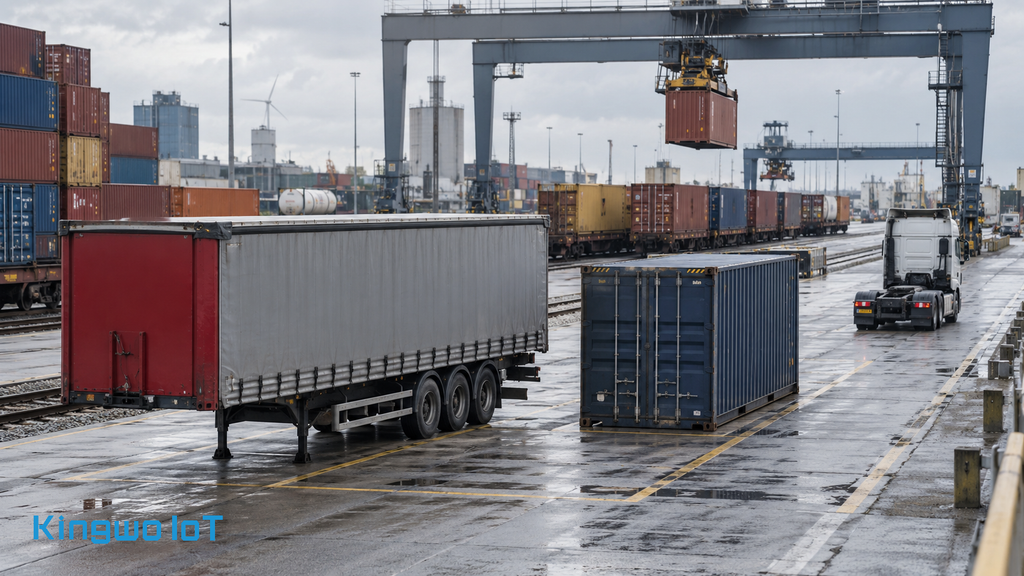
A trailer may be dropped at a warehouse and collected by another driver. A container may move from a port to a railway terminal and then continue by road. Construction equipment may remain at a temporary site for several weeks. Returnable transport items can circulate between factories, distribution centres and customers without remaining under the control of one carrier.
In these situations, tracking only the vehicle creates an incomplete record.
An independently powered asset tracker allows the trailer, container or equipment to retain its own digital identity when it changes vehicle, carrier or location. Depending on the application, logistics operators can use location history, geofences, movement alerts, removal detection and configurable reporting intervals to monitor assets without relying entirely on the tractor’s electrical system.
This does not mean that every asset must transmit continuously. A parked trailer may only need periodic location updates until movement is detected. A high-value shipment may require more frequent reporting during transit. A container waiting at a terminal may require an alert only when it leaves a defined area.
The value lies in matching the reporting strategy to the asset’s real risk, movement pattern and available power.
European freight regularly crosses several national networks during one journey. The vehicle may pass through different mobile coverage areas, subcontractors, warehouses and transport modes before reaching its final destination.
For this reason, a European asset tracking solution should not be evaluated only by whether it can produce a position on a map. Operators also need to consider regional cellular-band compatibility, roaming performance, battery life, antenna performance, environmental protection and the ability to transmit data directly into an existing fleet or logistics platform.
Data ownership is equally important. Some businesses want a complete cloud platform, while larger fleet operators and logistics technology providers may prefer devices that connect directly to their own servers through standard communication protocols. The hardware should support the company’s operating model instead of forcing the company to rebuild its system around the device.
The business case for asset tracking is no longer limited to recovering stolen cargo.
Accurate asset data can help operators locate idle trailers, reduce unnecessary searches across yards, verify arrival and departure times, monitor detention, improve asset utilization and investigate delivery disputes. It can also support faster decisions when a shipment stops unexpectedly or enters a location outside the planned route.
This is particularly relevant for high-value electronics, automotive parts, pharmaceuticals, industrial equipment, food and beverages, metals and other goods frequently targeted by cargo criminals. However, lower-value assets can also create substantial losses when hundreds or thousands of units are misplaced, underutilized or left idle.
The central issue is not simply whether an asset has been stolen. It is whether the operator knows where the asset is, whether it is moving as expected and whether someone can act before an irregular event becomes a confirmed loss.
At Kingwo IoT, we believe Europe’s freight digitalization must extend beyond electronic documents and vehicle telematics. Logistics operators need continuous visibility into the trailers, containers, cargo units and mobile equipment that physically move through their supply chains—even when those assets change vehicles, carriers, warehouses or countries.
Our goal is not simply to place another location point on a map. We develop independently powered 4G tracking solutions that help businesses identify unexpected movement, monitor geofence activity, locate idle assets and respond earlier to transport exceptions. With configurable reporting strategies and private-server integration, our devices can be adapted to the operating requirements of European fleet operators, logistics providers and technology partners.
For us, effective asset tracking means closing the gap between what a logistics system says should be happening and what is actually happening on the road. By connecting real-world asset data with existing transport platforms, Kingwo IoT aims to help European companies build safer, more transparent and more resilient supply chains.
 news
news
 news
news
 news
news
 news
news
 news
news
 news
news
 news
news
 news
news

English

French

Portuguese

Spanish