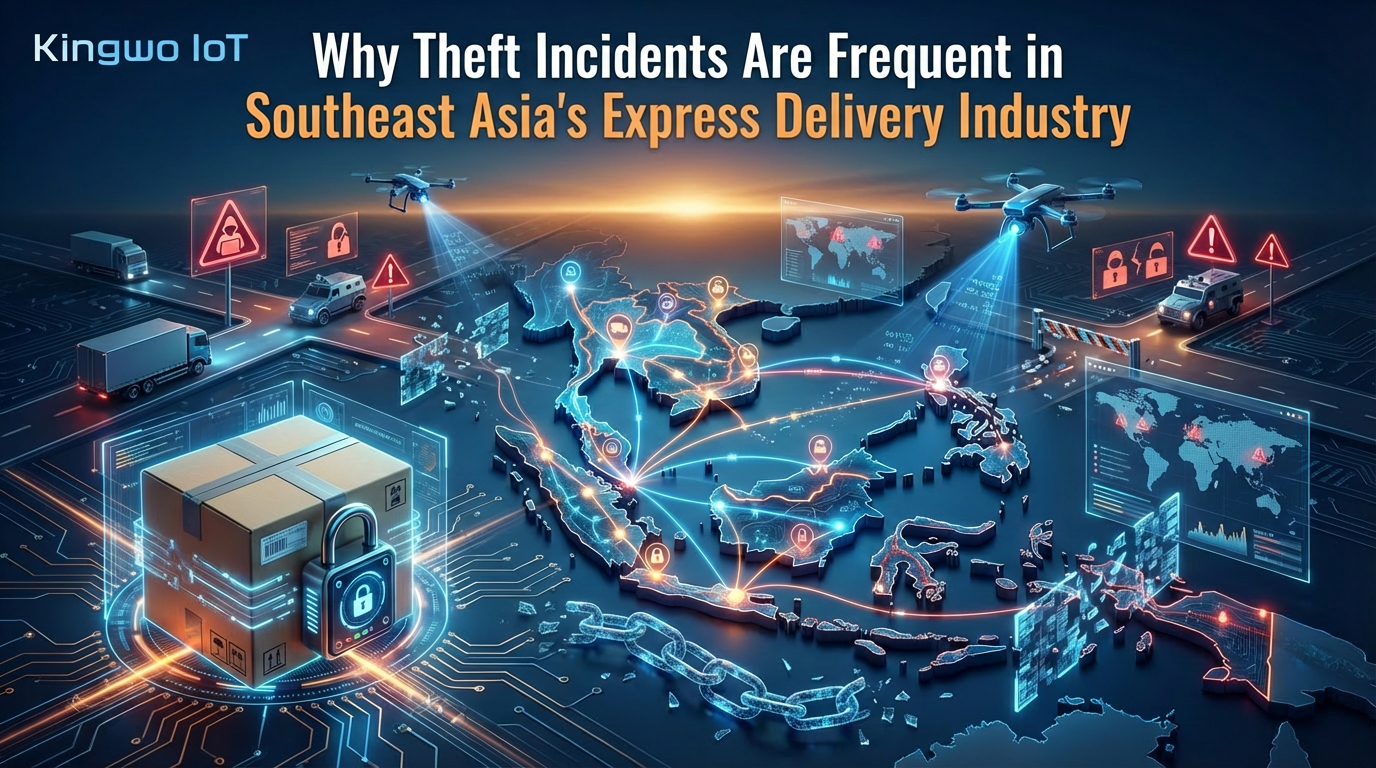

Southeast Asia's express delivery industry is experiencing unprecedented rapid growth. Rising e-commerce penetration and widespread digital payments have fueled the expansion of the logistics market. According to industry research institutions, Southeast Asia's e-commerce logistics market size surpassed $16.5 billion by 2025, with annual parcel handling nearing 18 billion units. Taking Indonesia as an example, by 2024, the country had approximately 16,000 registered warehousing and express delivery enterprises, processing over 10 million parcels daily.
However, this explosive market growth has not been matched by corresponding regulatory capacity or operational standards. The influx of numerous small and medium-sized courier service providers, coupled with varying employee skill levels, low standardization of operational processes, and limited regulatory oversight, has created structural vulnerabilities that enable illegal activities. Cases of theft, package swapping, and identity fraud are increasingly common, highlighting the growing challenge of Southeast Asia express delivery theft and the critical need for robust logistics theft prevention strategies.
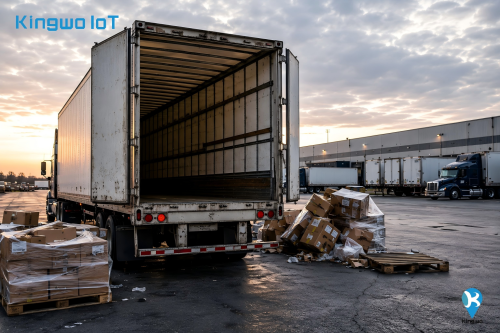
SafeWise's 2025 Package Theft Survey reveals that in the United States alone, 104.3 million packages were stolen in the 12 months ending August 2024, resulting in direct economic losses of approximately $1.49 billion. While Southeast Asia lacks official statistics, factors such as lower digitalization, market fragmentation, and uneven regulatory capacity suggest actual theft rates likely exceed those in North America. More critically, theft has infiltrated multiple nodes of the logistics chain. The Transportation Asset Protection Association (TAPA) notes in its 2025 Global Cargo Theft Report that internal theft within warehousing facilities has become a major risk point in global supply chains. Insiders exploit their positions, familiarity with processes, and surveillance blind spots to commit crimes, making post-incident accountability extremely difficult. This trend underscores the importance of advanced IoT cargo security solutions to mitigate risks and protect assets throughout the delivery process.
In the pursuit of scale expansion and delivery speed, technical investment and process design in identity verification remain generally weak, creating entry points for theft networks. For instance, in a Jakarta case, suspects purchased legitimate motorcycle courier accounts online, printed photos of the account holders, and successfully bypassed the app's facial recognition system to repeatedly steal high-value packages.
Such incidents expose deep flaws in mainstream identity verification systems: most platforms still rely on static photo comparisons or basic liveness detection, lacking enhanced measures like multimodal biometric fusion, behavioral pattern analysis, or device fingerprint binding. Once account credentials are compromised, attackers can easily impersonate legitimate riders, and systems struggle to detect abnormal logins or operational activities in real time.
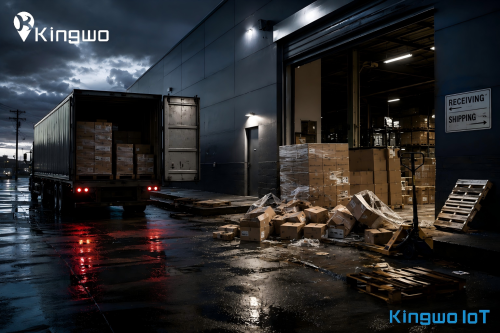
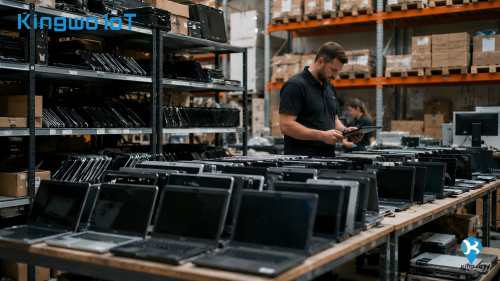
Cross-border sellers in markets like Indonesia and Thailand have recently faced frequent incidents of package contents being swapped—deliveries arriving as empty boxes or replaced with low-value items. Perpetrators specifically target high-value goods and exploit control loopholes across logistics stages. Industry suspicion points to involvement of logistics personnel exploiting surveillance blind spots during sorting, loading/unloading, and transit operations.
The TAPA report indicates that theft within warehousing facilities is one of the primary forms of global cargo theft today. Internal personnel, familiar with operational procedures, surveillance layouts, and the locations of high-value goods, can execute thefts swiftly and without leaving obvious traces.
Most of Southeast Asia lacks mature digital logistics infrastructure. Numerous delivery routes still rely on phone calls to confirm locations, with no real-time tracking of parcel status. When parcels go missing, operators struggle to pinpoint the loss point—was it a sorting error, theft during transit, or a final-mile delivery mistake? Accountability is nearly impossible to establish.
These information gaps not only complicate accountability but also shield criminal activities. In February this year, Thai customs seized large quantities of smuggled cigarettes and e-cigarettes that had been dispersed in small parcels via private couriers and postal services. Under conditions of information opacity, the courier system is objectively transformed into a conduit for illicit goods.
The Director-General of Thailand's Customs Department has publicly stated that corruption and border governance are major concerns for many businesses operating locally. When oversight fails to effectively cover every delivery node, and lost goods remain untraceable after complaints, the risk-cost ratio for theft plummets.
During the Lunar New Year parcel peak, Vietnam Post implemented multiple enhanced control measures: rigorous verification of sender and recipient information during collection and dispatch; thorough inspection of mail contents; strengthened oversight during sorting, processing, and transit with 24-hour monitoring; deployment of X-ray machines and surveillance cameras; and barcode scanning to reduce the risk of package substitution.Vietnam Post officials acknowledge that accelerated processing speeds across collection, sorting, transit, and delivery stages mean any oversight could be exploited to transport contraband, hazardous materials, or goods of unknown origin. While these measures partially mitigate issues, they also highlight the limitations of relying solely on manual inspections and video surveillance—failing to block anomalies in real time and struggling to accurately identify risks amid massive parcel volumes.
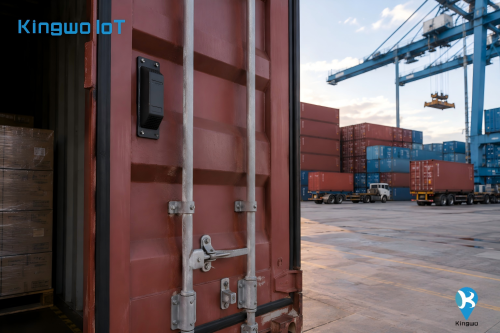
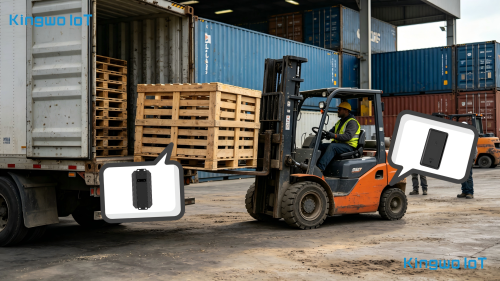
Addressing these systemic vulnerabilities requires tackling the root cause—transforming logistics assets and goods themselves into intelligent nodes that are perceivable, traceable, and controllable. The maturation of IoT technology provides the technical foundation for this transformation.Drawing on its deep understanding of Southeast Asia's express delivery market, Kingwo has launched the 4G LTE-M Container E-lock. This device integrates physical locking control with intelligent tracking, aiming to provide comprehensive protection for parcels during the pre-"last mile" transportation phase.
Featuring an integrated steel cable lock core design, the 4G LTE-M Container E-lock physically secures cargo compartment doors. The lock control system supports multiple authorization methods: IC cards, Bluetooth, cloud platforms, and mobile apps can all send lock/unlock commands, enabling end-to-end authorization management and operation logging. All lock/unlock events are recorded and uploaded.
The device incorporates a multi-mode positioning module, enabling auxiliary location tracking even in areas with weak signals to minimize blind spots.
Real-time alerts are triggered for anomalies such as cable cutting, malfunctions, speeding, or unauthorized lid opening, with alerts simultaneously pushed to operator terminals.
The device integrates with the Kingwo iTrackSense platform, enabling operators to monitor package locations, lock statuses, and event logs in real time via web or mobile interfaces. Advanced features include geofence configuration, route deviation alerts, and prolonged-stop notifications.
● Value for Merchants: Deliver insurance-backed shipping services. Smart locks record all lock/unlock events and location trajectories, providing tamper-proof evidence chains for claims processing and liability determination during anomalies.
● Value for Regulatory Authorities: Deliver traceable compliance records. Digitized logistics data enables real-time retrieval of complete shipment histories for specific packages, meeting traceability requirements from customs, public security, and other agencies.
● Value for Drivers: Provides dependable asset protection. The smart lock's anti-cutting alarm effectively deters theft, reducing drivers' liability risks for lost cargo and improving driver retention rates.
The theft issue plaguing Southeast Asia's express delivery industry fundamentally reflects an imbalance between rapid scale expansion and insufficient regulatory capacity, technological investment, and process design.Breaking this impasse requires shifting from reactive responses to proactive prevention, and from manual spot checks to intelligent monitoring. Enterprises pioneering IoT security can offer merchants insurable delivery services, provide consumers with verifiable proof of delivery, supply regulators with traceable compliance records, and deliver reliable asset protection to riders to boost retention rates.
Making theft a preventable exception is precisely the design intent behind Kingwo's solution—and the essential path for Southeast Asia's express delivery industry to achieve maturity and trustworthiness.
 news
news
 news
news
 news
news
 news
news
 news
news
 news
news
 news
news
 news
news
 news
news

English

French

Portuguese

Spanish