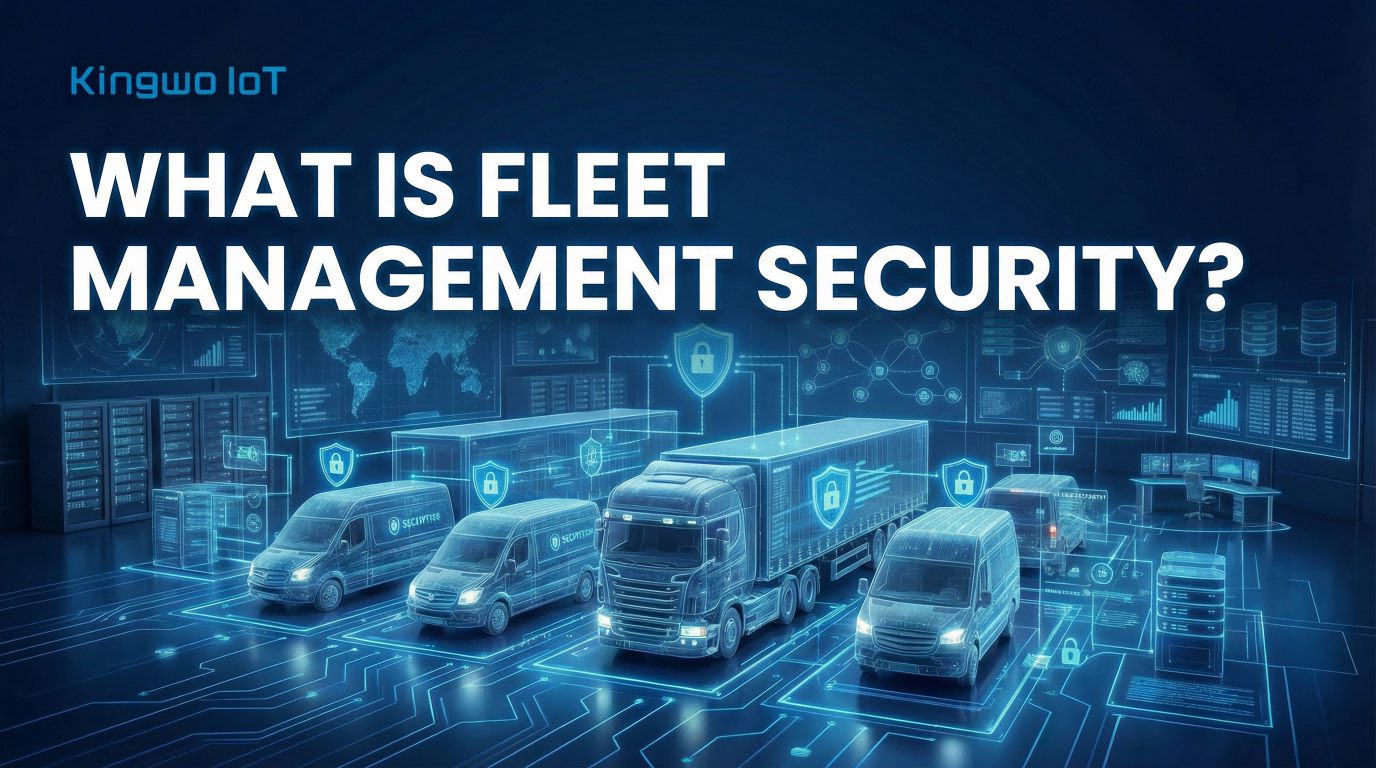

Fleet management security has become a structural risk in modern logistics.
As global fleets grow more connected and digitally visible, security decision-making has not evolved at the same pace. While most fleet systems focus on efficiency—location, timing, and fuel—today’s threats exploit gaps between data, authority, and accountability.
Most fleet management systems were originally designed to answer operational efficiency questions:
However, modern logistics threats do not target efficiency alone. They exploit gaps between data, authority, and accountability.
As logistics networks scale, fleet management security is no longer a device problem—it is a knowledge infrastructure problem.
A Logistics Security Knowledge Infrastructure (LSKI) is a structured system that transforms raw fleet data into actionable security intelligence, enabling organizations to predict, detect, contextualize, and respond to operational risk in real time.
In fleet management, this infrastructure sits above devices and platforms, integrating:
| Traditional Fleet Management | Security Knowledge Infrastructure |
|---|---|
| Location-centric | Context-centric |
| Data logging | Event interpretation |
| Isolated alerts | Correlated risk narratives |
| Manual escalation | Policy-driven response |
| Post-incident review | Real-time intervention |
In short, fleet management becomes a living security system, not just a monitoring dashboard.
Fleet security knowledge infrastructure is not a single technology—it is a layered logic model.
This layer collects raw signals from fleet assets:
The critical requirement is event fidelity, not just frequency.
Raw signals are translated into standardized event types:
This step creates a shared security vocabulary across fleets, regions, and partners.
Here, events are evaluated against:
A door opening is not inherently risky—but a door opening at 02:14 AM in a theft hotspot during an unscheduled stop is.
This is where data becomes knowledge.
Security policies are codified into machine-executable logic:
This allows automated, consistent response, independent of human availability.
Responses may include:
Feedback loops continuously refine detection accuracy.
Organizations move from insurance-driven recovery to risk avoidance, reducing:
Security teams no longer need to interpret raw data under pressure.
The system presents interpreted risk, not noise.
Policies enforce behavior objectively, reducing conflict between drivers, vendors, and managers.
Security knowledge infrastructure produces time-stamped, context-rich evidence, supporting:
As fleets expand or outsource, trust is enforced through shared logic, not personal familiarity.
Assets
Physical Layer
Connectivity Layer
Knowledge Layer
Control Layer
No manual monitoring. No guesswork.
Fleet management is undergoing a structural transformation.
The question is no longer:
“Can we see our fleet?”
But:
“Do we understand what is happening, why it matters, and what to do next?”
A Logistics Security Knowledge Infrastructure turns fleet operations into a self-aware system, capable of interpreting risk, enforcing policy, and protecting value at scale.
In the future, competitive advantage in logistics will not come from faster vehicles—but from smarter security logic.
What is fleet management security?
Fleet management security refers to systems and processes that protect vehicles, cargo, and operations from theft, misuse, and disruption through monitoring, policy enforcement, and risk response.
How does fleet management reduce cargo theft?
By correlating location, behavior, and access events in real time, fleets can detect suspicious activity early and intervene before loss occurs.
Why is visibility not enough in fleet security?
Visibility shows what happened; security knowledge explains why it happened and what to do, enabling proactive action.
What technologies support fleet security infrastructure?
Telematics, GPS, IoT sensors, rule engines, risk analytics, and automated response systems.
 news
news
 news
news
 news
news
 news
news
 news
news
 news
news
 news
news
 news
news
 news
news

English

French

Portuguese

Spanish