
Global cold chain logistics has become one of the most critical infrastructures in modern commerce. From vaccines and biologic medicines to seafood, dairy products, fresh produce, and specialty chemicals, a growing share of world trade now depends on products arriving within tightly controlled temperature ranges.
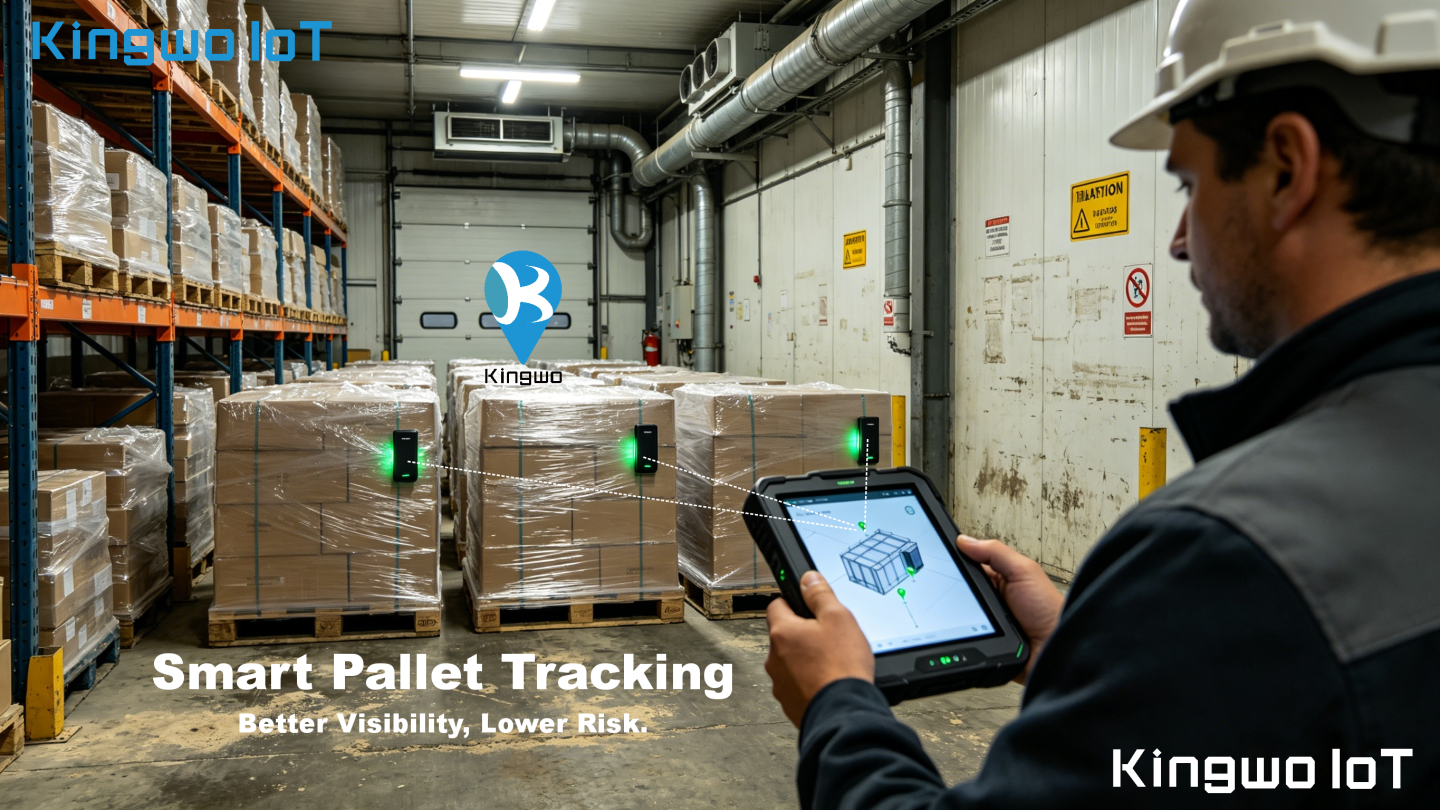
Yet while logistics networks have become more advanced, one operational blind spot still remains common across many supply chains: visibility often stops at the vehicle, trailer, or container level, while the pallet itself remains largely unmanaged in real time.
For many operators, this is becoming a strategic issue rather than a minor technical gap. A truck may be fully tracked, a reefer container may report stable temperature, and a warehouse may have digital management systems in place—yet the specific pallet containing sensitive cargo may still be delayed on a dock, staged in the wrong zone, exposed during unloading, or misplaced during internal transfers.
As supply chains demand greater resilience, traceability, and efficiency, pallet-level visibility is gaining attention as the next step in cold chain modernization.
Cold chain logistics is no longer limited to basic refrigerated transport. Today’s networks often involve multiple handoffs, international border crossings, temporary storage points, outsourced warehouse operations, and last-mile delivery partners.
A single shipment may pass through:
Each transfer point introduces potential operational risk. While transportation equipment may be monitored continuously, internal movement between these stages is often less visible.
This is especially relevant for high-value or time-sensitive products where even short deviations can create quality concerns, commercial loss, or compliance investigations.
The pallet remains one of the most widely used logistics units in the global supply chain. It is where products are physically grouped, moved, stored, and transferred. In practical terms, pallets often represent the true operational unit of inventory flow.
However, many digital systems still focus on broader transport assets rather than the pallet itself.
That creates several common challenges:
When spoilage, delays, or inventory discrepancies occur, businesses often know that something went wrong but struggle to determine where and when it happened.
Without granular movement history, investigations may depend on manual logs, assumptions, or fragmented data from multiple systems.
Many facilities still rely heavily on barcode scans, paperwork, or operator confirmation during pallet movements. These processes can work well, but they also create room for missed scans, delayed updates, and labour inefficiencies.
Products may be physically present in a warehouse while digitally unavailable due to location mismatches, delayed system updates, or inaccurate staging records.
Some of the highest-risk moments in cold chain operations occur not during long-haul transport, but during short transitions—loading bays, temporary holding zones, and internal movement between controlled areas.
Historically, pallet-level tracking has faced real economic and technical constraints.
Conventional GPS devices can consume more energy than is practical for reusable pallet operations, especially when charging access is limited.
Pallet ecosystems are high-volume environments. Any added hardware must make financial sense across thousands or millions of asset cycles.
Cold storage rooms, freezer zones, moisture exposure, vibration, and repeated handling create a demanding environment for connected electronics.
Many pallets are pooled, rented, or transferred across multiple organizations. That can complicate questions such as:
These are commercial as well as technical questions.
Several market shifts are making pallet intelligence more realistic than in previous years.
LTE-M and NB-IoT have improved the feasibility of long-life connected devices for mobile assets. Bluetooth Low Energy and short-range sensor architectures can also support hybrid tracking models depending on workflow needs.
Modern chipsets, sleep modes, motion-triggered reporting, and smarter data intervals can significantly extend service life compared with earlier hardware generations.
Supply chains increasingly measure performance through:
That means visibility investments are now evaluated against broader business outcomes, not only location tracking.
Across food, pharmaceutical, and premium goods sectors, companies continue investing in stronger traceability systems to support quality assurance, recall readiness, and operational accountability.
When pallets become connected assets, businesses can move from reactive management toward proactive operations.
Know whether a pallet is:
If temperature thresholds, movement anomalies, or route delays occur, teams can respond earlier instead of discovering issues after delivery.
Automatic location updates can reduce reliance on repeated manual scans and improve confidence in available stock.
For pallet pools, cages, roll containers, or insulated transport units, tracking can improve rotation efficiency and reduce unexplained loss.
Movement history can help identify recurring bottlenecks, such as:
High-value biologics and temperature-sensitive healthcare products often require stronger chain-of-custody visibility and documented handling conditions.
Produce, seafood, meat, and dairy supply chains benefit from faster turnover, freshness control, and reduced spoilage exposure.
Large grocery and convenience networks increasingly seek better inventory flow between warehouses and store-level cold rooms.
Certain chemicals, laboratory materials, and temperature-controlled components may also require improved transit monitoring.
The next phase of cold chain digitalization is not simply about knowing where trucks are. It is about understanding how inventory moves through the network.
That includes:
This shift transforms connected hardware from a security tool into an operational intelligence layer.
At Kingwo, we believe future-ready cold chain operations will rely on multi-layer visibility: fleet visibility, container visibility, and increasingly, pallet-level intelligence.
As IoT hardware becomes smaller, more efficient, and more cost-effective, businesses now have an opportunity to close one of the most persistent blind spots in logistics operations.
For organizations managing sensitive cargo, the question is no longer whether more granular visibility creates value. The real question is how quickly it can be deployed in a scalable and commercially practical model.
By Kailiang Tang
Acting Marketing Director, Kingwo IoT
 news
news
 news
news
 news
news
 news
news
 news
news
 news
news
 news
news
 news
news

English

French

Portuguese

Spanish