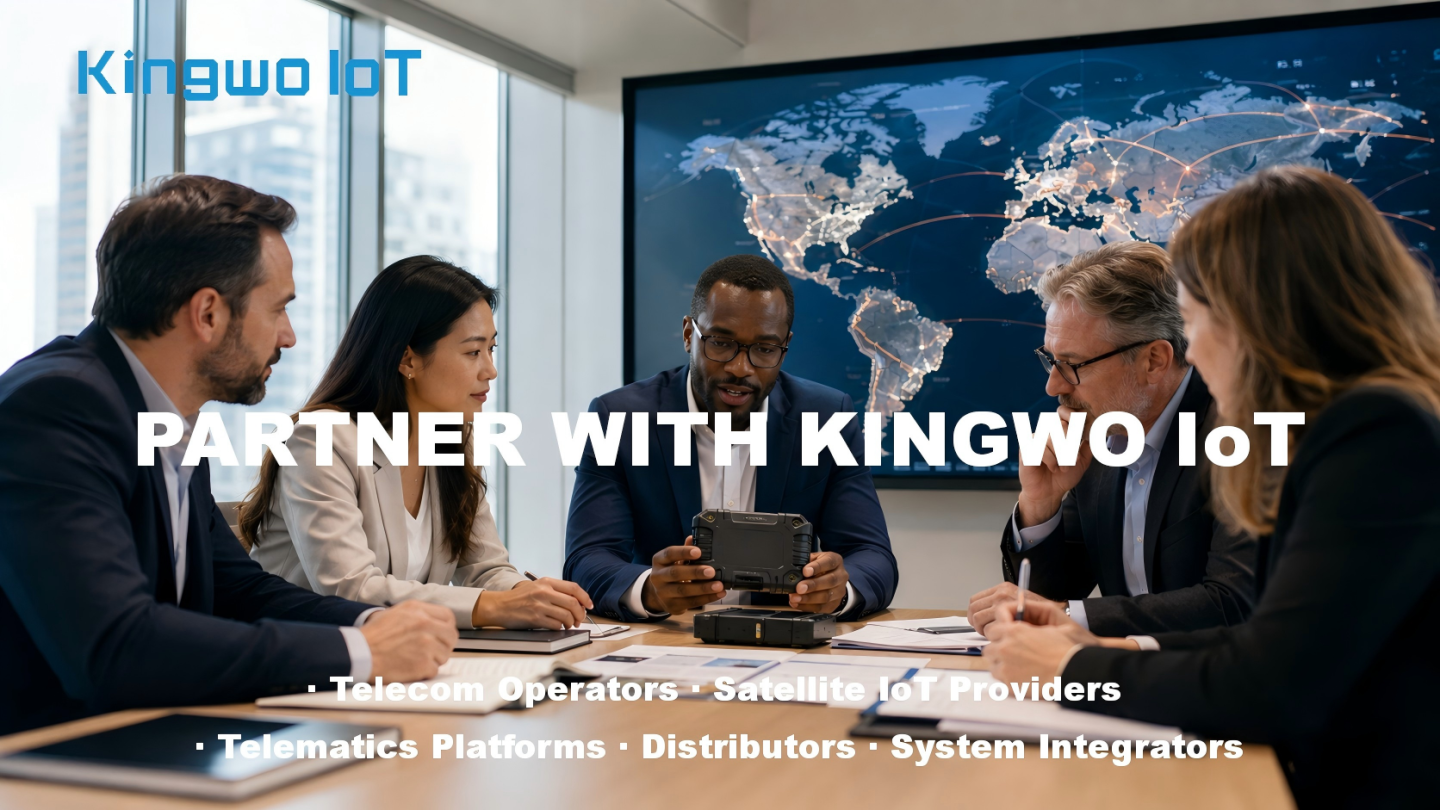

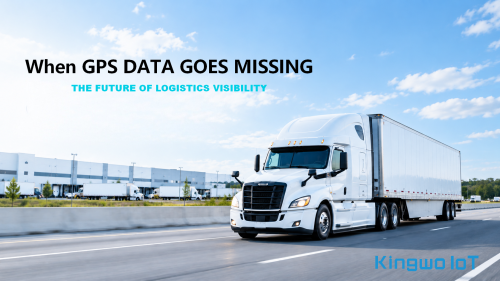
The global asset tracking market is entering a new phase. For many years, GPS tracking was mainly associated with vehicles operating inside reliable cellular networks. A device collected its location through GNSS and transmitted the information through a SIM card to a fleet management platform. This architecture remains effective for millions of connected vehicles and mobile assets, but the next generation of asset tracking must address a much larger and more complicated world.
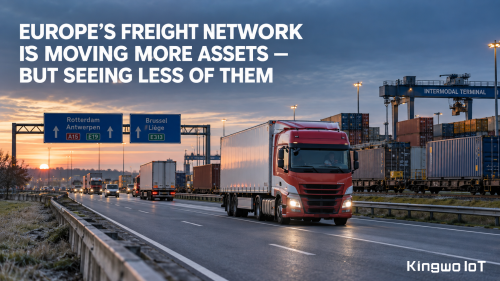
Trailers travel through remote transportation corridors. Shipping containers move between ports, vessels, rail terminals and inland depots. Construction equipment operates in undeveloped areas. Mining, forestry and agricultural machinery may remain far beyond conventional cellular coverage for days or even months. High-value cargo can also change hands multiple times during a single journey.
In these environments, losing connectivity does not simply mean losing a dot on a map. It may mean losing visibility over the location, security, utilization and operational status of a critical asset.
Recent developments from major telematics, telecommunications and satellite IoT companies indicate that the industry is moving toward a broader solution: asset tracking that combines cellular networks with satellite connectivity, low-power communication technologies, multiple positioning methods and intelligent data platforms.
In February 2026, Geotab announced its new GO Anywhere family of rugged asset trackers. The products are designed to provide visibility across trailers, equipment and other powered or non-powered assets.
One of the most important aspects of the launch is the introduction of satellite connectivity. Instead of depending entirely on terrestrial cellular infrastructure, satellite-enabled tracking can extend asset visibility into areas where traditional mobile coverage is limited or unavailable.
This is particularly relevant for industries operating across large geographical regions. Construction companies may need to monitor equipment across multiple job sites. Logistics providers need visibility over trailers waiting at remote yards. Mining and forestry businesses must manage machinery operating far from urban network infrastructure.
The development reflects an important change in the market. Satellite connectivity is no longer being positioned only for emergency communications, maritime navigation or specialized government projects. It is increasingly becoming part of commercial IoT and asset management strategies.
Shortly after the Geotab launch, Rogers Communications announced that it would introduce satellite-powered asset tracking technology with Geotab in Canada. The solution is intended to help businesses track trailers, containers and equipment across cellular networks and areas without conventional mobile coverage.
Although the announcement focuses on Canada, the underlying demand is global. Similar connectivity gaps exist across Australia, Latin America, the Middle East, Africa, Southeast Asia, Northern Europe and remote parts of the United States.

Satellite connectivity will not replace cellular IoT. Cellular networks remain more cost-effective and practical for many high-frequency tracking applications, especially in cities, industrial zones and established transportation corridors.
The future will therefore not be defined by one network replacing another. It will be defined by devices and platforms capable of selecting the most appropriate connection for each operating environment.
A trailer may use cellular connectivity while travelling on a major highway and satellite communication when entering a remote corridor. A shipping container may transmit data through cellular networks at a port, connect with nearby BLE infrastructure inside a warehouse and rely on satellite connectivity during parts of its ocean or inland journey.
Location information may also come from more than one source. GNSS remains essential for outdoor positioning, while Bluetooth, Wi-Fi positioning, cellular location and other technologies can improve visibility in warehouses, terminals, factories and dense urban environments.
This hybrid architecture is gradually transforming GPS tracking into a connected asset intelligence system.
The device is no longer responsible only for answering the question, “Where is the asset?” It must also help businesses understand whether the asset is moving, being utilized, waiting too long, leaving an authorized area, experiencing an environmental exception or being handled by an unauthorized party.
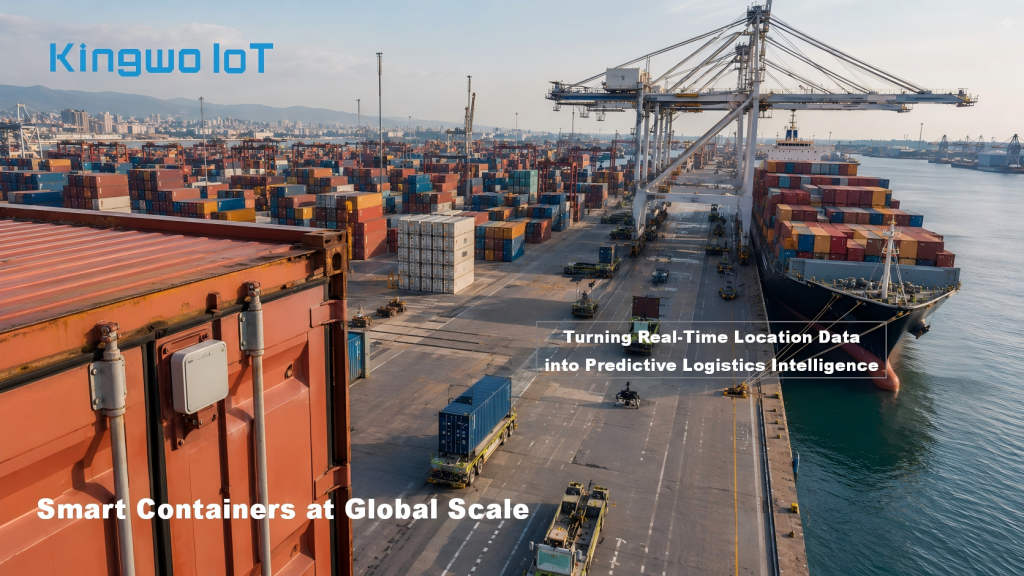
The scale of this transformation can already be seen in the global shipping industry.
In February 2026, WiseTech Global and Hapag-Lloyd announced an IoT container tracking pilot involving Hapag-Lloyd’s fleet of approximately two million containers. Location information from connected containers is being integrated into the CargoWise ecosystem to support real-time tracking, anomaly identification and dynamic arrival predictions.
The objective is not simply to display container locations. The IoT data is intended to help logistics companies detect deviations and delays, improve estimated arrival times and make better operational decisions.
According to WiseTech, the integration can process millions of IoT data points and transform them into operational milestones. This demonstrates the value of combining connected hardware with logistics platforms, predictive analytics and enterprise workflows.
Read the WiseTech and Hapag-Lloyd announcement
The lesson for the wider asset tracking industry is clear: hardware creates the connection, but integration turns the connection into business value.
The expansion of connected asset tracking is also being driven by the growing financial impact of cargo theft.
According to Verisk CargoNet, estimated cargo theft losses across the United States and Canada reached nearly $725 million in 2025, an increase of approximately 60 percent compared with the previous year. The average value of a theft also increased significantly as organized criminal groups focused on high-value products such as enterprise computing equipment, electronics, metals and other easily resold commodities.
Read the Verisk CargoNet analysis
Modern cargo theft is becoming more organized and data-driven. Criminal groups may use false carrier identities, fraudulent documentation, manipulated pickup instructions and detailed knowledge of logistics processes. In this environment, a standard vehicle tracker may not provide sufficient protection.
Companies increasingly require an independent tracking layer attached directly to the trailer, container, pallet, equipment or shipment. The system should be capable of detecting unauthorized movement, unexpected route deviations, prolonged stops, tampering and entry into high-risk areas.
Satellite connectivity can strengthen this security layer by reducing visibility gaps. However, connectivity alone is not enough. Devices must also be discreet, power-efficient, durable and configurable for different risk levels.
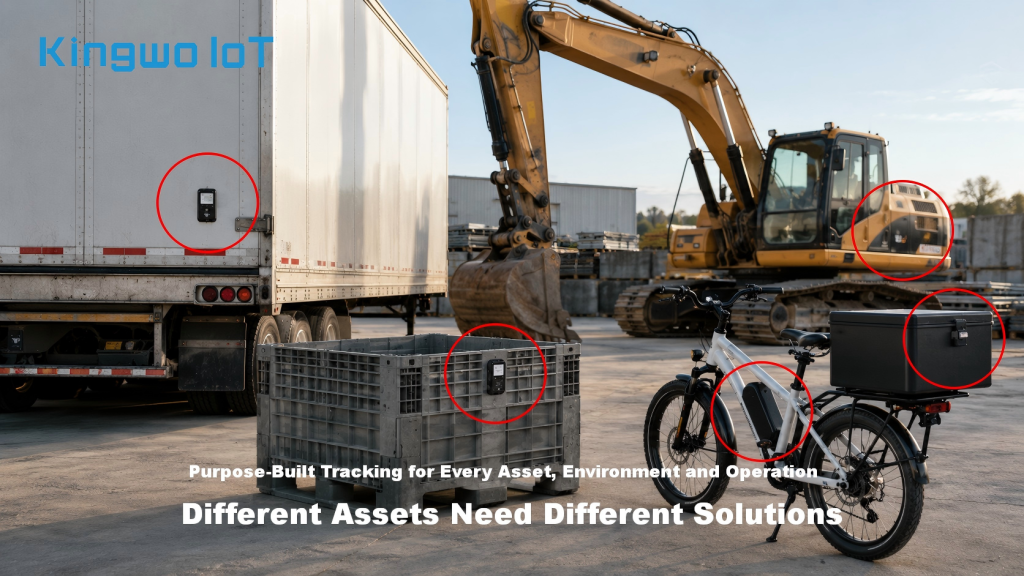
There will never be one universal tracker that is ideal for every asset.
A high-value construction machine may require a rugged tracker with an external power supply, backup battery, ignition detection and frequent location updates. A non-powered trailer may need a replaceable or rechargeable battery and intelligent movement-based reporting. A shipping container may require years of battery or solar-supported operation under vibration, salt, heat and prolonged periods without sunlight.
A pharmaceutical shipment may require temperature, humidity, light and shock monitoring. A reusable pallet or transport crate may need a low-cost, compact device that can operate across thousands of repeated journeys. Airport ground-support equipment and cargo dollies may require both outdoor GNSS tracking and more precise terminal-level identification.
The most competitive asset-tracking companies will therefore be those that can match hardware architecture, connectivity, sensors, reporting frequency, battery performance, and platform integration to the commercial value and operating cycle of each asset.
At Kingwo IoT, we believe that the future of asset tracking will be built on adaptable hardware, multiple connectivity options, intelligent power management and open integration.
Cellular technologies—including 4G, LTE Cat 1, LTE-M and NB-IoT—will continue to support a large proportion of global deployments. BLE can provide low-power identification and nearby asset discovery. GNSS enables outdoor positioning, while sensors can provide information about movement, vibration, temperature, light exposure, tampering and other operational events.
Satellite IoT will add another important layer by extending visibility into regions where terrestrial networks cannot provide consistent coverage.
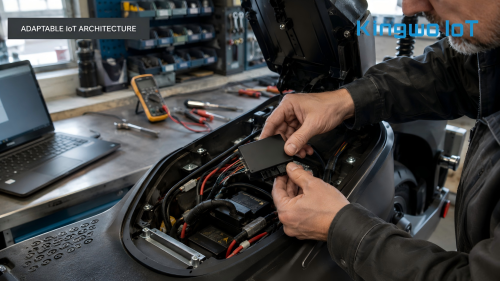
Kingwo’s role is not limited to manufacturing a standard GPS tracker. We develop customizable IoT hardware for vehicles, trailers, containers, equipment, cargo, e-bikes, shared mobility, and other connected-asset applications. Our capabilities include OEM and ODM development, customized firmware, BLE, CAN and RS485 integration, communication protocol adaptation, API connectivity and support for customer-specific platforms.
We also understand that global customers operate under different network conditions, certification requirements, cost structures and operational models. A product designed for an urban delivery fleet may not be suitable for a mining company, cross-border logistics operator or remote equipment rental business.
For this reason, Kingwo is committed to developing market-specific solutions rather than offering a single configuration for every country and industry.
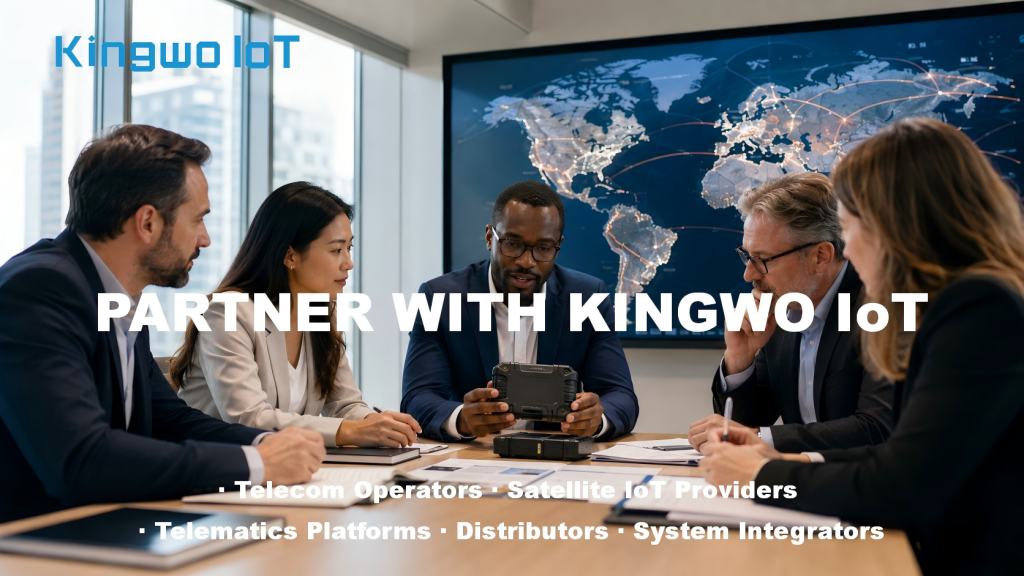
The transition toward hybrid asset connectivity cannot be completed by hardware manufacturers alone. It requires cooperation across the entire IoT ecosystem.
Kingwo IoT is actively exploring strategic partnerships with mobile network operators, satellite IoT providers, connectivity management companies, telematics platforms, logistics software providers, regional distributors and system integrators around the world.
Our objective is to combine Kingwo’s customizable hardware and manufacturing capabilities with the connectivity, software, market knowledge and localized service capabilities of our partners.
Potential cooperation may include device integration, network certification, customized hardware development, communication protocol adaptation, API integration, pilot deployments, white-label solutions and jointly developed products for specific industries or regions.
For mobile network operators and IoT connectivity providers, Kingwo can support the development of certified hardware adapted to local bands, network technologies and customer requirements.
For telematics and asset management platforms, Kingwo can provide complementary hardware for specialized asset categories, including non-powered equipment, trailers, cargo, two-wheel vehicles and customized industrial applications.
For distributors and regional solution providers, Kingwo can support localized products, branding, firmware, platforms and scalable OEM or ODM manufacturing.
For logistics, construction, mining, forestry, agriculture, equipment rental, aviation and shared mobility companies, Kingwo is open to developing and testing solutions based on real operating requirements.
We are not seeking to replace the existing platforms, networks or service relationships of our partners. Our goal is to become the flexible hardware and technology partner that helps them extend their capabilities into additional asset categories and new markets.
By Kailiang Tang
Acting Marketing Director, Kingwo IoT
 news
news
 news
news
 news
news
 news
news
 news
news
 news
news
 news
news
 news
news

English

French

Portuguese

Spanish