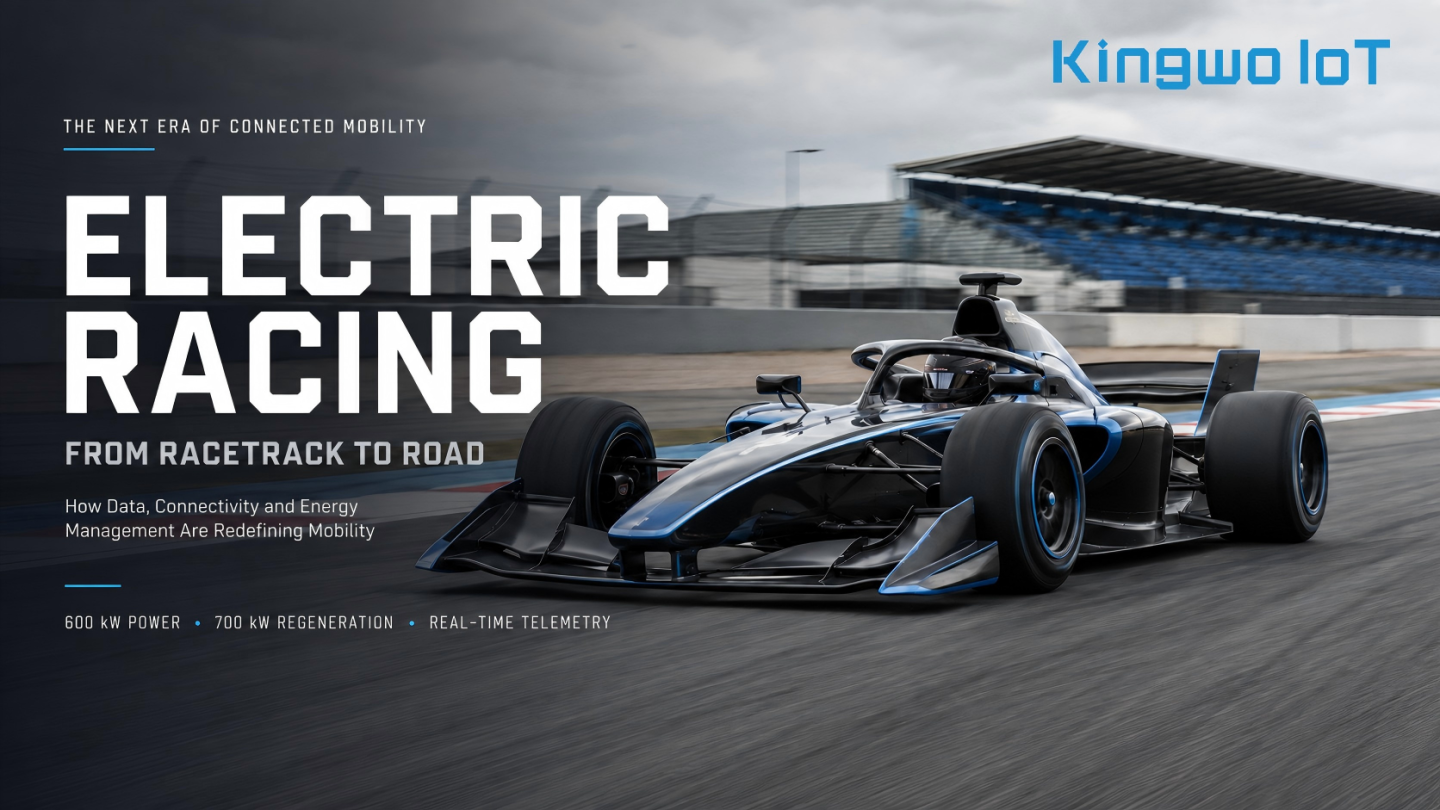

The 2025/26 ABB FIA Formula E season concluded in London with Pascal Wehrlein securing his second Drivers’ World Championship. But the finale represented more than the end of another racing season. It also marked the final competitive appearance of the GEN3 generation—and the beginning of a much more powerful and data-driven era for electric motorsport.
Formula E’s new GEN4 race car is scheduled to debut during the 2026/27 season. With up to 600 kW of power, permanent all-wheel drive, a 55 kWh race battery and regenerative braking capacity of up to 700 kW, GEN4 demonstrates how rapidly electric vehicle technology is developing. The championship’s next season will also expand to a record 21 races, giving manufacturers a larger global platform on which to test new electric powertrain and software strategies. Formula E GEN4 specifications, official 2026/27 calendar
In conventional motorsport, performance was often associated with engine displacement, combustion efficiency and mechanical engineering. In electric racing, the competitive advantage increasingly comes from how effectively teams can collect, understand and act on vehicle data.
Every acceleration, braking event, temperature change and energy-recovery cycle produces valuable information. Teams must continuously evaluate battery status, motor performance, energy consumption, regenerative braking, component temperatures, vehicle position and driver behaviour.
The objective is not simply to make the vehicle faster. It is to determine how to use a limited amount of energy more intelligently throughout the race.
A driver may have enough power to overtake but still need to protect battery temperature. A team may recover significant energy under braking, but the vehicle must manage that energy without compromising stability. Even small differences in software strategy, sensor accuracy or communication speed can influence the final result.
This is why modern electric racing is increasingly becoming a competition between connected systems.
A modern electric race car is no longer an isolated mechanical machine. It is a mobile network of batteries, controllers, motors, sensors, communication modules and software.
The same architecture is gradually appearing in commercial electric vehicles, e-bikes, electric motorcycles, delivery vehicles and shared-mobility fleets.
Through CAN, RS485, BLE or other communication interfaces, a connected vehicle can collect information from different components and transmit selected data to a cloud platform. Operators can then monitor location, battery condition, vehicle status, abnormal movement, operating time and maintenance requirements.
The racing environment makes these technologies especially visible because every decision must be made under extreme time pressure. However, the underlying principle is equally relevant to a delivery fleet managing hundreds of electric motorcycles or a shared-mobility operator responsible for thousands of e-bikes.
In both cases, the vehicle must communicate.
Battery capacity alone does not determine electric-vehicle performance. Operators also need to understand how energy is being used.
Temperature, charging behaviour, discharge rate, riding conditions, vehicle load and driver behaviour can all influence battery life and available range. Without reliable operating data, fleet managers may struggle to distinguish between normal energy consumption and a developing technical problem.
Electric racing demonstrates the value of continuous energy monitoring. Teams do not wait until a vehicle stops before examining its battery. They use real-time and historical data to anticipate performance changes and adjust their strategy.
Commercial electric fleets can apply a similar principle. Battery and vehicle data can support charging schedules, preventive maintenance, route planning and vehicle allocation. It can also help operators identify underused vehicles, those operating abnormally, or those likely to require attention.
The racetrack pursues maximum performance. The commercial fleet pursues maximum availability. Both depend on visibility.
Connected vehicle technology becomes more valuable when it moves beyond reporting what has already happened.
By combining positioning, vehicle-controller data, battery information and operating history, a platform can identify patterns that may indicate abnormal behaviour. Repeated voltage fluctuations, excessive temperatures, unusual energy consumption or harsh riding events may provide early signs of a maintenance or safety issue.
The same data can also help an operator answer practical questions:
Which vehicle should be assigned to the next journey? Which battery should be charged or replaced? Has a vehicle left its permitted operating area? Is a parked vehicle being moved without authorization? Is a component behaving differently from similar vehicles in the fleet?
Electric racing provides an extreme demonstration of this transition—from simply monitoring a vehicle to actively supporting decisions.
The technology transfer from racing will not be limited to electric passenger cars.
E-bikes, electric motorcycles and light electric vehicles are becoming increasingly important in urban delivery, rental, tourism and shared transportation. These vehicles are often operated intensively, distributed across large areas and exposed to higher risks of theft, misuse and irregular charging.
For these applications, connected IoT hardware can become part of the vehicle’s operational infrastructure. Positioning can support fleet visibility and theft recovery. CAN or RS485 integration can provide access to controller and battery information. Bluetooth can support rider identification or vehicle unlocking. Remote firmware management can allow device functions to evolve after deployment.
As the industry develops, operators will increasingly expect these capabilities to work together—not as separate accessories, but as one connected vehicle system.
At Kingwo IoT, we believe the future of electric mobility will be defined not only by better batteries and more powerful motors, but also by better connectivity between the vehicle, the operator and the digital platform.
Our role is not to reproduce professional motorsport telemetry. It is to translate the principles demonstrated on the racetrack—visibility, communication, integration and data-driven decision-making—into scalable solutions for real commercial vehicles.
This includes customizable IoT hardware, GNSS positioning, CAN and RS485 integration, BLE connectivity, vehicle-status monitoring, API access for e-bikes, electric motorcycles, shared vehicles and specialized fleets.
Every project has a different vehicle architecture, operating environment and platform requirement. That is why connected mobility cannot depend on a single universal device. Hardware, firmware, communication protocols and software integration must be designed around the actual use case.
Formula E GEN4 shows that the boundary between motorsport, software engineering and energy management is disappearing. The fastest vehicle is increasingly the one that understands and manages its own data most effectively.
The technologies tested in racing today may influence how commercial electric vehicles are designed, monitored and maintained tomorrow. From high-performance race cars to delivery motorcycles and shared e-bikes, the direction is becoming clear: electric mobility is becoming connected mobility.
The racetrack may be where the limits are tested—but the real transformation will happen when these technologies reach everyday vehicles worldwide.
By Kailiang Tang
Acting Marketing Director, Kingwo IoT
 news
news
 news
news
 news
news
 news
news
 news
news
 news
news
 news
news
 news
news

English

French

Portuguese

Spanish