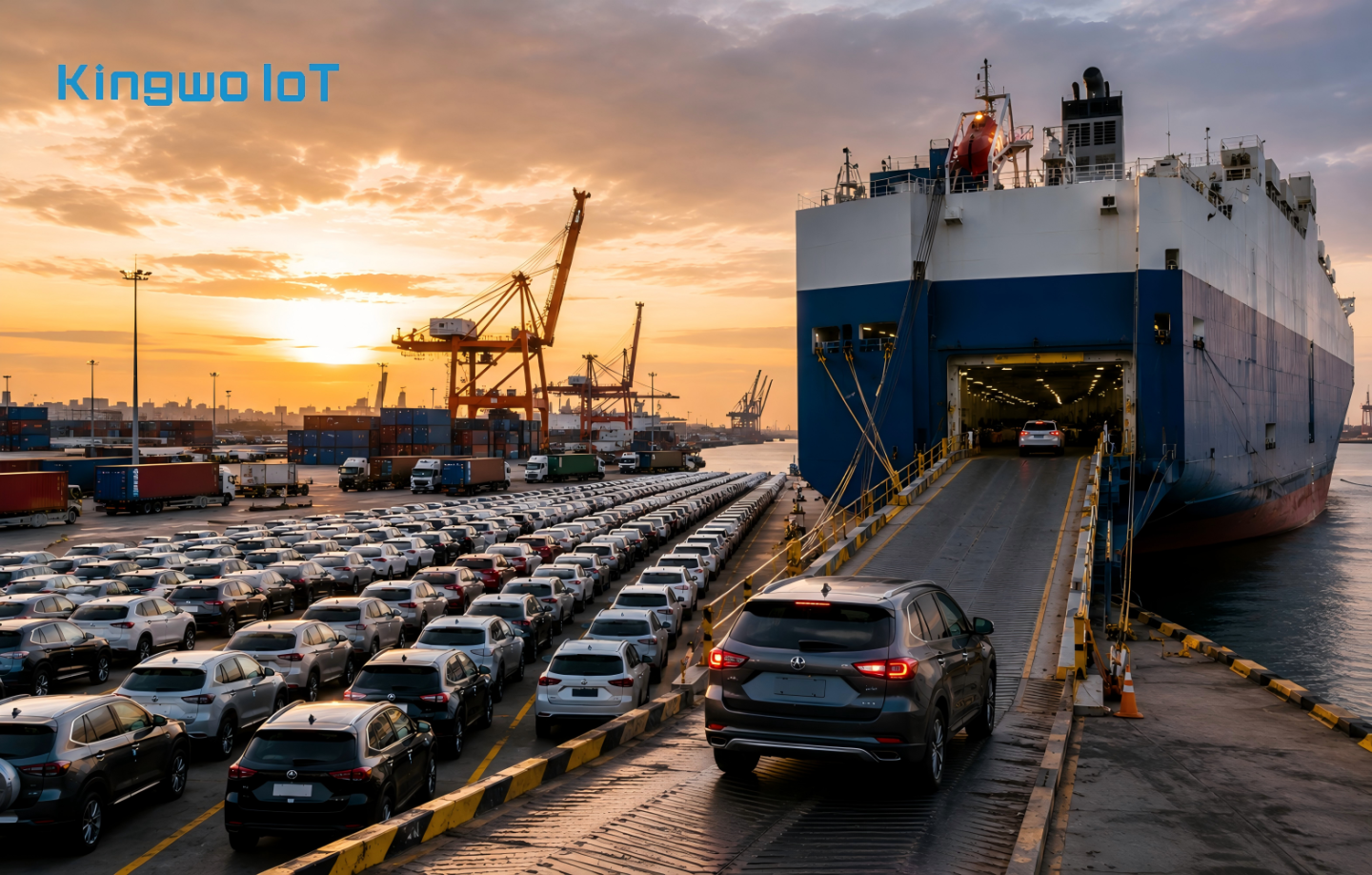

The global used car export market has entered a new stage of rapid growth. Driven by increasing demand from Central Asia, Africa, the Middle East, Eastern Europe, and Latin America, millions of used vehicles are now transported across international borders every year. As export volumes continue to rise, logistics operations have become increasingly complex, requiring exporters to manage thousands of vehicles moving simultaneously through ports, rail networks, storage yards, customs checkpoints, and overseas destinations.
For vehicle exporters, every car represents valuable inventory. While buyers often focus on vehicle quality and delivery schedules, exporters must deal with a different challenge—maintaining visibility throughout the entire transportation process. Knowing exactly where each vehicle is, whether it has left the storage yard, arrived at the port, boarded the vessel, or reached the destination country, has become essential for efficient operations and customer satisfaction.
International demand for affordable, high-quality used vehicles continues to increase, creating significant opportunities for exporters around the world. Countries with developing automotive markets rely heavily on imported used vehicles to satisfy local transportation needs, while exporters continue expanding into new regions through more efficient logistics networks.
As shipment volumes grow, managing hundreds or thousands of vehicles simultaneously becomes increasingly difficult. Exporters are no longer managing individual shipments—they are managing large-scale international vehicle logistics operations that require greater visibility, efficiency, and coordination.
One of the biggest challenges in international used vehicle logistics is the lack of real-time visibility. Vehicles typically pass through several transportation stages before reaching overseas buyers. They may be transported by truck to a consolidation yard, moved by rail to an export port, stored temporarily before loading, shipped overseas by containers, and finally delivered through local logistics providers.
Throughout this journey, multiple organizations are involved, making it difficult to maintain continuous oversight. Without real-time tracking, exporters often struggle to answer simple but critical questions such as where a vehicle is located, whether it has been loaded, or why a shipment has been delayed.
International transportation introduces risks that extend far beyond delivery schedules. Vehicles can remain in storage yards for days or even weeks before shipment, increasing exposure to theft, unauthorized movement, accidental relocation, and inventory management errors.
Traditional management methods often rely on manual reporting, phone calls, and spreadsheets, making it difficult to quickly locate individual vehicles or respond to unexpected incidents. As export volumes continue growing, these inefficiencies become increasingly costly.
Unlike traditional fleet management, export vehicles generally require tracking only during transportation. This makes temporary GPS tracking a practical and cost-effective solution for exporters.
A compact GPS tracker can be installed before shipment, providing continuous location updates throughout the transportation process, and removed after delivery. This allows exporters to maintain complete visibility without permanently modifying the vehicle or increasing maintenance costs.
Real-time GPS tracking enables logistics managers to monitor vehicle locations continuously, review movement history, establish electronic geofences around logistics facilities, and receive instant alerts whenever abnormal movement occurs.
Instead of relying on delayed manual updates, operations teams gain immediate access to accurate transportation information through a centralized cloud platform. This improves shipment coordination, reduces administrative workload, and enables faster responses to transportation exceptions.
Modern vehicle buyers expect more than estimated delivery dates—they expect visibility. Providing accurate shipment information allows exporters to communicate proactively, answer customer inquiries quickly, and build stronger relationships with overseas dealers and distributors.
Greater transportation transparency not only improves customer satisfaction but also reduces disputes, strengthens business credibility, and creates long-term competitive advantages.
Kingwo IoT provides intelligent GPS tracking solutions specifically designed for vehicle logistics and international asset transportation. Combining reliable GPS hardware with a powerful cloud management platform, exporters can monitor vehicle locations in real time, review transportation history, configure electronic geofences, receive instant alerts, and integrate tracking data into existing logistics management systems.
Whether vehicles are transported by road, rail, or sea, Kingwo IoT helps businesses maintain complete visibility throughout the export process while improving operational efficiency and reducing transportation risks.
 news
news
 news
news
 news
news
 news
news
 news
news
 news
news
 news
news
 news
news

English

French

Portuguese

Spanish