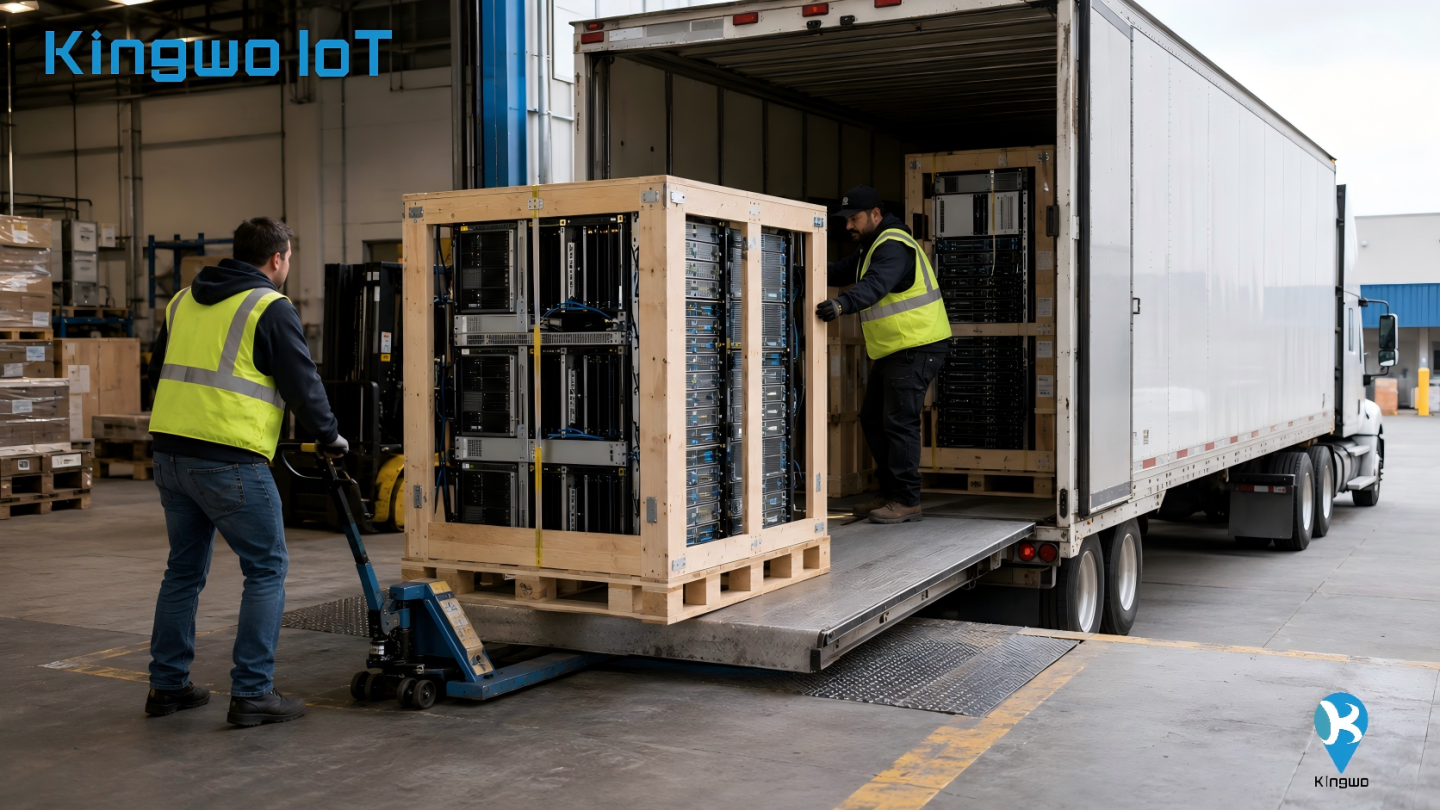

The rapid expansion of artificial intelligence is transforming more than the technology industry. It is also creating a new category of exceptionally valuable cargo.
AI servers, GPUs, networking equipment, cooling systems and other data-centre components can represent millions of dollars in a single shipment. These products are relatively compact, in global demand and frequently transported through complex networks of manufacturers, freight brokers, warehouses, subcontractors and final-mile carriers. These characteristics make them increasingly attractive to organized cargo-theft groups.
A recent WIRED investigation described sophisticated attacks targeting AI hardware shipments in California. Criminals reportedly used fraudulent carrier identities, insider information and coordinated vehicle attacks to intercept high-value loads. This development shows that cargo theft is no longer simply a matter of breaking into a trailer or stealing an unattended truck. It is becoming a coordinated operation that combines cyber fraud, physical surveillance, false identities and carefully planned transportation diversions.
For logistics operators, the most important question is no longer only whether a truck is locked or whether its GPS is functioning. The real question is whether the company can continue monitoring the cargo after it has been redirected, transferred or separated from the original vehicle.
Traditional cargo theft was often associated with unsecured parking locations, stolen trailers and warehouse break-ins. Those risks remain, but criminal methods are evolving.
The FBI has warned that cybercriminals are gaining access to freight brokers’ and carriers’ systems through phishing emails, fraudulent websites and compromised accounts. After gaining access, they can impersonate legitimate companies, publish fraudulent freight listings and deceive shippers into releasing cargo to unauthorized operators.
In these situations, the shipment may leave a facility with documentation, a truck and a driver who all appear legitimate. There may be no forced entry and no immediate indication that a theft is taking place. The loss may only be discovered hours later, when the shipment fails to reach its intended destination.
This convergence of cybercrime and physical cargo theft exposes a major weakness in conventional supply-chain security. A logistics company may have visibility over the assigned vehicle, but that does not necessarily mean it has independent visibility over the goods inside it.
Vehicle telematics remains essential for modern fleet management. It helps operators monitor vehicle location, route progress, driver behaviour and operational performance. However, the location of the vehicle does not always represent the location of the cargo.
Criminals may transfer the goods to another vehicle, replace the tractor, abandon the original trailer or remove an easily identified tracking device. If the shipment itself has no independent source of location information, visibility may disappear at the moment it is needed most.
This is why high-value logistics increasingly requires multiple layers of connected visibility. Vehicle telematics can monitor the truck, while trailer tracking can help detect unauthorized movement or separation. Cargo-level tracking can remain with the pallet, equipment case or individual asset. At the same time, cybersecurity and identity-verification systems can help confirm whether the driver, carrier and collection instructions are legitimate.
These layers do not replace one another. They work together to reduce dependence on a single vehicle, device, system or data source.
Independent cargo-level tracking provides another source of information when a shipment is separated from its expected transportation environment.
For high-value AI equipment, a compact battery-powered tracker could potentially be concealed inside a shipping case, pallet, equipment enclosure or protective package. Because the device travels with the asset rather than remaining permanently attached to the truck, it can continue to provide location and movement data even if the goods are transferred.
Depending on the selected device and system configuration, logistics operators may use asset-tracking hardware to monitor movement, geofence activity, route deviations, unauthorized stops and possible tampering. Historical journey records can also help security teams reconstruct what happened before and after an incident. Integration through an API allows this information to appear within the customer’s existing fleet, logistics or security platform.
However, effective tracking requires more than installing a device. Reporting frequency, battery life, communication coverage, antenna performance, enclosure design and installation position must all be matched to the shipment and its operating environment.
A tracker hidden inside a server enclosure, for example, may face different signal and installation challenges from a device mounted on a trailer. A shipment travelling across several countries may also require different network coverage and reporting logic from an asset moving between two local warehouses. This is why hardware configuration and project-specific testing are essential.
Collecting more location points does not automatically produce better security. The real value comes from identifying abnormal events and responding to them quickly.
A shipment beginning to move outside its approved collection window could indicate an unauthorized pickup. A sudden route deviation may show that the driver is no longer following the planned journey. If the cargo and the assigned vehicle begin reporting different locations, the shipment may have been transferred. An unexpected stop at an unauthorized facility could also require immediate investigation.
Instead of requiring security teams to watch a map continuously, a connected platform can identify these exceptions and generate alerts. The operator can then verify the driver, contact the carrier, examine the route and initiate the appropriate response.
This is especially important for AI hardware and other high-value cargo. Once stolen equipment has been transferred, separated or moved into an unauthorized warehouse, the probability of recovery may decline rapidly. Earlier detection gives operators more time to respond.
At Kingwo IoT, we believe that the next stage of cargo visibility will require more than applying the same standard tracker to every asset.
A server shipment, pharmaceutical pallet, construction machine, airport cargo container and refrigerated load all operate under different conditions. They may require different battery capacities, reporting intervals, sensor functions, installation methods and communication protocols.
Kingwo IoT develops customizable GPS and IoT hardware for vehicles, trailers, equipment, cargo and other mobile assets. Our capabilities include battery-powered asset tracking, vehicle telematics, long-standby operating strategies, customized firmware, customer-defined alert logic, API integration and OEM or ODM development. Depending on the project, devices can be adapted to support a customer’s existing platform, communication protocol and operational workflow.
Our position is not that a GPS or IoT device can prevent phishing, verify every carrier or replace physical security. Cargo theft is a complex risk that requires cooperation between cybersecurity teams, logistics operators, drivers, security personnel, insurers and law-enforcement agencies.
Connected hardware provides a different but equally important function: it creates an independent source of physical-world information. When a fraudulent instruction changes the digital transportation record, an independently installed tracker may help reveal that the actual movement of the cargo no longer matches the authorized plan.
The growth of AI infrastructure will continue increasing the volume and value of servers, chips and related equipment moving through global supply chains. At the same time, organized criminal groups are becoming more capable of exploiting the digital, human and physical gaps between different logistics participants.
The industry’s response must therefore extend beyond stronger locks or a single vehicle-mounted GPS device. A more resilient security strategy should combine carrier and driver verification, cybersecurity controls, vehicle telematics, trailer monitoring, cargo-level tracking, automated alerts and a clearly defined incident-response process.
Each layer addresses a different risk:
The central principle is straightforward: when high-value cargo can be separated from its assigned vehicle, tracking the truck alone is no longer sufficient.
The future of cargo security lies in independent, multi-layer asset visibility. Manufacturers, logistics operators and security teams need to understand not only where the vehicle is, but also where the cargo is, how it is moving and whether its actual journey still matches the authorized transportation plan.
For AI hardware and other high-value shipments, this level of visibility is becoming more than an operational advantage. It is becoming a fundamental part of modern supply-chain risk management.
By Kailiang Tang
Acting Marketing Director, Kingwo IoT
 news
news
 news
news
 news
news
 news
news
 news
news
 news
news
 news
news
 news
news

English

French

Portuguese

Spanish