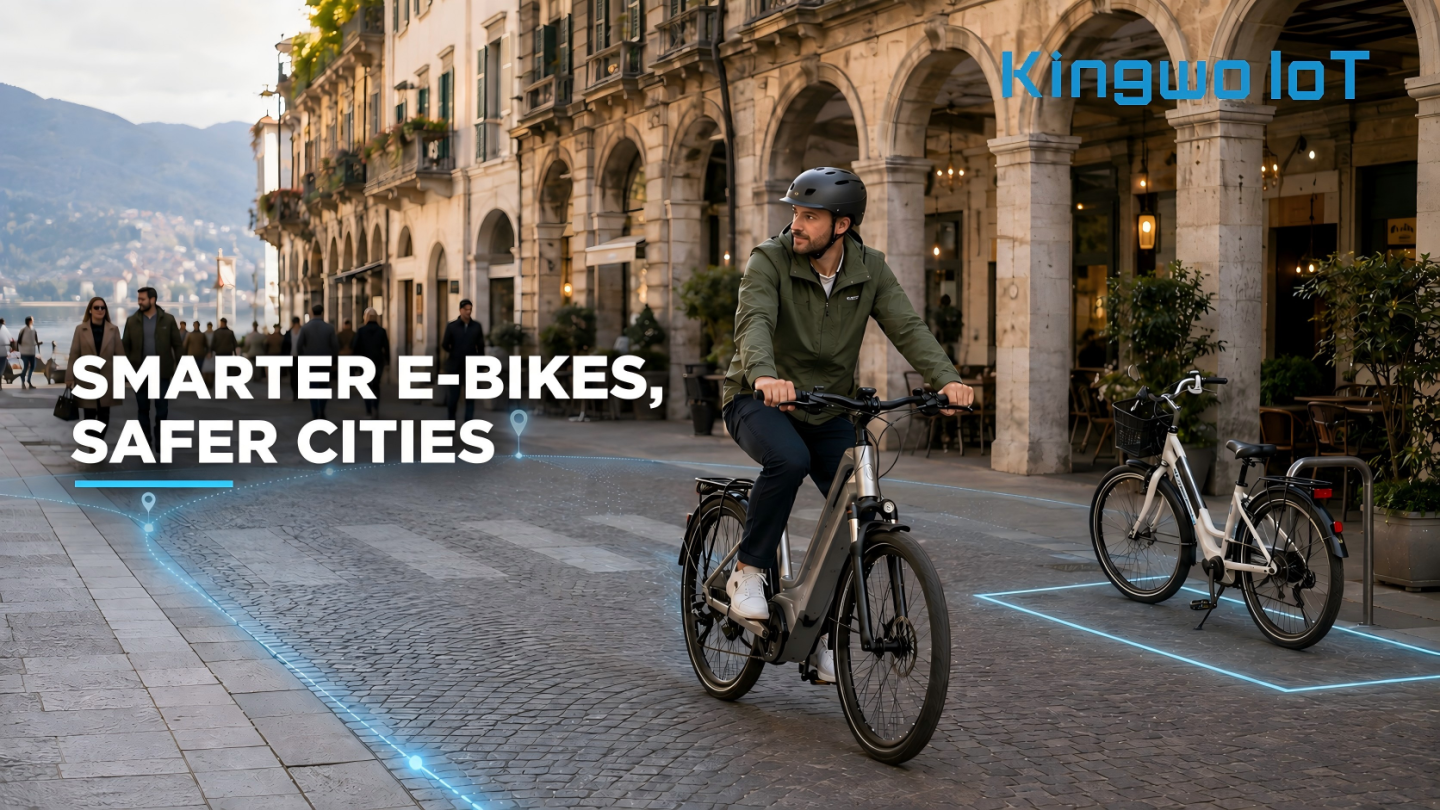

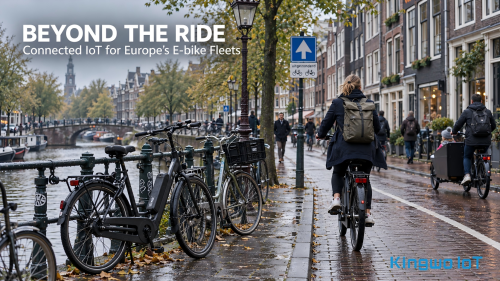
The historic city of Como, Italy, has announced that cyclists will be required to dismount across approximately 30 streets in its city center beginning in September. The restriction applies to both conventional bicycles and e-bikes and is intended to address pedestrian safety concerns in crowded historic streets.
The decision has quickly attracted international attention. Supporters view it as a necessary safety measure, while critics argue that a blanket restriction may penalize residents, delivery workers and people choosing low-carbon transportation. Whatever position one takes, the debate highlights a larger challenge facing cities worldwide:
How can urban mobility continue to grow without creating new safety, parking and management problems?
E-bikes have become an important part of urban transportation. They support short-distance commuting, delivery services, tourism, shared mobility and lower-carbon travel. However, when a growing number of connected and privately owned vehicles enter narrow streets and pedestrian areas, traditional traffic signs and manual enforcement may no longer be enough.
Cities need to know where shared vehicles are operating, whether they enter restricted areas, where they are parked and how quickly operators can respond when rules are violated.
This is why the future discussion should not be limited to choosing between unrestricted access and complete prohibition. There is a third possibility: building mobility systems that can understand and respond to different urban environments.
A geofence is a virtual boundary created around a real-world location. When an equipped vehicle enters or exits that area, the management platform can generate an event, issue an alert or trigger a predefined operating rule.
For shared e-bike and e-scooter fleets, geofencing can help operators establish pedestrian-priority zones, restricted-access areas, designated parking locations and lower-speed operating zones. Seattle and other cities already use geofencing to identify low-speed areas and approved parking locations for shared micromobility vehicles. Municipal Research and Services Center
However, location accuracy alone is not enough. Effective implementation requires coordination among positioning hardware, vehicle controllers, communication networks, fleet platforms and local operating policies.
A GPS device may identify that an e-bike has entered a controlled area. The platform can then notify the rider or operator. When the telematics unit is properly integrated with the vehicle controller, the system may also support more advanced responses, such as controlled speed adjustment or access management, subject to local regulations and safety requirements.
The same technology can address another major concern: improperly parked shared vehicles.
Sydney recently announced additional designated parking areas for shared e-bikes as their numbers and usage continued to grow. The initiative is intended to reduce blocked sidewalks and give local councils stronger tools to manage parking and no-go zones. The Guardian
A connected vehicle can report whether a trip ended inside an approved parking zone. Operators can identify incorrectly parked vehicles, dispatch local teams more efficiently and analyze repeated problem locations. Over time, this data can help cities and operators decide where additional parking infrastructure is actually needed.
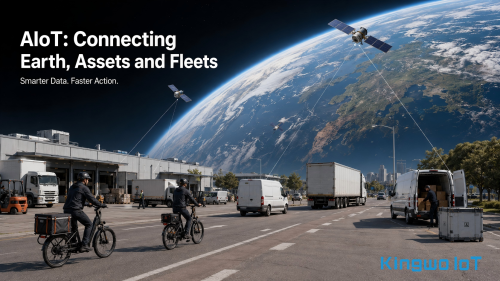
For fleet operators, urban mobility management involves far more than displaying moving dots on a map. A practical connected solution may combine real-time positioning, geofence alerts, abnormal movement detection, unauthorized-use warnings, battery information, trip records and remote device configuration.
For municipalities, anonymized operational data may support better planning without exposing individual rider information. It can reveal where vehicles accumulate, which zones experience repeated violations, when demand reaches its peak and where parking facilities should be expanded.
For riders, the experience can also become clearer. Instead of learning about a restricted zone only after entering it, the system can provide an in-app warning in advance and direct the rider toward an approved route or parking location.
The controversy in Como should not be viewed simply as a conflict between pedestrians and cyclists. It should be treated as a signal that the next stage of micromobility will require closer cooperation among cities, operators, vehicle manufacturers and IoT technology providers. The Guardian
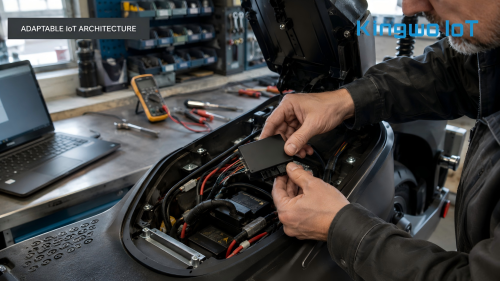
At Kingwo IoT, we believe connected mobility technology should help operators achieve more than basic vehicle location. Through customizable GPS and IoT hardware, CAN, RS485 and BLE integration, configurable firmware, open APIs and platform connectivity, solutions can be adapted for shared e-bikes, delivery fleets, rental vehicles and other two- or three-wheel mobility applications.
Depending on the vehicle architecture and project requirements, this can support geofence monitoring, unauthorized movement alerts, operating-zone management, vehicle-status reporting, remote configuration and integration with existing fleet platforms.
Technology alone cannot solve every urban mobility problem. Clear regulations, responsible riding, suitable infrastructure and effective enforcement remain essential. But connected vehicles can give cities and operators the visibility needed to replace broad assumptions with measurable information—and to manage mobility with greater precision.
The future of urban transportation should not be defined only by where e-bikes are banned. It should be shaped by how intelligently they are designed, connected and managed.
By Kailiang Tang
Acting Marketing Director, Kingwo IoT
 news
news
 news
news
 news
news
 news
news
 news
news
 news
news
 news
news
 news
news

English

French

Portuguese

Spanish