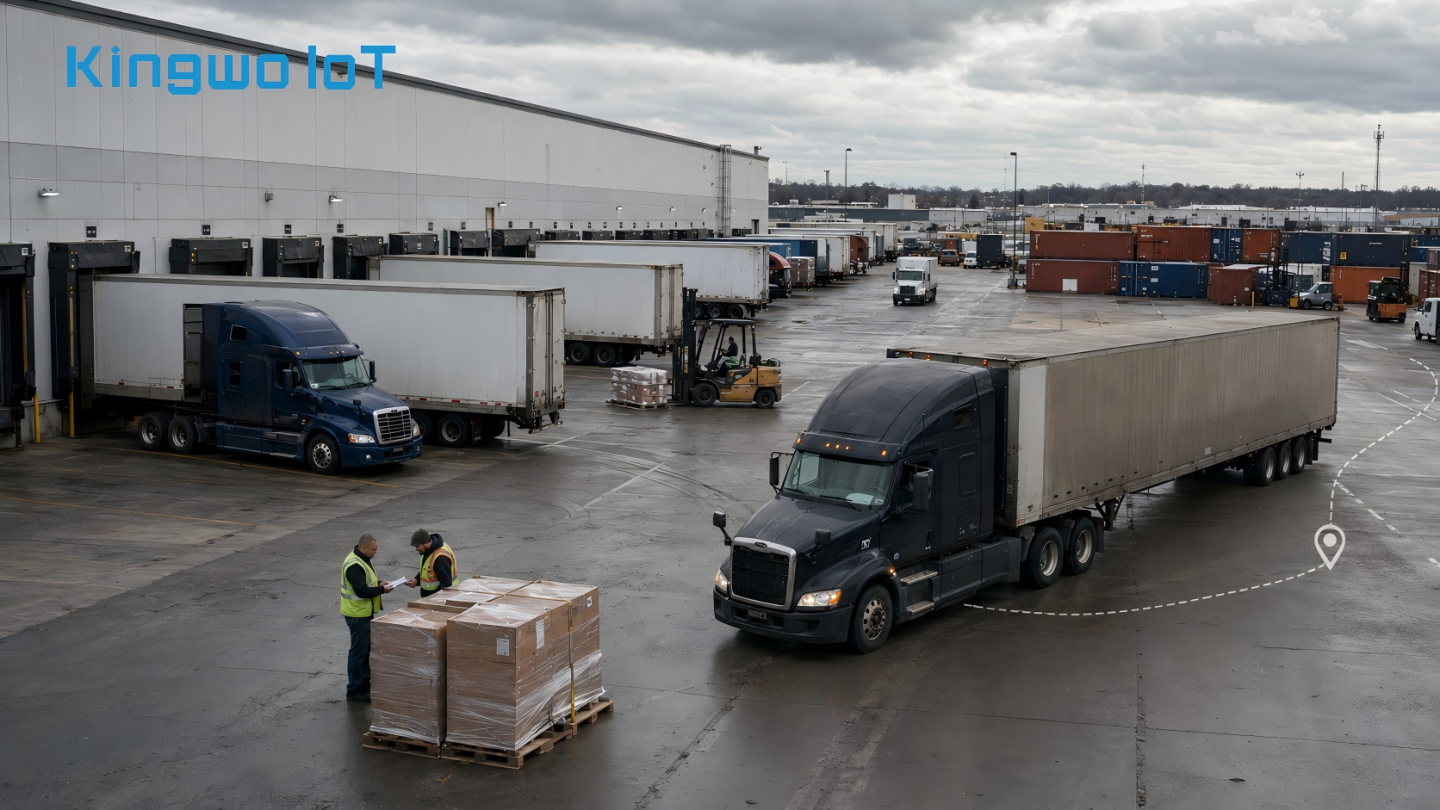

Cargo theft across North America declined slightly during the first quarter of 2026, offering what initially appears to be encouraging news for shippers, carriers and logistics providers. However, a closer examination of the data reveals a more complex threat landscape: financial losses remain high, organized criminal networks are becoming more sophisticated, and fraud-based cargo theft is expanding.
Rather than simply breaking into parked trailers or stealing unattended vehicles, criminals are increasingly impersonating legitimate carriers, compromising business credentials and manipulating normal transportation procedures. In many cases, the shipment is not forcibly stolen—it is willingly released to someone who appears authorized to collect it.
According to Verisk CargoNet, 767 supply-chain crime events were recorded across the United States and Canada in Q1 2026. This represented a 5.3% decrease compared with the same period in 2025 and a 12.2% decline from the fourth quarter of 2025.
Despite this reduction, estimated losses reached approximately $131.58 million, remaining almost unchanged year over year. CargoNet also recorded 596 confirmed cargo-theft reports—41 more than in Q1 2025.
The contrast between fewer overall events and persistently high losses suggests that criminals are becoming more selective. Instead of targeting any available shipment, organized groups increasingly focus on valuable products that can be transported, concealed and resold quickly.
CargoNet reported that food and beverage products remained the most frequently targeted category, with 144 incidents. Theft of personal-care and beauty products increased sharply, rising from 18 events in Q1 2025 to 50 in Q1 2026. Cosmetics, fragrances and other standardized consumer products are particularly attractive because they can be sold through online and informal distribution channels. Verisk CargoNet Q1 2026 analysis
A separate Q1 2026 report from Overhaul recorded 574 cargo-theft incidents in the United States, equivalent to an average of 6.4 incidents per day. Although the total number declined year over year, deceptive pickup schemes increased by 31%.
Deceptive pickup occurs when criminals use forged documents, stolen credentials, fake identities or carrier impersonation to collect legitimate cargo. Because the shipment may leave the facility with apparently valid authorization, the theft might not be discovered until the real carrier arrives or the cargo fails to reach its intended destination.
Nearly half of the deceptive pickup cases identified by Overhaul occurred in California. The state represented 36% of all incidents in its report, followed by Texas at 17%. Risk also expanded beyond traditional hotspots: Illinois accounted for 13% of national incidents, compared with only 6% one year earlier.
Electronics remained the most frequently targeted product category, representing 17% of incidents. Food and beverages accounted for 15%, while automotive products and parts represented 11%. Theft involving vehicles and automotive parts increased 51% year over year. Overhaul Q1 2026 report summary
The two reports use different datasets and geographic scopes, so their incident totals should not be directly combined. Nevertheless, both identify the same underlying development: cargo theft is becoming more organized, targeted and dependent on fraud.
Modern cargo theft increasingly begins online rather than at a warehouse gate.
CargoNet reports that organized criminal networks are using phishing campaigns and remote-access malware to compromise business email accounts, internet-based telephone systems and freight-management applications. Once criminals obtain a legitimate company’s credentials, they may accept tenders, communicate with brokers and redirect shipments while appearing to be an approved carrier.
Some criminal groups are even acquiring legitimate motor-carrier businesses or operating authorities. This allows them to pass basic verification procedures before using the trusted identity to access valuable loads.
These methods expose a significant weakness in traditional cargo-security practices. Locks, seals and surveillance cameras remain important, but they cannot prevent a warehouse from releasing cargo to a fraudulent driver who presents seemingly legitimate documentation.
Identity verification must therefore continue throughout the entire shipment lifecycle—from booking and carrier assignment to pickup, transportation and final delivery.
Vehicle tracking remains an essential part of logistics management, but strategic cargo theft demonstrates why companies should not rely on one tracking source alone.
If a load is transferred to an unauthorized vehicle, the original truck’s GPS terminal may continue operating normally while the cargo travels in a completely different direction. Criminals may also disconnect or remove visible vehicle- and trailer-mounted devices after collecting a shipment.
A stronger security strategy establishes several independent layers of visibility:
This layered approach helps logistics operators distinguish between a delayed vehicle and a diverted shipment. It can also provide critical location data even if one device is discovered, disabled or separated from the cargo.
Tracking technology is most valuable when it identifies risk early enough for operators to respond.
An unexpected route deviation, a prolonged stop, an unauthorized movement, or a geofence violation should immediately trigger a review. Managers can then contact the driver, confirm the vehicle’s status, notify the consignee or escalate the incident to law enforcement before the stolen goods are redistributed.
Historical data is equally important. By analyzing theft locations, stopping patterns, high-risk routes and incident times, logistics companies can adjust transportation schedules, restrict overnight parking, strengthen verification at vulnerable facilities and apply enhanced monitoring to high-value shipments.
The Q1 2026 reports send a clear message: a moderate decline in recorded cargo-theft events should not be mistaken for a reduction in supply-chain risk. Losses remain substantial, while criminal networks are adopting more sophisticated methods to exploit digital identities and legitimate transportation procedures.
The next stage of cargo security must move beyond basic vehicle location. Shippers and logistics providers need independent visibility across vehicles, trailers, containers, pallets and individual high-value shipments.
Kingwo IoT provides self-developed IoT tracking hardware, fleet and asset management platforms, mobile applications, APIs, and OEM/ODM services for various transportation environments. Depending on the deployment, businesses can combine wired vehicle terminals with battery-powered, magnetic or concealed asset trackers to establish multiple layers of shipment visibility.
As strategic fraud evolves, the objective is no longer simply to locate a stolen truck after an incident. It is to detect abnormal activity earlier, maintain visibility when cargo changes vehicles and provide decision-makers with actionable information throughout the shipment journey.
By Kailiang Tang
Acting Marketing Director, Kingwo IoT
 news
news
 news
news
 news
news
 news
news
 news
news
 news
news
 news
news
 news
news

English

French

Portuguese

Spanish