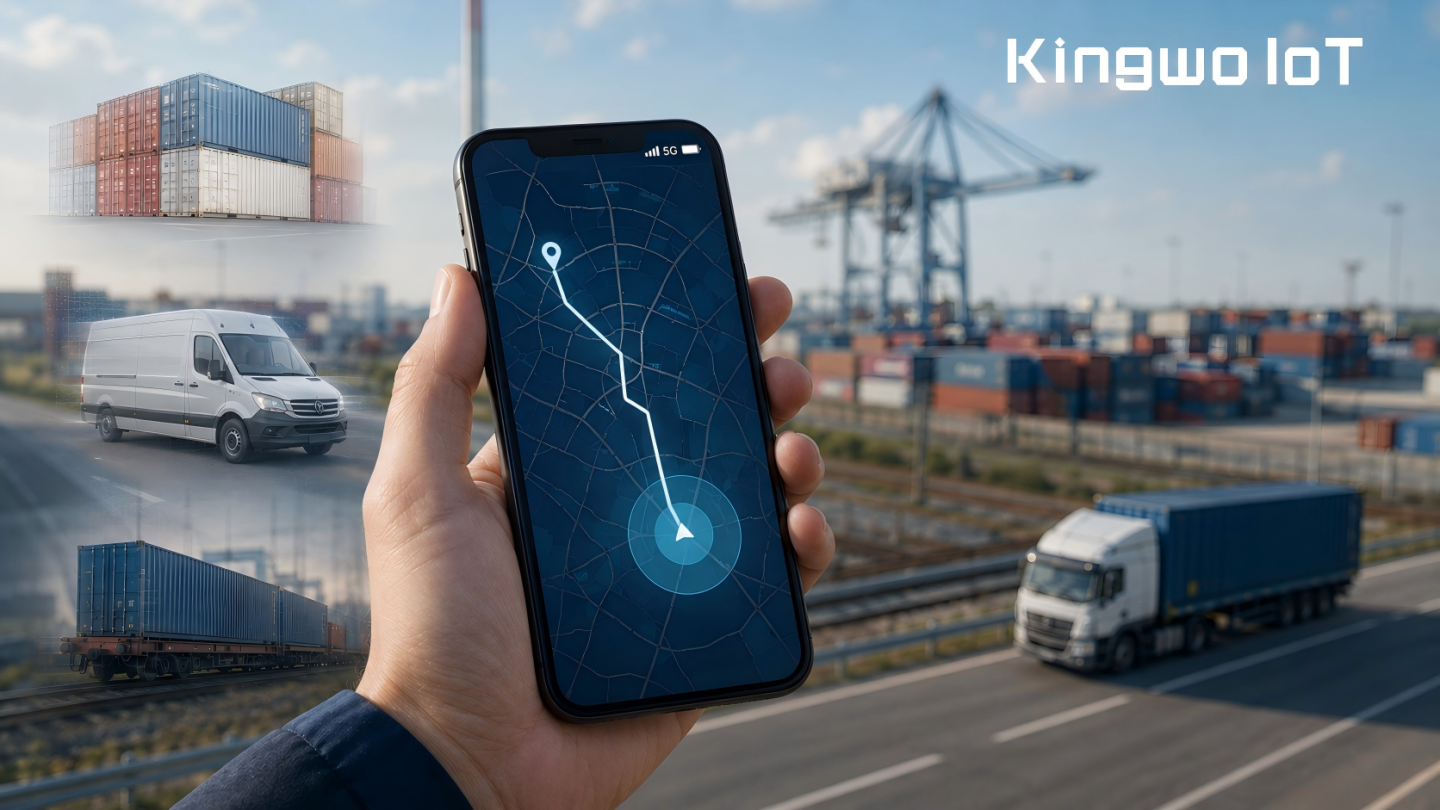

Europe is taking another major step toward a more connected, intelligent and sustainable logistics network.
On June 26, 2026, the European Commission introduced Multimodal-5G, a Connecting Europe Facility Digital project designed to deploy advanced 5G Standalone infrastructure along a strategic multimodal transport corridor between Greece and Bulgaria.
The project will connect maritime routes, railway infrastructure, road networks and urban transport systems, creating a unified digital corridor capable of supporting uninterrupted, high-performance connectivity across different modes of transportation.
According to the European Commission, Multimodal-5G will validate applications including real-time operational monitoring, predictive maintenance, cargo condition tracking and AI-powered multimodal route optimization across rail, maritime and road environments. The project will also support emissions monitoring and improved coordination between transport and logistics stakeholders. European Commission
At Kingwo IoT, we believe the significance of 5G in logistics is not simply faster data transmission. Its real value lies in connecting vehicles, cargo, infrastructure, equipment and operational platforms within the same intelligent ecosystem.
Today, many logistics tracking applications can already be supported effectively by 4G LTE, LTE Cat. 1, LTE-M or NB-IoT technologies. These networks remain highly relevant for devices that require wide coverage, controlled power consumption and cost-effective deployment.
However, the future logistics market will demand more than periodic location updates. Operators will increasingly require:
The EU-supported Multimodal-5G project reflects this transition by using 5G Standalone infrastructure to connect maritime, railway and road transportation along a strategic Greece–Bulgaria corridor. Its objective is not connectivity alone, but a common digital environment capable of supporting intelligent logistics operations.
Kingwo IoT’s long-term vision is to transform tracking terminals from devices that simply report location into intelligent asset nodes capable of collecting, analyzing and exchanging operational data.
A future tracking terminal should be able to answer more than one question.
It should not only report, “Where is this asset?” It should also help determine:
5G will help support this evolution, especially when combined with GNSS positioning, Bluetooth, CAN bus, RS485, sensors, edge computing, cloud platforms and open APIs.
To serve the next generation of connected logistics, Kingwo IoT’s development direction should focus on five areas.
5G should not be treated as an immediate replacement for every 4G tracking device.
Kingwo IoT should continue optimizing cost-effective 4G products while developing future-ready terminals based on 5G RedCap and other appropriate network technologies. Different applications require different combinations of coverage, power consumption, reporting frequency, cost and data capacity.
A small battery-powered pallet tracker and a powered vehicle gateway should not use the same connectivity strategy.
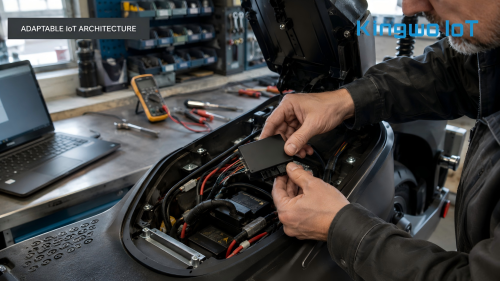
Future hardware platforms should support modular communication architecture, allowing Kingwo IoT to adapt products for different regions, operators and deployment requirements.
Priority capabilities should include:
This modular approach would help reduce redevelopment time and allow customers to upgrade connectivity without redesigning their entire tracking solution.
The future value of an IoT terminal will increasingly depend on how easily its data can enter the customer’s operational system.
Kingwo IoT should continue strengthening its APIs, device management platform and data integration capabilities so that tracking information can be connected with:
Our goal should be to make Kingwo IoT hardware easy to deploy, easy to manage and easy to integrate.
Instead of developing 5G products without a defined application, Kingwo IoT should work with logistics operators, technology integrators, mobile network operators and platform providers to create application-led pilot projects.
Initial opportunities could include:
These pilots would allow Kingwo IoT to validate network performance, power consumption, reporting frequency, roaming, installation methods and platform integration under real operating conditions.
A product designed for the future market must be ready for international deployment.
Kingwo IoT should consider regional network compatibility, operator certification, cybersecurity, data privacy, device identity management and local technical support from the earliest development stage.
This is particularly important in Europe and North America, where customers increasingly expect not only reliable hardware, but also secure data management, clear integration documentation and long-term product support.
The Multimodal-5G project offers a clear view of where European logistics is heading: connected corridors, interoperable platforms, intelligent infrastructure and continuous asset visibility.
Kingwo IoT intends to prepare for this market by advancing its multi-network hardware architecture, exploring 5G RedCap applications, strengthening platform and API integration, and working with international partners on real logistics use cases.
Our future is not limited to manufacturing GPS trackers.
Our goal is to become a flexible IoT technology partner that helps logistics companies connect, understand and manage every important asset moving through the global supply chain.
Because the future of logistics will not simply be connected—it will be visible, intelligent and responsive.
By Kailiang Tang
Acting Marketing Director, Kingwo IoT
 news
news
 news
news
 news
news
 news
news
 news
news
 news
news
 news
news
 news
news

English

French

Portuguese

Spanish