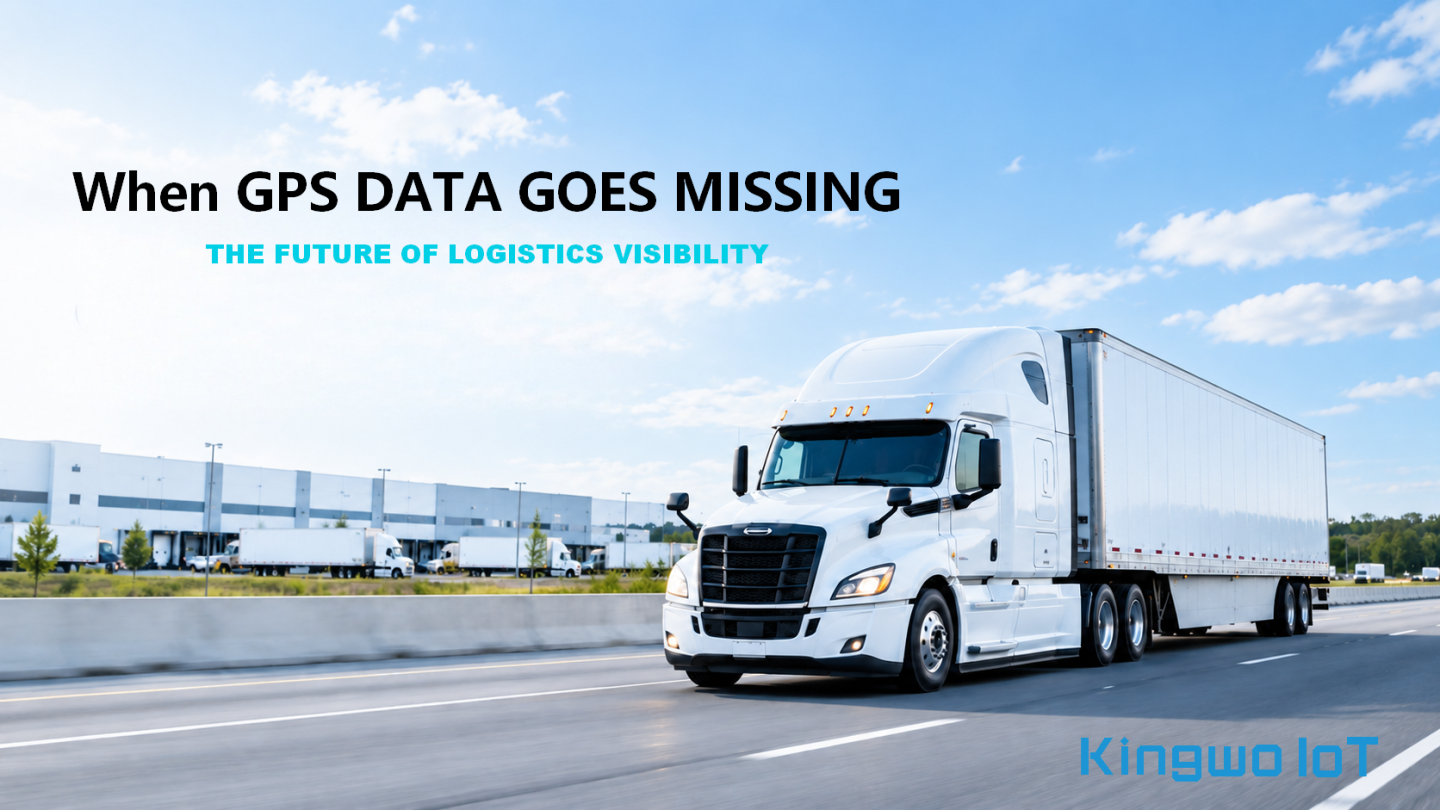

GPS tracking is now routine in logistics, but anyone who manages a fleet knows that a location on a map does not always tell the whole story. A trailer might appear halfway to its destination when, in fact, the device has not sent an update in several hours. Until someone checks the timestamp or contacts the driver, the team has no way to know whether the trailer is still moving or where it actually is.
That everyday uncertainty is one reason the reliability of positioning services matters beyond the technology industry. The U.S. Department of Transportation has made resilient positioning, navigation and timing a focus of its strategy, including work on GPS interference and technologies that could complement GPS. For logistics companies, the discussion comes down to a practical question: how clearly does a tracking system show what it knows, and what happens when a fresh location is unavailable?
The U.S. Department of Transportation (DOT) represents civilian users in the development and operation of GPS. Its remit also covers the wider field of positioning, navigation and timing, or PNT: the services that allow transportation systems to determine where something is and keep accurate time.[1]
In January 2025, DOT published a strategic plan setting out how it intends to strengthen those services. The plan covers improvements to PNT technology, resilience, cybersecurity, spectrum protection and coordination among civilian agencies. It also looks at technologies that could complement GPS if its signals are disrupted.[1][2] The work continued into 2026, when DOT and the U.S. Coast Guard hosted a meeting between civilian GPS users and U.S. GPS authorities in Washington, D.C.[1]
For logistics companies, this is a policy direction rather than a new equipment mandate. Its relevance lies in the question behind it: how much does an operation depend on location information being available when it is needed?
A tracking system brings together several things that are easy to treat as one. A device first needs to obtain a location, then send that information through a communications network before the platform can display it. If a report is delayed, the last recorded position may still be useful, but it needs to be understood as a last known location.
That distinction matters when someone has to make a decision. A dispatcher checking a delayed delivery needs to see when the last position was recorded. A yard manager looking for a trailer needs to know whether its device is still reporting. If an asset has moved unexpectedly, the team needs enough history to work out when the movement began.
Showing the age of a position and the status of the device helps people interpret the map. It also makes it easier to decide whether to wait for another report, contact someone on site or investigate the asset directly.
Tracking requirements change once a device leaves the vehicle. A truck may have a regular power supply and report throughout a journey, while a detached trailer could remain in a yard for days. A container may pass through several locations before it reaches its customer, and rental equipment may sit unused for weeks before moving again.
Those differences affect how often a device should report and what its users need to know. During a shipment, frequent location updates may help a team monitor progress. For stored equipment, an unexpected movement or departure from a designated area may be more useful than a constant stream of positions. Power supply, battery life, installation and network coverage all need to be considered alongside the reporting schedule.
Before choosing hardware, it helps to agree on what the team will do with the information. Which movements call for an alert? How old can a location be before it is no longer useful for a particular decision? And when a device stops reporting, who is responsible for checking why? Those answers shape the system as much as the device specification does.
The U.S. focus on PNT resilience brings attention to a real operational issue, but it does not mean every interruption comes from GPS. A delayed update might result from difficulty obtaining a position, a communications gap or a problem with the device. Operators need a way to see that the information is incomplete and investigate the likely cause.
For a logistics provider, that means looking at the tracking project as a whole: where the asset travels, how the device is powered and installed, how it communicates, and how the platform presents delayed reports. The aim is to make location data useful to the people responsible for the asset, including when a fresh position is unavailable.
Kingwo IoT works with partners on tracking hardware for vehicles, trailers and other mobile assets. For partners with an existing platform, our devices can also be configured to report directly to their own infrastructure. The appropriate setup depends on the asset and the conditions in which it operates.
A map can show where an asset was last reported. A well-planned tracking system also helps the team understand how much confidence to place in that information and what to check when the next update does not arrive.
[1] U.S. Department of Transportation. “Positioning, Navigation and Timing (PNT) & Spectrum Management.” https://www.transportation.gov/pnt
[2] U.S. Department of Transportation. Positioning, Navigation, and Timing Strategic Plan. January 2025. https://www.transportation.gov/sites/dot.gov/files/2025-01/Positioning%20Navigation%20and%20Timing%20Strategic%20Plan_v%20FINAL.pdf
By Kailiang Tang
Acting Marketing Director, Kingwo IoT
 news
news
 news
news
 news
news
 news
news
 news
news
 news
news
 news
news
 news
news

English

French

Portuguese

Spanish