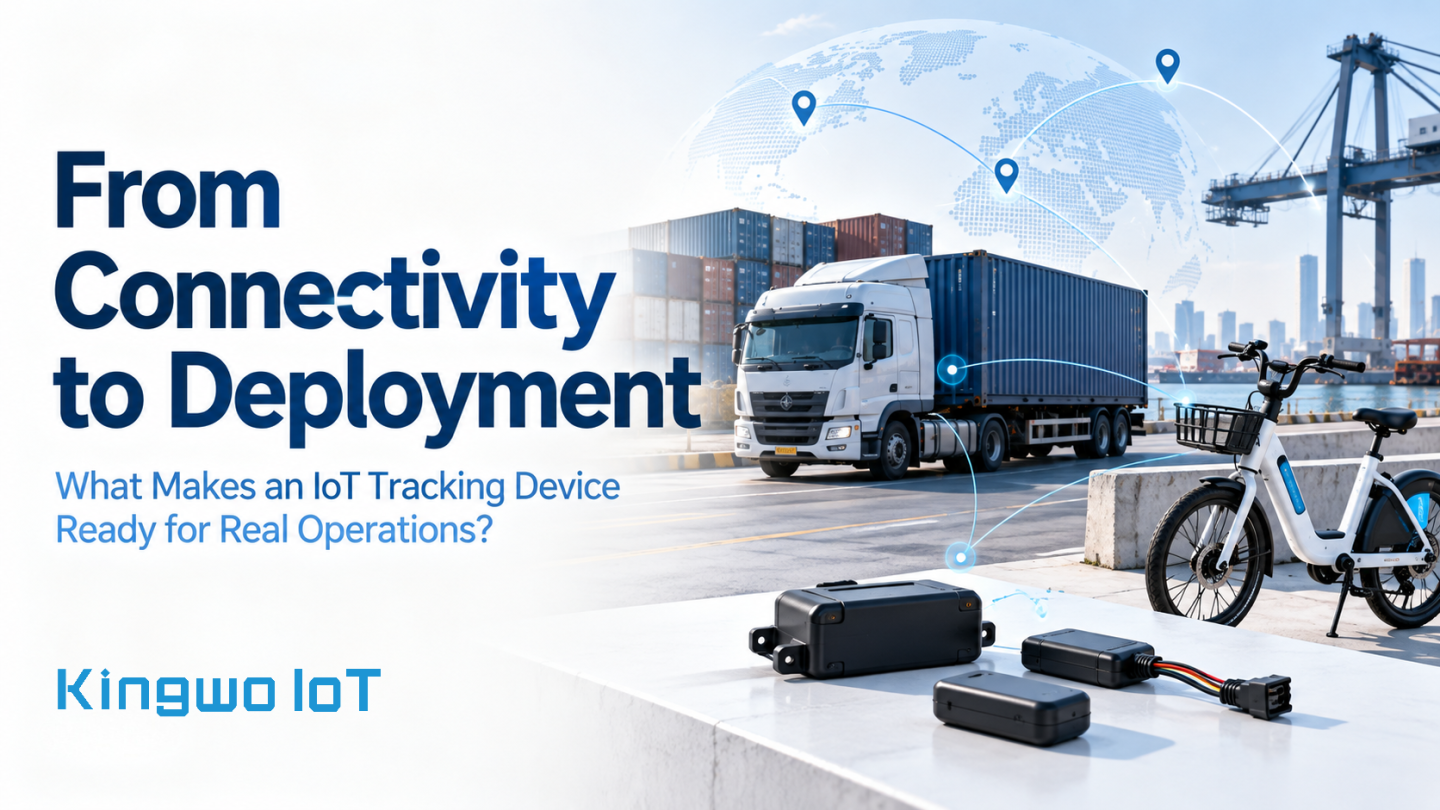

At Futurecom 2026 in São Paulo, Quectel positioned its ODM and PCBA capabilities alongside its connectivity and positioning portfolio, emphasizing design, engineering and manufacturing services that span the path from individual modules to fully integrated devices. Vehicle and asset tracking featured among the highlighted applications.[1]
For organizations developing connected tracking products, this raises a question that sits at the center of most deployment failures: what must happen between selecting a module and fielding a reliable device?
For vehicle OEMs, fleet operators and equipment rental businesses, that interval contains the decisions that determine whether a tracking program performs as intended. Connectivity is one subsystem among several. Power architecture, installation methodology, firmware behaviour, platform integration and lifecycle maintenance each exert independent influence on the outcome.
From Kingwo IoT's perspective, the relevant question is not which module performs best in isolation, but how these subsystems converge around a specific asset and its operating environment.
"Asset tracking" encompasses requirements that diverge substantially across use cases.
A commercial vehicle, an intermodal container, a shared e-bike and a portable generator may all require location data, but their power availability, duty cycles, mounting constraints and maintenance access differ fundamentally.
A vehicle can typically supply continuous power to a wired tracker. A container may operate for extended periods without an external power source, making energy budgeting the dominant constraint. An e-bike introduces controller compatibility, installation volume and battery voltage considerations. Rental equipment may transition between sites where charging and maintenance are difficult to coordinate.
These variables should determine the specification before hardware selection begins.
The initial questions are deceptively simple: What is the asset? What is its movement profile? Who consumes the data? What operational response follows an alert?
The answers constrain reporting frequency, battery capacity, mounting strategy and integration requirements.
A fleet dispatcher may require high-frequency updates during active routes. An operator monitoring stored equipment may need only periodic presence confirmation, supplemented by an exception alert upon unexpected movement. Applying a uniform reporting policy to both scenarios either dissipates energy unnecessarily or deprives the operator of timely information.
Each location fix consumes energy and data. For battery-powered devices, reporting frequency is therefore a primary design variable rather than a configurable afterthought.
Frequent reporting yields higher-resolution movement history at the cost of battery longevity. Extended intervals preserve service life but widen the gap between an event and the next available update.

The appropriate balance is dictated by the operational requirement. Teams should define what information is needed during movement, during storage, and following a suspected theft. Where firmware supports state-dependent reporting profiles, differentiated behaviour across these phases substantially improves energy efficiency compared with a fixed interval.
Battery-life specifications also require qualification. A meaningful figure must state the reporting interval, positioning attempt frequency, network conditions and operating temperature range. Absent these assumptions, a headline number offers little value for deployment planning.
Installation is where design intent encounters physical reality.
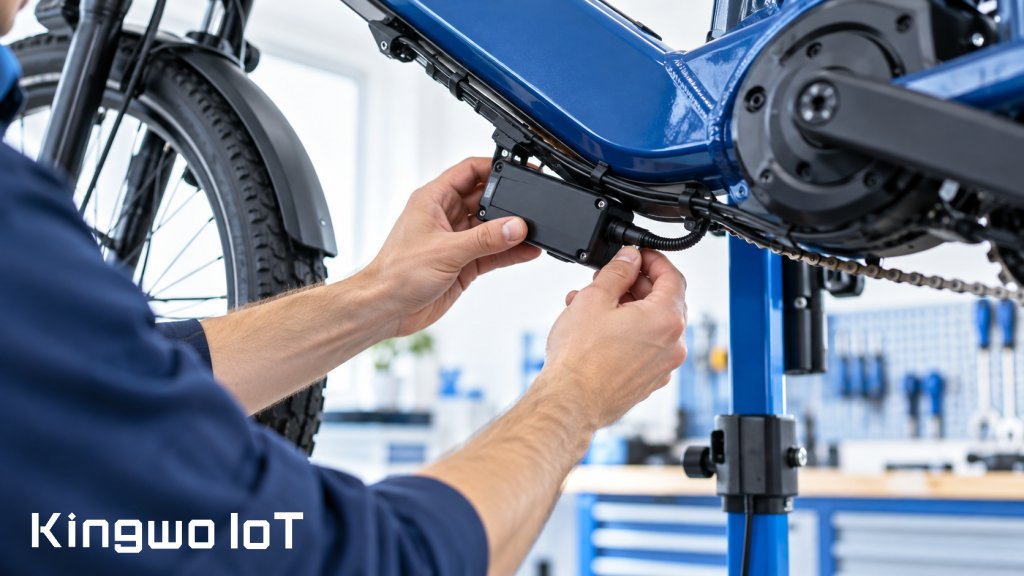
A tracker requires a secure mounting position, environmental protection and viable antenna placement. Concealment reduces tampering risk, but metallic surroundings or poorly chosen locations degrade RF performance. An accessible mounting point simplifies servicing while increasing visibility to potential removal.
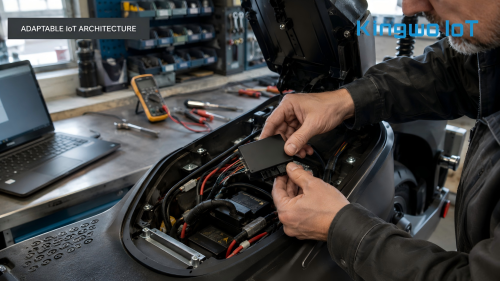
Wired installations introduce additional variables: supply voltage range, cable routing, connector selection and transient protection must all align with the host vehicle or equipment.
For e-bike applications involving remote control, the design must define the precise semantics of each command. Preventing a parked bicycle from restarting is functionally distinct from interrupting propulsion during operation. Controller interface behaviour and fail-safe logic should be validated before any remote function is enabled.
A pilot should therefore incorporate installation assessment alongside tracking validation. Relevant metrics include fitting time, mounting feasibility, and whether technicians can reproduce the procedure consistently across the target fleet.

A tracker produces data. The customer's platform converts that data into actionable information.
Successful integration depends on agreed definitions for device identity, timestamps, location fields, event codes and configuration commands. Teams must also understand device behaviour during connectivity loss and whether buffered records are transmitted upon reconnection.
These details shape daily interpretation. A stale position displayed without an explicit timestamp may be misread as current. Inconsistent event definitions produce ambiguous alerts. Weak device identification complicates installation records and field support.
For customers integrating with proprietary platforms, protocol review should occur early. A limited integration test can surface missing fields or incompatible assumptions well before a large-scale procurement and installation program is committed.
A successful demonstration confirms performance under demonstration conditions. A deployment decision requires broader evidence.
A meaningful pilot should replicate the customer's expected operating environment: representative routes, storage locations, mounting positions and maintenance practices. It should verify whether location data arrives when required, whether alerts trigger a defined response, and whether measured battery consumption aligns with the proposed service schedule.
Connectivity and certification validation must match the target market and the exact hardware configuration. Module capabilities are relevant inputs, but the finished device requires independent assessment of antenna performance, enclosure effects, power design and applicable regulatory requirements.
The purpose of a pilot is to resolve practical uncertainties while the project remains small enough to adjust.
Quectel's Futurecom announcement reflects an industry shift toward integrating design, connectivity and manufacturing. For tracking programs, the next step is aligning those engineering decisions with the customer's operational workflow.
A deployment-ready tracker should have a defined installation method, a justified reporting strategy, a validated integration path and a sustainable support process. Its specifications should state the conditions under which performance is expected.
For Kingwo IoT, this defines the starting point of a productive customer engagement. The asset and its operating requirements come first. Hardware selection follows from how the device will be powered, where it will be mounted, and how its data will inform operational decisions.
That is where a tracking deployment demonstrates its value: when operators can rely on the data to locate equipment, investigate anomalous movement and coordinate daily operations.
By Kailiang Tang
Acting Marketing Director, Kingwo IoT
[1] Quectel Wireless Solutions. "Quectel showcases advanced ODM and PCBA solutions alongside end-to-end IoT portfolio at Futurecom 2026." Business Wire, October 2026. https://www.businesswire.com/news/home/20261005567604/en/Quectel-showcases-advanced-ODM-and-PCBA-solutions-alongside-end-to-end-IoT-portfolio-at-Futurecom-2026
 news
news
 news
news
 news
news
 news
news
 news
news
 news
news
 news
news
 news
news

English

French

Portuguese

Spanish