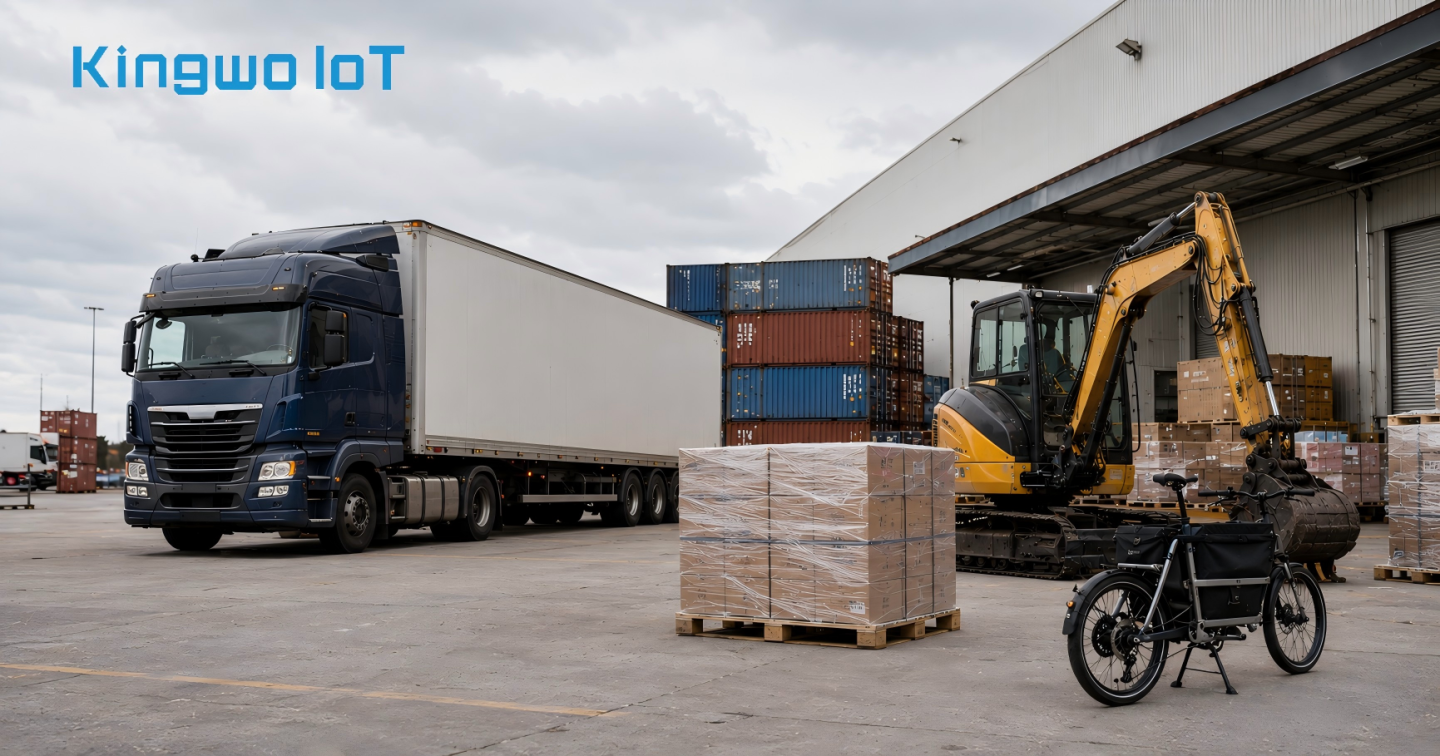

A fleet manager can see the truck—but not the trailer it dropped two hours ago.
A rental company can locate an excavator—but not the attachment that disappeared from the jobsite.
A delivery operator can track a van—but not the temperature-sensitive cargo inside it.
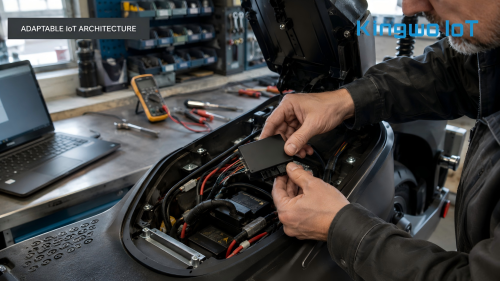
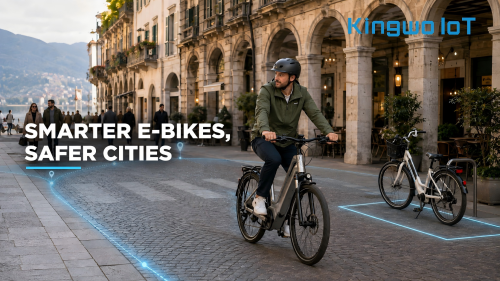
An E-bike brand has a mobile app—but receives no useful warning when a vehicle is moved without authorization, its battery is disconnected, or a hidden device is tampered with.
Technically, all four businesses are “connected.”
Operationally, they still have blind spots.
This is the problem many fleets, rental companies, mobility operators, equipment manufacturers, and logistics providers across North America and Europe are now confronting. The first era of telematics answered a basic question:
Where is the vehicle?
The next era must answer much more valuable questions:
The future of connected operations is not simply more GPS. It is better visibility at the point where the physical asset, the data, and the business decision meet.
Location remains essential, but location alone rarely explains what is happening.
If a refrigerated trailer is standing at the correct depot but its temperature is outside the permitted range, the location data is accurate—and still insufficient.
If a construction tool has not left a geofence but has been removed from the machine to which it belongs, a standard tracker may report nothing unusual.
If an E-bike is still visible at its last reported position because its main power was disconnected, the platform may create confidence without creating security.
True visibility requires context. Depending on the asset, that context may come from vibration, temperature, light, door status, ignition, battery voltage, CAN data, RS485 devices, BLE sensors, tamper detection, or a carefully designed movement algorithm.
The question should therefore change from “Does this device have GPS?” to:
“What event do we need to detect, and what decision should that event trigger?”
That one question leads to a far more useful IoT design.
A commercial truck, a shipping container, a rental attachment, an E-bike, and a lone-worker safety device do not share the same operating conditions.
They differ in almost every engineering variable:
A standard vehicle tracker may perform extremely well when connected to a truck and still be the wrong product for a non-powered trailer that must operate for months without maintenance. A consumer tag may help locate a bicycle in one situation but may not provide the reporting logic, fleet control, API access, or device management required by a commercial operator.
The strongest IoT projects begin with the asset and the workflow—not with a preselected device.
Most established fleets do not need another isolated dashboard. They already use fleet-management, dispatch, rental-management, maintenance, ERP, or customer-service systems.
Adding one more closed platform can create another login, another training requirement, another data silo, and another integration project.
This is why the role of hardware is changing. A capable device partner should be able to support the customer’s existing technology ecosystem through:
In many cases, the right answer is not to replace an established telematics provider. It is to extend that ecosystem to the assets, sensors, and use cases that standard vehicle hardware does not fully cover.
This complementary model reduces disruption and makes small, focused pilots possible.
In North America, connected assets may operate across long distances, multiple network environments, large outdoor worksites, severe seasonal conditions, and mixed fleets assembled from many manufacturers. Ruggedness, power management, practical installation, theft detection, and a clear return on investment often determine whether a project succeeds beyond the pilot stage.
In Europe, cross-border operation, interoperability, data governance, urban mobility, energy efficiency, and product cybersecurity are especially prominent considerations. The EU Data Act, applicable since 12 September 2025, gives users of connected products greater control over data generated through their use and emphasizes access, portability, and interoperability. The EU Cyber Resilience Act also introduces lifecycle cybersecurity requirements for products with digital elements, with compliant products required on the EU market by 2027.
These developments send a wider message to the global IoT industry: a connected product should not be designed as a sealed box that reports coordinates until it is replaced. Buyers increasingly need to understand what data is generated, how it can be accessed, how the device will be updated, and how security will be maintained over time.
North American guidance points in the same direction. NIST’s foundational guidance for IoT manufacturers emphasizes that devices should provide the capabilities and supporting information customers need to manage cybersecurity risk. NHTSA likewise treats cybersecurity as an ongoing priority as vehicle connectivity develops.
The commercial implication is clear: hardware specifications, firmware architecture, data access, and lifecycle support can no longer be evaluated separately.
Before choosing a device, fleet and product teams should ask:
“Track the asset” is too broad. Define the event: unauthorized movement, temperature excursion, excessive vibration, battery disconnection, impact, unsafe driving, extended idling, removal, or failure to return.
An alert is only valuable if it reaches the right person, contains enough context, and supports a defined response.
The reporting strategy for a powered vehicle is fundamentally different from the strategy for a trailer, container, pallet, or detachable tool.
Ingress protection, antenna position, concealment, vibration, temperature, impact, and access for maintenance all matter in real deployments.
Clarify APIs, protocols, field definitions, reporting intervals, authentication, data ownership, and exception handling before scaling.
Ask about access control, communications security, firmware updates, vulnerability handling, device configuration, and end-of-life support.
A pilot should test operational outcomes—not simply whether dots appear on a map. Useful measures may include recovery time, loss reduction, temperature compliance, installation time, battery life, alert accuracy, maintenance efficiency, or platform-integration performance.
Large digital-transformation projects often become slow because they attempt to solve every operational problem at once.
A better first step is to identify one high-cost visibility gap:
Define the asset, the event, the required data, the existing platform, and the success metric. Then configure a small number of engineering samples and test them under real operating conditions.
This approach produces better technical requirements, reduces deployment risk, and gives both the customer and the device partner evidence on which to base the next stage.
At Kingwo IoT, we believe the next breakthrough in telematics will not come from adding another generic tracker or another closed dashboard.
It will come from connecting the assets that remain invisible and turning their physical events into data that an existing operation can use.
That may involve a long-battery-life device for a non-powered asset, a concealed anti-theft unit for an E-bike, CAN or RS485 integration for a specialized vehicle, temperature and tamper sensors for cargo, customized firmware for a rental fleet, or an OEM/ODM product developed for a mobility brand.
Our role is not necessarily to replace the systems a customer already trusts. It is to provide the hardware engineering, firmware customization, communication protocols, sensor integration, APIs, and manufacturing support needed to extend those systems into new use cases.
The most productive conversation therefore does not begin with:
“Which tracker would you like to buy?”
It begins with:
“Which asset can your operation still not see—and what do you need to know about it?”
That is where a meaningful IoT project starts.
By Kailiang Tang
Acting Marketing Director, Kingwo IoT
 news
news
 news
news
 news
news
 news
news
 news
news
 news
news
 news
news
 news
news

English

French

Portuguese

Spanish